South America Sep – Dec 2025

Tom & I visited South America for four months in late 2025. It was the first time in that continent for both of us, and we hit quite a few ‘bucket list’ locations, as well, as a few (not many) places off the beaten track.

I’ll add posts incrementally as I have time:

Peru

Ecuador

Back to Peru

Bolivia

Chile

Argentina

Salta – Dec 2025

From the deep southern reaches of the Patagonia we were headed to one of the northernmost provinces of Argentina; Salta. It wasn’t really the right time of year to be heading here, but we were having to last minute fill 12 days that were meant to have been in Antarctica. Given we’d already included all the things we really wanted to do in our 4 month itinerary, it was challenging to find things – particularly given the time of year, and that it was leading into Christmas. We knew December was the start of the rainy season in northern Argentina, and could prove problematic for the roads. And we knew it was going to be hot. But we rolled the dice. So from sub 15°C in Ushuaia we landed at 8:30pm with mid-20°Cs in Salta (via Buenos Aires).

[As a side point for anyone travelling via AEP in Buenos Aires – there is a currency exchange available for foreigners which has reasonable exchange rates. Given the difficulties of finding places to exchange in some parts of the country it is worth changing money there. We were lucky to have a bit of time between our flights as we were in the queue for 45 minutes. Once we got to the front we found we needed to provide proof of our arrival in to Argentina to get the advertised rate. For most people that would be easy as they likely have just flown in, but in our case we had to dig up our bus tickets from a month earlier. Of course there is no signage telling you what documentation you need to provide in advance. I’m sure the queue could have moved twice as fast if everyone was aware of what they needed to show!]

Similar to our hire vehicle in Chile, we ended up with an almost brand new 2WD SUV. We could only hope it had a bit more guts than the earlier vehicle. With some short flight delays, and a bit of difficulty finding our AirBnB it was 9:30pm by the time we arrived. Our host was lovely and helped us get a pizza delivered (Spanish definitely not up for phone ordering of pizza!) so that we could actually get some dinner that night.

The next morning we left Salta city on our 7 day road trip around Salta province.

Our route – we went clockwise

Our first day we took Route 68 South to Cafayate. If you just drove straight through it would be a bit over three hours (185km), but the last 50km (Quebrada de las Conchas / Gorge of the Shells) has many road side attractions to stop at, so we took about six hours. The landscape really reminded us of South-West USA – all red rock.

Garganta del Diablo (‘Devil’s Throat’)

El Anfiteatro (‘The Amphitheatre’)

El Sapo (‘The Toad’)

Green & red landscape (Tres Cruces lookout)

We gave a local a lift from Tres Cruces lookout a short way to Santa Barbara and used more Spanish talking to him for 10 minutes than we had in weeks! The drive was spectacular as we were rising from 1,200m in Salta through to 1,700m in Cafayate – we went through many different rock strata layers.

Despite the heat we did a couple of short hikes – Yesero to Los Estratos (~4km round trip?), and we went rogue near El Obelisco and wandered out to the rocks behind it. We found a couple of small canyons which was fun.

Los Estratos hike

Los Estratos hike

I was pretty happy I’d prioritised getting accommodation with a swimming pool, and we were quick to get in once we arrived in Cafayate. (NB. Just when you think you’ve got your head around Spanish you arrive in Argentina and have to adjust for their pronunciation differences – kah-fah-SHAH-teh being the way to pronounce Cafayate)

The next day we decided to get our exercise by walking to the vineyards, and had a sweaty 5.5km walk to Finca Las Nubes. We did a tour and tasting – that was conducted in Spanish (we knew this when we signed up). Given we’ve done so many other winery tours we could kind of follow along since you know the topics that are likely going to be covered. The main reason we were there was the winery got props for being the one of the most scenic in the area – we had lunch with expansive views looking across the vineyards to town.

Finca Las Nubes

The slight downhill back to town made the return walk feel far easier. Tom decided we needed another tasting so we managed to sneak in just before closing at Domingo Hermanos. We were glad to get a English speaker running our, very enjoyable, matched cheese and wine tasting.

Domingo Hermanos tasting

The other big thing on the ‘to do’ list for Cafayate was to have wine ice cream – so we hunted down the ice cream parlour which supposedly started the flavour. Then it was time for a well earned swim back at our accommodation.

Wine ice cream in Cafayate – Torrontés on the left, Malbec on the right

Cats of South America – at our B&B in Cafayate

Our exercise the next day was another walk to a winery – but at least this one was only 4km and there was a slight breeze! We got a biligual tour this time, then a tasting. Disappointingly a few of the wines in the tasting had been open a bit too long, and the person leading the tasting didn’t really seem to understand the issue. Fortunately lunch was much better and the service was excellent.

Piattelli Winery entrance

Lunch at Piattelli

We had to be a bit creative in getting food supplies for the next few days. We wanted to have some lunch items with us – but with the 30°C+ temperatures we could only get things which were going to survive the heat. The next morning we headed out of Cafayate, with 20km of sealed road, before hitting the dirt for the rest of the day. The estimate was 4 hours driving for the 130km we were planning to cover. The road was better than I was expecting – there were no particularly bad corrugations (it may have been recently graded), it was very slow as it was constantly winding in and out of many dry washes. It was a bit disturbing watching the google map showing us driving into rivers – they were dry but could easily change if the rains arrived.

The Quebrada de la Flecha section was stunning. We enjoyed the chance to get out of the car and stretch our legs walking up to a lookout.

Quebrada de la Flecha (‘Ravine of the Arrows’)

Quebrada de la Flecha (‘Ravine of the Arrows’)

It took us about 2h 15 to get to Molinos, where the car was claiming it was 38°C. Sitting in the shade in the tree filled plaza it didn’t feel much over 30°C (cause we’re such good judges of temperature!). The road from Molinos to Colomé Estate was a bit more interesting – a lot more pot-holes, blind corners, sandy sections etc, it probably took us around 50 minutes for 18km.

Christmas is in the air – in the park in Molinos

Our two nights at Colomé Estate were a treat to somewhat compensate for the disappointment of our Antarctic trip being cancelled. Colomé is the oldest winery in Argentina, founded in 1831, and also one of the highest altitude wineries in the world. The original estate is at 2,300m (they also have plantings at higher altitudes).

It’s a tough life

The original 1831 winery at Bodega Colomé

The James Turrell Art Museum is on site, which we visited on our first evening. No photos allowed in the installations so only one of Tom in his funny shoe covers. Given neither of us are particularly arty, we enjoyed our visit. The only downside was that the tour needs to coincide with sunset (for reasons which will become obvious if you do it) and given how close we were to the summer solstice this was quite late in the day. So we were pretty hungry by the time we got to dinner after 9pm.

Tom after our tour of the James Turrell Art Museum. Had to wear the shoe covers so as to not damage the art installations.

Tom had unfortunately picked up some blisters with all our vineyard walking in Cafayate so he decided to have a chill day. I decided to do one of the walks on the property. I lost the directional arrows part way through, but figured since I was supposed to be walking to some cascades (in incredibly dry country) I could just keep walking up the creek that the route had been following. I found an entire cliff full of nesting parrots. We’d seen a similar site on Ruta 68 but, the parrots had largely been out and about, whereas these ones were all home.

Parrots living in the side of the cliffs

I was feeling pretty intrepid as I kept rock hopping my way up the creek, which was now flowing slightly. Then I got to some infrastructure in the creek and realised there was a road that ran the whole way there – which I was probably meant to have been on. I found some cascades just above the infrastructure so figured that was likely the goal, but then I spotted some locals winding there way up the hill. I scrambled up to where I’d seen them and found a foot track which I followed. This took me further up the gorge through some gorgeous granite sections – reminiscent of Morong Deep.

By this point I thought I better head back since I’d told Tom I’d probably be a couple of hours, and I’d already been going over 1.25 hours. As it turned out I took the road on my return and was back much quicker. I still have no idea where I went wrong – but I daresay I had a far more enjoyable time taking my own route.

Cascades

Sadly we couldn’t enjoy a second leisurely breakfast on the terrace as we needed to be in Seclantás by 8:30am to meet our guide for a trip to Cuevas de Acsibi. That said, it was a far more pleasant temperature to be driving in when we left Colomé at 7am! It took us about 1.5 hours to get to Seclantás (not the 1h per google) – probably in part because there was a road diversion as they were sealing a section.

We met Tony our guide, and got into his 4WD and headed out of town for about an hour onto Tony’s property. The 4WD had its work cut out for it driving in and out of dry washes. We stopped about half way for photos, in the midst of many cacti, with views of the mountains – stunning.

Cacti and mountains

We parked the 4WD about 9:30am and then had 1.5 hour walk up the watercourse – through a canyon initially, then a wider valley. The rock was constantly changing – some sections very much reminded us of Goblin Valley in Utah.

Rock formations

The caves themselves were probably a little underwhelming (if that was all you were going for) but combined with the rest of the walk it was a well worthwhile trip.

Cuevas de Acsibi

Cuevas de Acsibi

Returning from Cuevas de Acsibi

Short canyon section

We were dropped off back in Seclantás at 1:30pm, so we had lunch in the plaza (the remains of our packed breakfast), before hitting the road again for Cachi.

Even though it was only another hour of driving it was twisty and hot, and I was very glad to stop when we got to Cachi. Once we’d checked in we wandered around the village trying to find an open ice cream shop – we were eventually successful.

Art made from old tyres

Open air drying – of Tom’s nemesis red capsicum – for making paprika

Dogs of South America – keen on ice cream!

There was one winery within easy walking distance from town, though from the reviews we weren’t sure if it was going to be open. It was quite the revelation – going from a dusty street front, to walk through to a lovely terrace with stunning views of the surrounding mountains. We had a lovely relaxing time here.

The beautiful Bodega Isasmendi

The next day we had another scenic drive – this time Ruta 33 through Parque Nacional Los Cardones (‘The Giant Cactus National Park’). It was spectacular – we did four very short walks, and stopped at a few lookouts.

Recta Tin Tin – 19km of completely straight highway

Views over Parque Nacional Los Cardones

We’d been climbing as we drove and made it up to 3,400m before needing to descend back to Salta at 1,200m. The road down was full of switchbacks, though fortunately quite wide so not the same nervousness as some other roads we’d driven!

The very windy Ruta 33 – all of those sections of road are connected!

We got into Salta (city) mid-afternoon. We only had that afternoon/evening so walked across town (~3.5km) to the cable car. We were close to closing time so didn’t spend too much time at the top.

View over Salta (city)

While Salta hadn’t been on our original itinerary we enjoyed our last minute trip here. It would have been better to have come in the dry (& cooler) season, so that we weren’t constantly watching the forecast nervously for any rain. It felt a fair bit cheaper travelling here compared to the other parts of Argentina we visited. It did feel somewhat ironic that we were only a day’s bus travel away from San Pedro de Atacama where we had been 2 months earlier – if this had been part of the original plan there would have been better ways to incorporate it!

With Christmas almost upon us it was time to head to one of the biggest tourist towns in Argentina – Puerto Iguazu.

Ushuaia – Dec 2025

From El Chalten we flew south (from El Calafate) to Ushuaia. This was meant to be so we could board a ship bound for Antarctica, but as it had mechanical issues it had been cancelled. We decided to go to Ushuaia anyway, since the arrangements were all made. If we hadn’t done so much hiking in the previous few weeks then we may well have chosen to stay in Tierra del Fuego and hiked to replace the cruise. But we were sick of hiking!

Not so much that we didn’t go to Tierra del Fuego National Park for the day. We managed to hire an automatic car at the last minute – a low slung sedan, which I cautiously drove on the almost exclusively dirt roads out to the park. The weather wasn’t great so we stuck to the lakeside Hito XXIV track for our first walk. It was quite pleasant following the lake around till you hit the Argentine/Chile border and for some reason it stopped there 🙂

Moody Lago Roca

Dog Orchids (Codonorchis lessonii)

Argentina/Chile border marker

Tom naughtily crossing an the international border

On our way back we finally managed to spot a pair of Magellanic Woodpeckers. We’d been hoping to see these for weeks so we were delighted to spend half an hour watching the male on a tree, and female on the ground. Not long after we started walking again it started raining so the timing was also perfect.

Carpintero – Magellanic Woodpecker – Tom has the better photos

Walking the Hito XXIV trail

We were glad to dive into the car once we got back to the trailhead. We decided to continue onto the far end of the park – there was a lot of traffic out by this point, and the road was pretty wet with the rain. It was incredible the speed some drivers were getting up to given the conditions. Once at the Puerto Arias car park we ate lunch in the car, and waited, and waited, for the rain to stop.

Lunch in Tierra del Fuego National Park

An hour and a half later we decided it had eased off enough to get out and do some of the short walks which surround the area.

The colours of Tierra del Fuego

Tom was keen for a few more walks, but I felt we’d had a reasonable cross-section of the park and was happy to call it a day. Fortunately the crazy drivers had eased off by mid-afternoon and we had a less fraught drive back to Ushuaia.

That night we walked down to the harbour to see if we could spot our broken boat. Just as we spotted it, it started heading out of the harbour – presumably to go get repaired somewhere else.

Our ill-fated Antarctic boat leaving Ushuaia (presumably to get repairs)

Overnight there was snow which beautifully covered the surrounding hills.

Overnight snow on the hills above Ushuaia

Since we were no longer going to Antarctica we took a day trip on the Beagle Channel. Besides the scenery, the main points of interest were a comorant colony (which our guide had to explain weren’t penguins), a sea lion colony, and then the thing we were really all there for – penguins.

Imperial Comorants

Sea lions

The penguins are on Isla Martillo which is the turn around point for the longer Beagle Channel boat trips. It’s feels somewhat intrusive – the catamarans basically beach their noses on the shore where the penguins are all hanging out, and then the passengers get about 20 minutes to watch them. You can pay much larger amounts to do trips that allow you onto the beach, but given we were less than 10m away from them on the boat I’m not sure the cost is worth it.

Penguins on Isla Martillo in the Beagle Channel

Gentoo Penguin and Magellanic Penguins

Throughout South America the streets are full of different shaped metal baskets. They very much reminded me of disc golf baskets, but in they are actually for rubbish to be but in for collection. I had meant to get a collection of photos but this is the only one I ended up taking.

Disc golf baskets of South America

The weather had cleared by our last morning, and we finally got to see the views of the surrounding ranges from our apartment. (Since Ushuaia is largely built on a slope it seems like every apartment in town has a great view)

I’d been able to change our tickets, at no cost, to fly to Buenos Aires the next day, so that was the end of our very enjoyable time in Patagonia.

El Calafate – Dec 2025

After a good nights sleep on a comfortable mattress (for a change from the previous couple of nights!), it was a bit chaotic at the bus station the next morning. As it turned out, because we were taking a bus across the border (Chile to Argentina) we needed to check-in and have all our paperwork checked. Normally with the buses nothing like that is required – and of course no one was expecting it, so we were all queued up at the last minute. If we’d been told about this in advance then I’m sure most people would have arrived a bit earlier and we would have got away on time!

Dogs of South America – bus terminal Puerto Natales

We crossed the border pretty early on, then had several hours of driving, including a lunch stop. We’d read so much information that suggested Argentina only operated on cash so I was pleasantly surprised to find I could buy lunch with my credit card despite being in a tiny ‘town’ in the deep south. I’d booked the bus tickets well in advance so we had the front seats on the second floor of the bus – which meant good views. We got into El Calafate about an hour later than scheduled. The baggage handler got pretty surly when we didn’t tip – but what were we supposed to do, we’d just arrived in the country and had no currency.

The 10 minute walk to the accommodation seemed a lot longer in the sun, and all our gear. We were a bit shocked to find the heater was on in our apartment given how warm it was – and apparently no way to turn it off. We hadn’t thought through what arriving in a Sunday might mean for currency exchange – unsurprisingly none of the Western Unions were open, and no luck with any of the shops that were mentioned online for potentially changing money. So, with no pesos, we found a great Korean restaurant (of all cuisines!?) where we could pay for dinner by credit card. Though, to be honest, it seemed credit card was probably accepted in most places – but we had no capacity to tip (since this was generally only able to be done in cash).

The next day we got picked up for our tour to Perito Moreno Glacier. I’d just booked the cheapest tour we could find, since all we really wanted was transport to and from the park. There were 16 of us in a minivan, with a somewhat odd guide. We weren’t really sure what he thought about things when he started suggesting we needed to search the dark web to find out the truth about climate change…?

Boardwalks at Perito Moreno Glacier

Perito Moreno Glacier – about the height of an apple 🙂

We were given 1.75 hours to explore the board walks, and then those of us who’d opted for the boat trip got taken down to the pier for that. We’d thought the boat trip would help give us perspective on just how big the glacier is. But even from the boat we failed to get a sense of perspective. We were the last ones on board for the boat (since our eccentric guide had got distracted destroying loose tiles … don’t ask), but this turned out to be a genius move, as we all had to be in the cabin for departing the pier, but shortly after we were allowed on deck. As we were the last in, we were then the first out on the deck so got spots next to the rails with good views. It was pretty chaotic on deck!

Perito Moreno Glacier – from the boat cruise

Iceberg

Iceberg

Crowded boat (this is after many of the people have gone back inside for return to the dock)

Back in town, being Monday, we managed to change some money at Western Union. That brought a sense of relief, even if we hadn’t managed to get the best rate.

Cats of South America – I think this belonged to the accom where we were staying?

The following day we slogged back to the bus station for our next bus trip to El Chalten. Fortunately this time I avoided the surliness from the baggage handler since we had some cash to tip him!

Not the O Circuit – Nov 2025

As already discussed in my Carretera Austral Part 4 post, 5 people had died on the O Circuit 5 days before we were due to start it. Our last two days in Puerto Varas had been intended for preparation for the O Circuit but instead we were searching the internet for anything relating to the circumstances, and trying to work out what to do.

Do we just work on the assumption that it will re-open in time for us to start walking? Do we try and hedge our bets with options both ways? Do we just assume it won’t re-open in time and plan for that? We looked at the forecast for the days we were meant to be going over John Gardner Pass. We bought microspikes. I became a reddit reader for the first time in my life.

In some ways it was a good thing we only had 2 days between when we found out on Wednesday night and when we were due to start on Saturday morning. It meant we couldn’t spend too long thinking about it. After ruminating on it for a day we concluded that we should just pivot to doing the W trek.

For those not familiar with the O/W – the O Circuit, as the name implies, is a circuit, normally done over 8 days. Three of those days (the section on the Northern side of the range) have to be walked in an anti-clockwise direction. On the 4th day the O Circuit goes over John Gardner Pass and arrives at Grey Campsite. The W Trek can be walked in either direction and starts (or ends) at Grey and goes through to Las Torres Hotel (where the O starts) i.e. the W is 4 of the 8 days of the O Circuit. The W side of the circuit is a circus compared to the more remote northern side. The W can be accessed in multiple places, so you will encounter people doing short day trips, long day trips, two, three, four night trips, and going in any which direction.

Our (new) plan was to get to Grey campsite on the day we should have walked over the pass. But, since we weren’t going to be walking the O we needed to work out how we were going to get there. The most common and cheapest option is to get a catamaran across Pehoé Lake and then walk from Paine Grande to Grey, then walk back again the next day and camp at Paine Grande on the second night. Neither Tom or I had any interest in walking Paine Grande – Grey and then returning on the same track the next day, so the alternate option was to get the Lago Grey Ferry to Grey directly. This is much more expensive as the ferry is mainly a sight-seeing excursion (rather than hiker transport) that sails across the face of Grey Glacier. This sounds amazing, but of the three daily sailings two of them go to the face of the Glacier before dropping off at Grey, the other one drops off at Grey then goes to the Glacier. The only sailing which had any availability left on it was the one which went directly to Grey which was made it a particularly bitter expense since we didn’t even get the sight-seeing bit! Anyway, at least we had a way secured to get onto the W.

If you’re interested in our reasoning for the pivot, here are the various reasons which contributed to the decision:

  • There was every chance the O wasn’t going to re-open in time, so the earlier we made the decision the more time we had to re-arrange plans (which would mean less stress)
  • The forecast for the day we were due to go over the pass was ok, but the days on either side weren’t great. Given hikers were likely to be super nervous given the events of the previous week we didn’t want to get caught up in chaos around the pass.* And the weather could obviously move around from the current forecast.
  • We realised how vulnerable we would be (and most hikers are) since we’d elected to book pre-erected tents. We didn’t have a shelter with us, so if we did get caught in weather we wouldn’t be able to bunker down.
  • After all the hiking we’d done on the Carretera Austral we weren’t feeling fresh, and weren’t that excited for an 8 day hike

With the decision made that we were just doing the W, we had 3 extra days in Puerto Natales. Our first day, originally meant for grocery shopping, we tracked down one of the best coffees we had on our trip. Then managed to hire a car for a couple of days so we could visit Torres del Paine National Park as a day trip.

A decent coffee

The next day we drove the ‘back route’ (Y-290) into Torres del Paine National Park. The road was some gravel and some ashphalt. It was a pleasant morning and we stopped at a few lookouts on the way in, and did a short walk to Salto Chico (waterfall). Then we did a longer walk up to Mirador Condor, where we had morning tea. I walked back to the car the way we’d come, and then drove along the road to pick up Tom at the alternative trailhead.

Classic TdP views

Mirador Condor

At this stage we hadn’t really run into too many people, and had probably been lulled into a false sense of quietness. Our next stop was to visit Mirador Cuernos/Salto Grande but the car park was packed! We ended up having to park at the catamaran parking area and walked back along the road. We had lunch at Mirador Cuernos – we seemed to be at the end of the peak, so by the time we’d finished lunch it was a lot quieter than when we’d arrived.

Mirador Cuernos

As we finished lunch the cloud had started forming and was quite dramatic over the peaks as we headed back.

Weather coming in

As we continued our loop around the park we encountered a large number of cars parked along the road. Curiosity meant we stopped to find out why they were all there. Apparently a puma with a kill was behind some bushes, only about 30m off the road. There were some very serious wildlife photographers set for the long haul, but after 20 minutes and no action I was keen to be on our way. As a consolation prize as we were on our way out of the park I spotted an Andean Fox which Tom managed to photograph, and then a flock of rheas (ostrich like birds) on the main road. It was a long day, but we did get to see a bunch of stuff in the park we wouldn’t have seen if we’d been on the O.

The next day we headed to the Mylodon Cave National Monument which is only a 30 minute drive from Puerto Natales. We were pleasantly surprised by our visit here. We walked to the smallest cave (Cueva Chico) first, the walking track was surprisingly sheltered given it was a very windy day. The landscape was level and somewhat different to what we’d had. We did regret the order we’d chosen to do things once we found picnic tables (a rare site in Chile) near Cueva Chico – we had to settle with having morning tea there since we hadn’t brought lunch with us. From there we walked past The Devil’s Chair and to the medium cave (Cueva de Media).

The Devil’s Chair

Cueva de Media (the medium cave)

Next was up the hill to the mirador – where it was exceedingly windy and we did not last long. We’d chosen the order since we figured we’d save the biggest for last, but we’d been quite surprised how large the first two caves had been. Finally, we got to Cueva Grande (Big Cave). It was pretty impressive.

Cueva Grande – where Mylodon (prehistoric sloth) fossils were found

Then we did manage lunch on some picnic tables but essentially in the car park, so not anywhere near as nice as our morning tea spot. It was a very enjoyable visit – we spent about 3 hours there – and was one of the few places in Chile where it felt that the entry fee was actually going into developing the site into a tourist-worthy experience.

By coincidence another SBW member was in town – also impacted by the O Circuit closure – so we caught up with him for a hearty meat filled dinner.

Victims of the O Circuit closure

Our third extra day we spent getting food and preparing for the W track. We were pleasantly surprised by the things we were able to get in the various supermarkets. The best win from our perspective were dehydrated tomatoes. We opted to just get BackCountry dehy meals for dinner – but if you didn’t want to incur that cost there were plenty of things you could buy for dinners e.g. pasta, noodles.

————–

*There are many issues with the way things currently run in Torres del Paine. It is immensely popular and so camping and refugio spaces are booked out six months in advance. If the weather is poor on the day you are supposed to go over the pass then there doesn’t seem to be any capacity for delaying – more people are going to arrive at the campsite you’re meant to vacate. And if you do delay, then you will then be out of sync with your bookings for the future campsites. Unless that issue is addressed (and that would require significant change) I think it’s quite possible a similar tragedy could occur again. This is compounded by many people not carrying tents – so unable to erect a shelter if caught in inclement weather.

Carretera Austral – Nov 2025

The Carretera Austral was the least structured part of the trip with around 3 weeks to see how far south we could get, and which way we might get back. Despite being the least structured it probably had the most research put into it before we left.

The Carretera Austral is the name given to Chile’s Highway (Ruta) 7. It is a 1,240km stretch of road passing through some incredibly scenic landscape. The southern end of it at Villa O’Higgins is a dead-end for vehicles, though cyclists and pedestrians can go cross-country, with some logistical challenges, to El Chaltén in Argentina. Due to the terrain – glaciers, mountains, fjords – some sections require ferry travel to access them. The highway is mainly sealed to Villa Cerro Castillo. There are whole guidebooks dedicated to it, and while it might have still been ‘off the radar’ 15 years ago it is definitely well travelled now days.

The main decisions to be made in advance are how are you going to travel it:

  • Will you hire a car?
    • If so what sort? 4WD? Camper trailer?
    • One way hire or loop?
    • Are you going into Argentina?
  • Where are you starting from?
  • What sections are you doing?
  • If not a car then what? Hitch-hike? Bus? Cycle?
  • Camping or not?

You need to work through the various options, as they all have their own difficulties. Eventually we settled on doing a loop trip out of Puerto Montt. We concluded that one way hire, for at least the options we were considering, was expensive, difficult and added a whole lot of boring driving on the Argentinian side. We decided to go with an SUV rather than a 4WD – since all the information we could find suggested that a 4WD was a nice to have rather than a necessity if just doing the main route (and it saved a significant amount of money). With the variability of the weather we decided not to rely on camping (despite my use of the tent icon on the map!).

Even with the broad brush decisions made there were lots of decisions which were going to happen on the road – we expected these to be largely based on the weather.

The plan already had 3 nights in Puerto Varas at the start, as we were expecting to be tired after the involved travel days from Cusco to San Pedro de Atacama. However, we arrived in Puerto Varas sick as well as tired, and at that stage the whole trip just seemed so overwhelming we were contemplating just heading north to Pucón and hiring a house on a lake for a week.

Fortunately after a couple of days in our lovely AirBnB we were feeling slightly more inspired and with a less aggressive start managed to get on our way.

I’ve split the trip up into 4 sections:


Day Date Finish Driving Km Travel time Activity
Fri 31/10/25 Puerto Varas Rest & recover
Sat 01/11/25 Puerto Varas 0 Rest & recover
1 Sun 02/11/25 Hornopiren 125 2h 45 + 30 min ferry Travel
2 Mon 03/11/25 Chaitén 135 1h 20 + 5h 30 ferry Travel, Pumalin NP Day 1: Cascadas, Los Alerces Trails
3 Tue 04/11/25 Chaitén 90 2h Pumalin NP Day 2: Laguna Tronador, Volcan Chaitén Trails
4 Wed 05/11/25 Chaitén 60 1h Pumalin NP Day 3: El Mirador, Darwin’s Frog Trails
5 Thu 06/11/25 Puyuhuapi 235 4h Ventisquero Yelcho Trail, Queuelat NP
6 Fri 07/11/25 Villa Cerro Castillo 328 6h Travel & resupply
7 Sat 08/11/25 Puerto Gaudal 143 2h 30 + 2h 30 ferry Travel / scenic drive
8 Sun 09/11/25 West Winds Campground 70 1h 45 Patagonia NP: La Vega Trail, Sendora Cañadón Chacabuco
9 Mon 10/11/25 West Winds Campground 0 Patagonia NP: Lagunas Altas Trail
10 Tue 11/11/25 Cochrane 82 3h Patagonia NP: Avilés Trail
11 Wed 12/11/25 Cochrane 10 20m Patagonia NP (Tamango Sector): Los Carpinteros Trail
12 Thu 13/11/25 Villa Cerro Castillo 232 4h 40 Marble Caves boat tour
13 Fri 14/11/25 Coyhaique 95 1h 30 Bad weather
14 Sat 15/11/25 Coyhaique 0 Bad weather / walk around town
15 Sun 16/11/25 Puerto Cisnes Ferry 207 3h 15 + 23h ferry Travel
16 Mon 17/11/25 Cucao 82 1h 10 Travel (stuck on ferry)
17 Tue 18/11/25 Cucao 45 1h 10 Muelle de las Almas, Chiloe NP
18 Wed 19/11/25 Puerto Varas 225 3h 15 + 30 min ferry Travel
19 Thu 20/11/25 Puerto Varas 110 2h Vicente Pérez Rosales NP
Total Kilometres:             2,274

There were a couple of things we’d read before we went that didn’t match our experience:

  • “You need to carry lots of cash” – we only used cash in 2 places during our time on the Carretera Austral: for accom in Villa Cerro Castillo & for the Marble Caves boat tour. Everywhere else we were able to use credit card. We could have got more expensive accom in Villa Cerro Castillo using credit card.
  • “Fill up the car with petrol every opportunity” – we were driving a relatively fuel efficient vehicle, so maybe our range was a bit better than driving a camper trailer? We didn’t feel any anxiety about this and had no issues getting fuel.

Bear in mind that we were travelling in shoulder season (November), and only went as far south as Cochrane. Otherwise the only other thing which tripped us up was our hire car only had USB-C outlets, so we had no way to charge anything in the car. Bring a USB-A to USB-C adaptor!

Carretera Austral – Part 4 – Cochrane to Puerto Varas via Chiloe Island

Our wonderful weather was looking like it was going to come to an end, and I was keen to get through the dirt road and back to Villa Cerro Castillo (where the seal starts/ends) ahead of it. From Cochrane we made it into Puerto Rio Tranquilo mid-morning and instantly had touts pimping their tours to Marble Caves. We ended up just going with the guy who had helped direct us to a car park – which in the end made no real difference. With the poor weather due that afternoon, and it being shoulder season, there were barely enough passengers to justify a boat going out at 11am (which was good as there was lots of space!). Subsequently, everyone who was signed up, regardless of who with, ended up on the same consolidated boat.

The weather wasn’t too bad when we set out, and at the caves themselves it was sunny and still. I was more impressed than I expected – but I’d had very low expectations. Condors nest on the cliffs near the caves so we saw them flying around above us which was an added highlight. The boat trip back was a bit exciting as the wind had picked up creating quite large waves – the boat went airborne several times as we cut across the waves.

Marble Caves tour

Marble Caves

Marble Caves tour

The section of road between Puerto Rio Tranquilo and Villa Cerro Castillo was the worst we encountered on the whole trip. There were lots of potholes – which we hadn’t really encountered on any of the other gravel roads. And by this stage it was raining and some sections of the road did not have much traction. There was also more oncoming traffic than we’d had elsewhere – despite all that we only took half an hour longer than the Google estimate.

We stopped at a lookout just out of Villa Cerro Castillo. It was so windy we could barely get in/out of the car, and Tom wasn’t able to hold his camera still enough to take a photo!

On approach to Villa Cerro Castillo – Tom can’t hold the camera still enough to take a photo due to the wind

When we arrived at our accommodation in Villa Cerro Castillo our host said the wind was at 100km/h – and that was down in the village – I can’t imagine how windy it was on the peaks. Needless to say we didn’t try and secure a guide to go walking this time! I didn’t sleep well as I was waiting for the roof to blow off, or for something to smash into the car. Fortunately neither happened! Given the weather there was little incentive to get moving, indeed there was more reason to stay put, so we checked out as late as possible.

The first half of the drive to Coyhaique was relatively protected but the second half was on open roads and there was a lot of buffeting of the car. Given the forecast for the next couple of days wasn’t great, and we’d largely done what we wanted on the way south, we decided to have two nights in Coyhaique to see off the weather. It was good to have a bit more selection on the dinner front and enjoyed two nice meals (not pizza or burgers) while we were there.

Our main exercise over the time there was a walk along Ruta 7 to Mirador Rio Simpson. I would have liked to climb Cerro Mackay, the prominent peak, but with wind forecasts of up to 70km/h it didn’t seem like the best idea.

Exercise while in Coyhaique (Cerro Mackay looms over the town)

Now that is a distinct colour change at a river confluence! Mirador Rio Simpson

There’d been a lot of options on how we could get back to Puerto Varas: back the way we came or ferries from about 3 different places. In the end we’d opted to take the ferry from Puerto Cisnes to Quellón. The reasons for choosing this option were – it limited the repeat driving we had to do, we would get the opportunity to see all of Chiloe Island, and (less importantly) it was an overnight ferry so we’d save a night’s accommodation/didn’t spend all day travelling.

We hadn’t factored in it being a Sunday and many restaurants/cafes being closed en route and in Puerto Cisnes (though it could have been November rather Sunday that was the problem). We were pleasantly surprised to stumble on a cafe which did a decent coffee and excellent mini croissants. Dinner however ended up being hot dogs (completos) from a food truck. As it turned out most of the traffic on the ferry was trucks, and they had to back on, which was quite complex. Unsurprisingly the (few) cars were loaded last and we were allowed to turn around on board making life a lot easier. There weren’t many passengers on board so we happily commandeered a row of three seats each and got a reasonable sleep.

Lookout over Puerto Cisnes

I was quite happy when I woke up and it was light – that meant we should be docking soon, as it was a 12 hour ferry (8pm-8am). Unfortunately Tom then told me we hadn’t moved for some hours…. Checking our position using the GPS/map app we were some 10km south of Melinka (the only stop on the route). We got a free coffee and a packet of biscuits each for breakfast, but no information. And then spaghetti bolognaise got given out for lunch, but still no information. Eventually about 1:30pm we started moving, and got into Melinka at 2pm.

View for about 11 hours…

Our stuck spot for 11 hours

There were a lot of passengers waiting to board, and the ferry was pretty packed by the time we left Melinka around 2:30pm. We finally got into Quellón just after 7pm – 24 hours on the ferry instead of 12! We had a mad dash to the supermarket and then hit the road for our AirBnB which was half way up the island. So much for our leisurely day of sight-seeing. Fortunately we got there just on dark as it would have been tricky to spot the driveway in the dark.

So happy to get to our lovely AirBnB – complete with fresh flowers

The next day we headed to the sculpture Muelle de las Almas (Pier of the Souls). By complete coincidence our AirBnB host was the artist who created it. Like many things it’s become an instagram favourite, and in peak times gets crazy – as evidenced by the sign advising 2 minutes per person. There was one other couple visiting that morning, so we had as much time as we wanted. It’s a 2km walk each way from the car park, and we had surprisingly good weather.

Fortunately the 2 minutes maximum doesn’t really apply when you’re the only ones there!

Muelle de las Almas

We then had to toss up whether to go to the newer sculpture which was a much longer walk, or whether to visit Chiloe National Park. We opted for the national park, which was somewhat underwhelming (especially given the entry fees!). Of course, several of the walks were closed. We did everything that was open, I enjoyed Sendero Dunas de Cucao the best.

Chiloe National Park

Chiloe National Park

So many flowers on one bush

Sendero Playa doesn’t actually get you to the beach unless you wade through Rio Puchanqui

Reminiscent of Sydney Red Gums

The next day was (sort of) our final day of the road trip as we were to get back to Puerto Varas that night. It was also the worst weather day – in that it rained on and off the entire day. We had our final ferry to get back onto mainland Chile and then back to the AirBnB we’d stayed in when we arrived.

That night (Wednesday) we discovered that tragically several people had died on the “O Circuit” in a massive storm on Monday. We were due to start the O Circuit on Saturday so we were unsure what that meant for us. So on Thursday we panic-bought some microspikes (given the likely conditions in Torres del Paine), and I got a new pair of boots as the ones I’d started the trip with were unlikely to survive an 8 day hike, particularly if we were walking in snow.

With our shopping behind us, we headed around Lago Llanquihue to Vicente Pérez Rosales National Park. Of course we paid a squillion dollars for 1.5 hours of walking tracks. The waterfalls through the old lava flows at least had some wow factor, so we didn’t feel quite as gouged as Chiloe National Park.

Tom being Tom

Petrohué Waterfalls and Volcan Osorno

Views of Volcan Osorno

Views of Volcan Osorno from our AirBnB

Friday morning we had an early start to fly from Puerto Montt to Puerto Natales. I failed to pack my pocket knife in my checked luggage, but fortunately they let me go back and check another bag so I didn’t lose it altogether!

Thus ended our Northern Patagonian adventures.

Carretera Austral – Part 3 – Patagonia National Park

From Puerto Gaudal it should have been a short drive to the Chacabuco Sector of Patagonia National Park. We had been warned there were roadworks and sections of the road were closed for large parts of the middle of the day so we were off early to try and avoid getting stuck in those. However I decided we had enough time for the 1km round trip walk to the confluence of Rio Baker and Rio Neff – famous for the colour differences as the grey glacial Neff merges with the blue Baker.

We didn’t hit any complete road closures but there was still some pretty slow sections where only one side of the road was operating so we were a bit later than anticipated getting to the Visitors’ Centre of Patagonia National Park.

Confluence of Rio Baker (front) & Rio Neff (back). Note the colour difference.

Much of Patagonia National Park was created via donation of land purchased by a US Foundation led by Kristine Tompkins (nee McDivitt). Kristine was also the CEO of the company Patagonia (of apparel fame) for 20 years. It’s quite an interesting history of rewilding cattle ranches to what it is today. Kristine’s husband Doug (an original North Face apparel founder) was involved in a similar process for the creation of Pumalin National Park.

We spent 2 nights/3 days camping & hiking in the Chacabuco sector and then visited the Tamango sector from Cochrane. Our original plan had been to hire a tent & mats at the start of the road trip but that didn’t end up happening, and there’s very little option for doing so once you leave Puerto Montt. So to avoid a 40 min drive to/from Cochrane each day to visit Chacabuco, we ended up buying a cheap tent and air mats from the Chilean equivalent of Bunnings in Coyhaique. The tent proudly declared its use scenario – one season only! If the forecast hadn’t been good we never would have considered this but the weather was still on our side.

Arriving at the Park we had hoped to camp at the Casa de Piedra Campground, but (surprise, surprise!) it wasn’t yet open for the season so that meant our only option was the West Winds Campground. With that decision made for us we did the relatively flat La Vega Trail (7km?) before lunch. This took us past the graveyard, including Doug Tompkins grave.

Graveyard at Patagonia NP

La Vega Trail

On theme, of course, the loop trail we’d intended to do before arrival was no longer in operation, and so instead we did the 10km out-and-back Cañadón Chacabuco Trail in the afternoon. We saw quite a few Guanacos on this walk. The walk went out to a suspension bridge over a short canyon section of the Rio Chacabuco. The bridge was a pretty impressive piece of infrastructure but it was unclear what its purpose was. It didn’t appear to take you anywhere useful!

Mum & baby Guanaco

Bridge to nowhere?? over Rio Chacabuco

Rio Chacabuco

Sentinel Guanaco

It was a pretty warm day and both the walks had little shade, so we were toasted by the time we finished. All I wanted at this point was to get to camp and relax. Unfortunately the road to the campsite wasn’t compatible with our car. There was one small rise that our 2WD vehicle wouldn’t get up. I then made the mistake of mentioning to the campground host I’d parked on the side of the road below the rise. He then insisted that we could only park in designated car parks, and so I had to park 1.5km from the camping area. This meant we got in a few more walking kilometres than we’d bargained for. In retrospect we shouldn’t have bothered walking the La Vega trail since the route to our car meant we walked a section of it several times over the next two days…

West Winds Campground

Our next hike was the 23km Lagunas Altas Trail. I had hoped to get started quite early to avoid the heat, but with the need to walk an extra 3km to the car to get gear and back to the trail head at camp, it wasn’t an overly early start (8:30am). Fortunately it clouded over as there wasn’t much tree cover! The first 6km of the walk is pretty constant up – climbing 850m. From there it undulates around and alongside rocky tarns and mountain tarns on the plateau.
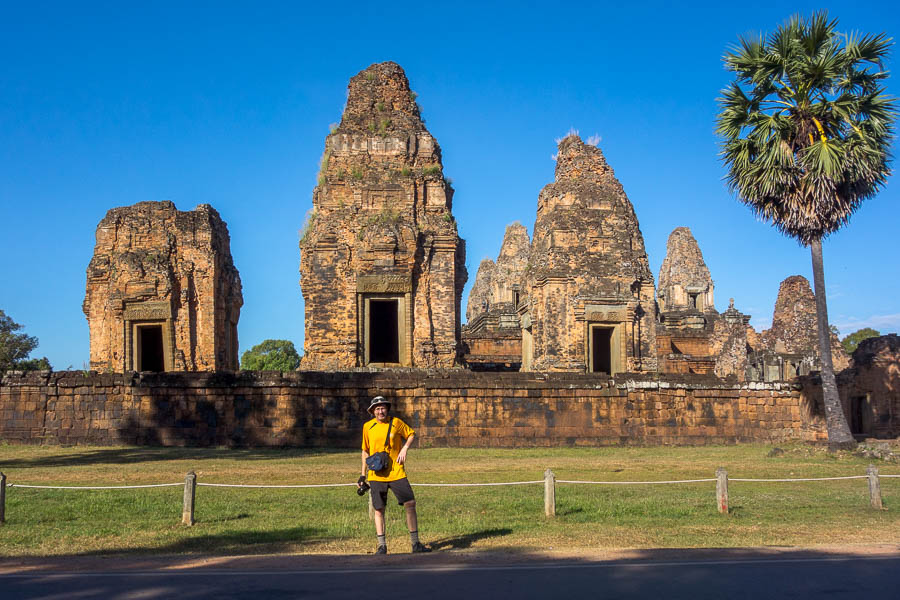
Views part way up the Lagunas Altas Trail

Lagunas Altas Trail

Lagunas Altas Trail

Lagunas Altas Trail

By the time we got back to camp we’d clocked up 25km and were pretty tired! The campground had cleared out from the day before and there were only 2 cars in the car park (not ours of course). We enjoyed the hot showers (solar heated) and the picnic tables. A guided walking tour from the (very expensive) lodge, the only accommodation besides the campsite in the park, had a late afternoon tea in the picnic shelter next to us. The guide gave us their leftover teabags and energy bars – I was very happy about this because I’d left my teabags in the car and there was no way I was walking an extra 3km to go and get them!
Fancy freebies

Crested Caracara ruling the roost at the campground

We might have stayed a third night at the West Winds Campground if it hadn’t been for our inability to drive there. I was adamant I wasn’t doing that 3km round trip for another day. So we packed up and headed further into the park to the Casa de Piedra Campground (where we’d hoped to stay) – the trailhead for the 16km Las Avilés Trail. As we were getting ready to leave the car a large bus pulled up and about 15 trail runners hopped out – they were looking very cold in their skimpy trail running outfits (it was an overcast morning). They were on a trail running holiday – running every day for a week through the area.
Las Avilés Trail

Las Avilés Trail

We did the trail in the direction it had been described to us at the Visitors’ Centre – which was the opposite direction to the trail distance markers. Just as we’d got 7km in (so the 9km marker) we got to a side creek crossing that was flowing pretty strongly. We headed upstream a fair way to try and find a dry feet crossing but no luck. Back at the original crossing point I was the guinea pig to see how the crossing would go – it was quite ‘pushy’ and would have been very difficult without walking poles. From there it was about 700m to the main river crossing where we hoped the bridge still existed!!

Unexpected deep crossing!

The trailrunners were crossing the bridge (along with much filming/photography) as we arrived. It was a one person at a time bridge, and far less substantial than the bridge we’d visited two days earlier. The section of canyon below it was quite impressive, though hard to get a good view of.

Furthest point on the Las Avilés Trail

We got a bit of light rain and the wind picked up. Unfortunately the wind meant a couple of nice lunch spots were out of the question and we ended up at sheltering behind the ruins of an old hut. It was a surprisingly undulating last 6km, and from an interest point of view we were happy with the direction we’d chosen to walk the trail.

Flowers

Back at the car mid-afternoon we headed out of the Chacabuco Sector and further south on Ruta 7 to the small town of Cochrane. Despite various claims on Google of restaurant opening hours, pizza ended up being the only dinner option.

The following day we decided we’d earned a lazy morning! We were under the impression that the Los Carpinteros Trail was a relatively easy track, so headed out to do it in the afternoon. Sadly, given how tired we were from the three previous days, it ended up being a lot harder than we were expecting. The first two-thirds of the trail felt like there was no flat – constant undulations – some of which were 100m+. That meant it was a much more interesting walk but I could have done with a “boring” track! It ended up being 3.5 hours for 9.5km, including a 20 minute break at the far end, and a few side trails on the way back.

Los Carpinteros Trail

Los Carpinteros Trail – the amazingly clear Rio Cochrane

Los Carpinteros Trail – views over a small part of Lago Cochrane

Los Carpinteros Trail

Los Carpinteros Trail – Chilean Firebush (Embothrium coccineum)

Cochrane was our turn-around point on the Carretera Austral, and now it was time for us to start heading back north towards Puerto Varas. We never could have imagined the amazing run of good weather we ended up with on our way south!

Wanting to miss the road works closures we headed off early the next morning, hoping to make it to Puerto Rio Tranquilo and the Marble Caves before the bad weather set in.

Carretera Austral – Part 2 – Chaitén to Puerto Gaudal

Having exhausted all our hiking options in Pumalin National Park we continued south along the Carraterra Austral. Our first stop for the day was a short walk (6km) to the Yelcho Glacier viewpoint in Parque Nacional Corcovado. Unfortunately the glacier was only just visible below the cloud, which lifted about 20 minutes after we left! We did get a reasonable view of it from one of the lookouts near the car park on our way back. This walk was free at the time we did it, but definitely looked like they were gearing up for having an entry booth sometime soon…

Cloud ruining our view of Ventisquero Yelcho

Then we drove past our overnight stop in Puyuhuapi to Parque Nacional Queulat and did a series of short walks. At least for this park we already knew that the longer walk we wanted to do – to the Hanging Glacier – was closed, so we were not overly disappointed. Besides three of the five walks led to glacier viewpoints! The best of those was the “City of the Caesars” walk – which also had a big climb. This park was even worse than Pumalin – it closed at 4:30pm even though there was another 4 hours of daylight available. Given how crowded it gets it just boggles the mind that they don’t let the crowd spread out over the daylight hours. We helped some touring cyclists with the gate just as we were leaving, about closing time, we really hoped for their sakes they would be allowed in!

Ventisquero Colgante – the famous hanging glacier in Queulat NP

We really enjoyed our night in Puyuhuapi. We stayed in a very cosy cabin, though given how delightful the weather was we didn’t really need the fire which had been started in anticipation of our arrival. It was a lovely evening along the shoreline and we had a great meal, and first of many Chilean Carménère.

When in Queulat then drink Queulat

Puye in garlic – a variety of galaxia – same family as canyon fish 🙂

Beautiful sunset in Puyuhuapi

The next day we had a long drive to Villa Cerro Castillo via a short walk to a waterfall (Salto El Condor), and provisioning in Coyhaique, the major town in this part of Patagonia.

Salto El Condor on our way down from the very windy, dirt section of Ruta 7 – Cuesto Queulat

Roadside scenery

I had convinced Tom that we needed to get some camping gear as the next leg of the trip was going to have too much driving if we didn’t camp. So guiltily we bought the cheapest tent we have ever owned (a 1-season tent!) & a couple of air mattresses at the Chilean equivalent of Bunnings. By the time we’d done a grocery shop, got possibly the last gas cannister in the camping store, and got the camping equipment, we were running somewhat tight on time. The accommodation I’d booked in Villa Cerro Castillo had all been done via WhatsApp and was going to be held until 6pm, and we didn’t want to lose it.

Of course, as we were driving to Villa Cerro Castillo we spotted a few Huemuls on the side of the road. Apparently there are only about 1,500 of these left in the wild, so seeing them is not that common. After about 20 minutes I had to drag Tom away so that we could get to our accom!

Here’s looking at you Huemul

As we were coming down the windy road into the valley that Villa Cerro Castillo is in we got about 10 minutes of rain. We weren’t to know at this stage but it was the only rain we got in the first 11 days of this leg!

The only rain we got in the first 11 days was at this lookout

The views of Cerro Castillo from town were pretty spectacular. We were a bit disappointed we weren’t able to do the main day walk of the area (though only a bit since it is a 1,300m ascent/descent!). At that time of year, due to the low-lying snow, it was closed unless you went with a guide. We’d tried to arrange a guide but no one was available – possibly (or not) because Villa Cerro Castillo was celebrating its 59th anniversary the weekend we were there.

As the sign says…

Since we couldn’t do the hike, and the weather was still in this wonderful high pressure pattern, we did some quick decision making for the next day. It hadn’t been on our radar at all in our planning, but we decided to drive to Puerto Ingeniero Ibáñez and take the ferry across Lago General Carrera to Chile Chico.

Once again I convinced Tom we should arrive 2 hours in advance for the ferry, since that is what the tickets said. This was even more unnecessary than the last ferry since no one else turned up until about half an hour before! So we enjoyed an empty port and did some stretching…

The ferry left exactly on time at 12pm and we disembarked around 2:15pm. We drove up to the lookout above town before hitting the X-265. It is a truly spectacular road. The conditions were better than I was expecting – the other dirt roads we’d been on up to this point at been quite rocky but this one was pretty smooth. We stopped a few times for photos – one of the most beautiful roads I’ve ever driven.

Tom aspiring to join the statues above Chile Chico

There were definitely a few sections of the road where I was very glad we didn’t meet anything coming in the other direction though! Just before Puerto Gaudal we stopped and visited a waterfall, which was quite impressive.

Top of Cascada El Maqui

Top of Cascada El Maqui

The stunning Lago General Carrera

We “splurged” on a more expensive AirBnB so we could get Wi-Fi for the night. It seemed a shame, a bit like Puyuhuapi, to only spend one night in Puerto Gaudal, but besides the beautiful scenery there wasn’t much to keep us there for longer. What we’d realised as we visited these small towns was two things; firstly they were still waking up for the season, and secondly that meant often a pizza restaurant was the only open dinner option. We were getting a bit sick of pizza or burgers so we’d hoped to visit the local pub, but it was closed when we first went past. We went back at bit later, since we had found that sometimes restaurants closed between lunch and dinner. It was still closed, so we were about to give up and go to the pizza place, when the proprietor came out and sort of invited us in. It was unclear if she actually wanted to feed us, but we had a delicious meal (Tom had a pork chop, I had a chicken leg with peas. It wasn’t what I thought I was ordering but it wasn’t pizza, so I was happy!)

Stunning sunset from Puerto Gaudal

From Puerto Gaudal it was only a short drive to rejoin Ruta 7 and continue south.

Carretera Austral – Part 1 – Pumalin NP

Our original plan had been to get to Pumalin National Park in one day, with a very early start from Puerto Varas. Instead we split the travel into two days. The first day we left Puerto Varas mid-morning, did some grocery shopping en route, took our first ferry from Caleta La Arena to Caleta Puelche, and arrived in Hornopirén mid-afternoon.

The (not so) mighty, almost brand new, Volkswagon T-Cross

Great weather to start the trip

100km down… how many hundreds more to go?

The next day I made Tom get in the queue for the ferry 2 hours in advance, which proved somewhat unnecessary. My understanding was that the ferry route from Hornopirén to Caleta Gonzalo usually runs as a bi-modal route, with two ferries split by a short drive in the middle. Information I’d read suggested that the second ferry was a smaller vessel compared to the first, so not everyone would get onto the first sailing. So I was trying to ensure we would be on the first sailing of the second ferry… except our ferry ended up just going all the way to Caleta Gonzalo!

Our ferry arriving in Hornopirén

Distances aren’t huge – but roads aren’t fast

We were quickly off the ferry and just had to find a park since our first trailhead was at the pier. Unfortunately the Cascadas trail had been shortened (now 3km?) in the previous couple of years, and the most interesting section no longer part of it. Most people probably have no idea – but if you look at old descriptions they say things like “Parts of the trail are made by going up and down wooden ladders and using ropes to get over the rocks along the way”. The powers that be clearly decided this was all too dodgy as now the trail is much shorter and doesn’t involve any sketchy river crossings but ends at a very civilised wooden platform.

The (new) end of the Cascadas trail

We felt quite at home here – the vegetation could have been NZ or Tassie – until you ran across the Nalcas!

Completely surrounded by green!

Our second walk was the Los Alerces Trail (1.4km) which leads you to some impressive big trees. Fortunately by doing the Cascadas trail we almost missed the bus loads of passengers that had been taken here straight from the ferry.

3000-year old Larches (well not sure if this one is but some of them were that old)

Our last walk for the day was the Lago Negro Trail (2.2km). I was pretty disappointed we didn’t have any camping equipment with us at this point. The trail starts from one of the camp grounds and it was a beautiful evening. We were going to have to drive back the next day to do some of the other walks, so it would have saved us a couple of hours of driving. But, with no tent, and a cabin booked in Chaitén, there wasn’t really any option.

End of the Lago Negro Trail

The next day we headed back up the road almost back to Caleta Gonzalo to walk the longer Laguna Tronador trail. As was to become a bit of a theme, it had some “peligro” (“danger”) tape across the trailhead. We were pretty annoyed since we’d driven an hour to get there, and there had been no indication on the official websites about any closures. There was no information besides the tape so we decided to start off on it, we figured we were experienced enough walkers that we would be able to assess whether the track was dangerous. It was a pretty steady ascent, sometimes up ladders, alongside a canyon at times, to get to the underwhelming Volcan Michinmahuida lookout.

I hadn’t appreciated when looking at the map that the route went up to the lookout and then down to the laguna. We continued down until we got to a nice lookout. I questioned whether there was value in continuing on down to the lake but Tom wanted to, so we went on. In retrospect it wasn’t worth it – once upon a time there was camping at the lake but I’m not sure how many years its been since it was maintained. The camping area was completely overgrown and we ended up heading back up to the half-way lookout for morning tea. That section definitely had some rotten stuff and you needed to be careful where you walked on some of the raised walkways.

Views of Laguna Tronador

From there we backtracked up the ladders to the high point, and then down the ladders back to the road. Surprisingly (or not) we encountered a few other hikers on our way down, who like us had decided they could assess the danger for themselves. I think the route would have been unpleasant/maybe a bit precarious in rain – which in November is common – however, it had been (unseasonably) dry for over a week. I tend to think it was more the park didn’t have the flexibility to adjust its opening schedule based on the actual weather.

Negotiating slightly dodgy ladders and low-hanging trees on the Laguna Tronador trail.

One of the couples we’d bumped into said they’d ended up there because the Cascadas Escondidas Trail (different from the Cascadas Trail) was closed for maintenance. We had hoped to do that trail next so we figured we’d go have a look. Unfortunately that had very official signage notifying of its closure and we didn’t feel we could justify ignoring that, so instead we had to settle for having lunch at a roadside lookout.

We’d also discovered that it was a good thing we hadn’t planned on camping because most of the campsites don’t open until mid-December – not that you’d be able to find that on any of the websites! (Though maybe my feedback was taken into account as I see they are now updated)

Lunch at this shabby lookout overlooking Lago Negro

After lunch we continued back towards Chaitén to the Volcan Chaitén Trail. The car park at the trail head was packed! Not content with having put +/-500m vertical in our legs in the morning, we did another +/-600m (+?) on the Volcan Chaitén Trail in the afternoon. The trail was brutal being pretty much straight-up (650m ascent in 2.2km), at times quite steep. The good news was that everyone was on their way down, and by the time we got to the top there were only 2 other people there. We enjoyed the glorious views and the solitude (and rested our aching quads!) before heading back down.

Tom nearing the end of the Volcan Chaitén trail

Views from the end of Volcan Chaitén trail

Volcan Chaitén steaming behind me & Tom

Our last stop for the day was Playa (Beach) Santa Barbara. We were hoping to see dolphins here but the water was so flat it probably wouldn’t have been enough fun for them. We did acquire a dog for a walk along the beach (of course).

Beautiful Playa Santa Barbara

Dogs of South America. This one just wanted company for a beach walk.

The next day we headed south to the El Amarillo Sector of the park. We were a bit confused when we got to the park entry and it was chained shut – with a sign saying it was closed “Opening hours 8:30am-5pm”* – given it was 8:50am. Eventually we worked out that there was an admin office a couple of hundred metres back down the road. The ranger there assured us the park was open (and hurriedly sent her offsider to go and unlock the chain!). Surprise, surprise, the trail we’d planned on doing (El Ventisquero) wasn’t open for the season yet, so we had to settle on two other shorter walks.

Another glorious day

A couple of German backpackers turned up at the office as we were getting our briefing, and it was clear they didn’t have a car. I offered them a lift into the park which they gratefully accepted (otherwise it was a 5km walk in to the trailhead). Though that meant we awkwardly kept overtaking each other as we both tackled the El Mirador trail first. We got views over the glacier we’d hoped to walk to as our consolation.

Views over Glacier Michinmahuida from the El Mirador Trail

Giant rhubarb – actually Nalca

After lunch, in one of the few picnic areas we’d encountered on the trip, we did the Darwin’s Frog Trail. No Darwin’s Frogs spotted. And to be honest the trail was quite boring. Back in Chaiten we tracked down an ice cream store – but I rolled the dice on the flavour (since it was in Spanish). I thought it looked like I was ordering something with chocolate chips in it – disappointingly turned out to be passionfruit pips 🙁

Our next challenge for the day was getting our first petrol. All petrol in Chile is pumped by attendants. We had no idea how to open the fuel cap – fortunately the attendant was able to eventually communicate to us we needed to unlock the doors and that would allow her to open it. We’d already had to google how to open the bonnet of the car (not that I can recall now why we needed to get into the engine) – turned out a nondescript lever was the answer. I thought Volkswagons were supposed to be user friendly!?

Unfortunately I got my first (likely) food poisoning of the trip that night. I’d had salmon & mash at a local restaurant and it all came back up again pretty quickly. Fortunately once it was out that was the end of it. I blame the salmon. Tom had gone for the local seafood stew and was fine.

Having done 7 of the 12 walks in Pumalin National Park (of which only 6 were open) it was time to head south. Pumalin is unique in the Chilean National Parks that it doesn’t have entry fees – we didn’t realise how good this was until we got nickel and dimed at every park (and attraction) after that. I assume this is something to do with the arrangements that were agreed when the land was donated to the Chilean government by Douglas Tompkins.

*Also, let’s mention how ridiculous it is to have a park closing at 5pm when it isn’t getting dark until 8pm or later…

1 2 3 4