Galapagos – Oct 2025

After the Amazon, due to flight schedules, we had a night the highly dangerous city of Guayaquil. Regarding Guayaquil the Australian Government advised to “reconsider your need to travel due to high level of gang-related crime and threat of kidnapping.” I shouldn’t joke about it – and we certainly didn’t court danger. We had one of only a couple of nights for the whole trip in a proper hotel, with a shuttle to and from the airport, and our only excursion was to the large mall across the road.

Having survived that we then flew on to the Galapagos. We got our first iguana while we were walking from the plane to the airport terminal. Our next animal encounter was in the luggage collection area – we all had to stand by and watch two dogs sniff everyone’s luggage before we were allowed to collect it. It’s then a bit of a convoluted process to get to main town of Puerto Ayora – a bus to the canal, then a boat across the canal, then a cab! All to be paid in cash.

Waiting for the dogs to sniff our luggage

We had two nights in Puerto Ayora where it became obvious how easy the wildlife was going to be to spot – sea lions in cycle lanes and marine iguanas on the footpath. Coming from the jungle where binoculars were critical as everything was at quite a distance this was a welcome change!

Cycle hazard

Tom surrounded by Candelabra & Opuntia Cactus on our way to Tortuga Bay

Following our time in Puerto Ayora we did an 8-day cruise on a boat with 13 passengers (including us), a guide and about 7 crew, and visited 6 different islands. Across the Galapagos there are maybe 50 sites over about 14 islands that the boats can visit, and all the boats do a 21 day loop, visiting 2 sites a day. There’s a maximum of 4 boats at any one site at a time – though we were often the only boat at our sites (we were there in the off-season if Galapagos has such a thing). At most sites we would do a couple of activities – depending on the site, walking, snorkelling, a ride in an inflatable boat, or kayaking.

Santa Cruz Highlands: Giant Tortoise

Santa Cruz Highlands: How many giant tortoise can you spot in this photos? (There’s 6)

Santa Cruz Highlands: Giant tortoise poo – quite big!

Santa Cruz Highlands: Tom in a lava tunnel

Santa Cruz Highlands: Another Galapagos adaptation?

Isabela Las Tintoreras: Marine iguanas overseeing the white-tip sharks

Isabela Las Tintoreras: Amazing access to wildlife! White-tip shark nursery channel

Isabela: Villamil Flamingo Lake

Isabela Is.

Isabela: Blue-footed booby

Isabela: Sealions were always entertaining – even when not moving!

Typical snacks on return to the boat from an excursion

We had the fun of the boat generator breaking down on day 3. So we were without power for about 12 hours while a speedboat was dispatched with parts and engineer. No power meant the kitchen couldn’t cook anything (sandwiches for dinner), our below deck windowless room had no light or aircon (so most of the below deck guests slept outside or in the guest lounge that night), no showers (so sleeping was a bit sticky as we’d been swimming that afternoon). Fortunately it got resolved during the night! And the engineer stuck around on board in case anything else went wrong – and got his first ever visit to Genovesa as a bonus.

Isabela – Moreno Point: Cero Azul shield volcano

Isabela – Moreno Point: Here’s looking at you! Pelican & flightless cormorants

Isabela – Urbina Bay: The far more illusive land iguanas (relative to marine iguanas!)

Isabela: Tom with Darwin Lake and Tagus Cove

Fernandina – Espinosa Point: What’s a pile of marine iguanas called? Our boat in the background

Fernandina – Espinosa Point: The very colourful Sally Lightfoot crab

Fernandina – Espinosa Point: Lava cactus – endemic to the Galapagos

Fernandina – Espinosa Point: Tom and the lava cacti

Santiago – Egas Port: Sealions – mum & pup. We saw pups most days – so much fun to watch.

Other than tropical fish, things we spotted while snorkelling included: sea lions, green sea turtles, penguins, flightless cormorants, pelicans, sharks and rays. Most of these came within a metre of us at one time or another while we were swimming!

Santiago – Egas Port: Blowhole excitement on Santiago Is.

Santiago – Egas Port: Galapagos Fur Seal – it launched itself into the water from that spot eventually.

Tom enjoying a sunset from the back of the boat.

While we did see a lot of sea-life, the thing we saw the most of was the birds. Variously spotted from panga (dinghy) rides, walks or kayaks. Genovesa Island was an absolute highlight. We were there in breeding season and the birds were thick on the ground – literally. They were all around, metres away, and you had to watch your step, as there would regularly be adults or chicks on the path. The frigatebirds were also impressive – and huge, like a mini-pterodactyl. They don’t dive for fish themselves, but they will chase other birds who have caught fish. We watched two of them catch a tropicbird in flight by the tail and shake it to get its fish!

Nazca Booby on Genovesa Is.

Red-footed Booby on Genevesa Is.

Nazca Booby – parent & “baby” (it eventually ends up bigger than the parents as they feed it so much they end up in poor condition)

Juvenile Lava Gull

Wading through the mangroves to see nesting birds

North Seymour: Male Magnificent Frigate birds – non-displaying and displaying!

Sea life didn’t really agree with me, while the wildlife was outstanding, the rest of the time on the boat was more a matter of endurance. With the benefit of hindsight I now understand a lot more about stabilisers and why you might want them on a boat. We had chosen a small boat deliberately, and don’t regret that choice at all, but a future trip would be on a catamaran!

I would be remiss not to include a Galapagos Finch photo – while waiting for our flight out at the airport!

Yasuni National Park – Sep 2025

We had a few days in Quito between the Huayhuash Circuit and heading into “the Amazon”. The Amazon basin is obviously a huge area and there are many different places you can visit it. As we were trying to fill some time between Northern Peru and the Galapagos we’d chosen to go to Yasuni National Park in the East of Ecuador. Specifically to a community-run lodge situated on the Tiputini River – one of the many tributaries of the Amazon River.

Our trip didn’t start so well when there was no one to meet us at Coca airport. Eventually someone turned up – who didn’t have much English and had no official signage – but at least he said the name of the lodge. We were taken to a local restaurant in Coca where breakfast was a whole fish with plantain patties. Eventually Bill, our guide, who was meant to have met us at the airport, turned up – looking very much like he’d just rolled out of bed.

Once we’d had breakfast we were offered grilled grubs (chontacuro) on a skewer – a local delicacy apparently. Like contestants on Survivor we dutifully ate them, but I wasn’t likely to be going back for more. Then it was time for a 2 hour drive to a nondescript put-in point on the River Tiputini.

The put-in point

Us, our luggage, food and water were all loaded on the river boat. Then we were in the hands of our boat driver to guide us around the obstacles and to our lodge an hour or so downstream. Home for the next six nights was a canvas style safari tent with a big thatch roof over the top. The bathroom was out the back of the tent – open to the bugs but the thatch covered it from any rain.

Some of the lodge buildings from the river

We’d notionally signed up to 7 day tour involving hiking, kayaking and camping. Of course, everything was subject to the weather and the program that we’d seen on the website was more of a guideline. As it turned out, the program probably hadn’t been updated for some time. For example, it had included some cultural experiences (which we were quite happy to miss out on), which were no longer possible because the house we were meant to visit hadn’t been occupied for several years.

We had our first hike in the late afternoon of our first day. We were kitted out with gumboots and headed off with Bill into the jungle (as it turned out we were the only guests for the first 5 days so had Bill to ourselves). We learnt pretty quickly that 1) it was very humid, 2) it’s pretty hard to spot wildlife in the jungle. Good thing that Bill knew lots of stuff about the plants and trees since there’s not always much else to talk about!

Bill looking for animals

There was a fair bit of rain while we where there, some of which slightly delayed our longest hike the next morning. We ended up heading out in the drizzle – but we remained surprisingly dry due to the thickness of the canopy.

Jungle infrastructure

Post lunch was always rest time, and then we would generally have a late afternoon activity. On day 2 it was a boat trip down the river – the skies opened up just after we left – fortunately the boat had a roof! The rain didn’t last long and we saw, what was probably the highlight of the trip (though we didn’t realise it at the time), two capybaras running into the river. On most outings we saw a few monkeys and of course plenty of birds – my favourite being a yellow-headed vulture. I left the animal photography to Tom as they were generally a fair distance away.

Pouring down – at least we have a roof!

Unfortunately I’d come in with the remains of a cold and as is often the way I had a cough which lingered on. I’d hoped the moist, sea-level air would help settle it down but no luck. So, my overall enjoyment of the trip was definitely impacted by my poor sleep due to coughing… and the large amount of insect bites we acquired on day 3. The packing list for the trip had listed “repellent (no spray)” so we’d brought along gel-based repellent. I’m still not clear why spray wasn’t recommended as it became clear we really needed to have covered our bodies, including under our clothes, with repellent.

One of the bigger trees we saw

The morning of day 3 had us visiting a parrot clay lick. We waited in the hide for a couple of hours and the parrots very slowly started making their way down. Just as it felt like they were getting a bit of confidence to move in larger numbers a hawk arrived and they all scattered. So that was the end of that. But, we suspect, while we’d been sitting there not moving for 2 hours, some other things had been moving. We ended up covered in mite bites – in some pretty unpleasant places – all underneath our clothing.

The afternoon of day 3 we went looking for anacondas in the lagoon across the river from the lodge. It was very peaceful, but no anacondas spotted.

Hoping for anaconda on the lagoon

Our morning hike on day 4 had us stalking a tapir for a long time – plenty of footprints, but we never found it. The plan had been to go camping on night 4 but a huge thunderstorm broke mid-afternoon and continual rain into the evening nixed that plan.

Tom relaxing in the main dining room/lounge

The butterflies liked anything salty (so therefore anything sweaty)

Instead we convinced Bill that we wanted to go kayaking (since that had been on the program!), and so we agreed we would kayak to the intended campsite the next morning. Tom & I had a double-inflatable and Bill was in a single – which perhaps had a leak which might have explained Bill’s reluctance? There was enough current in the river that we didn’t have to do much paddling.

Kayaking down the Rio Tiputini

Before we knew it we were at “camp”. It was a pretty sorry sight (& site!). The river had been dropping over the time we’d been at the lodge and all the banks were very muddy. Our crew chopped a camp into the vegetation and got palm leaves to put down as a natural groundsheet to avoid the tent area getting (more) muddy. I almost told them not to worry about it and we’d just head back to the lodge it was that unappealing (since all the gear had come down on the river boat, so it was all entirely contrived as a camping experience). But, Tom reckoned we should roll with it, so we did.

Possibly the muddiest campsite I’ve ever had

So many beautiful butterflies (and this isn’t even a good representation)

Fortunately rather than spending much time at camp we spent most of the day fishing. Before lunch we headed a bit upstream and Bill and the other crew managed to catch 4 catfish in pretty quick succession. Tom & I didn’t have much luck though my bait did get taken – apparently by a piraƱa (piranha) – based on the state of the bait. I don’t know that I’ve ever had fresher fish for lunch? We were saddened to learn that the Napo River, which is the larger river to the north, is now basically dead. Our guide said that the local people no longer fish from it, as there has been so much pollution from the oil industry.

Tom throwing out a line

Unfortunately the afternoon’s fishing was far less productive – despite trying 5 different spots. The only thing that got caught was a stingray. The local people who run the lodge no longer take stingray from the river, so it was quite the effort to get the hook out of the ray and throw it back in, while avoiding the stinger.

The stingray before it was unhooked and thrown back in

Our camping mattress had a slow leak – fortunately sufficiently slow that we got through the night without getting to the ground. I think the crew were as keen as us to get out of the mudfest, so we were on our way pretty efficiently after breakfast the next morning. Bill, Tom & I got dropped off at a track which followed the ridges back to the lodge. This was a nice change from walking on the valley floors as we got some views and it was less stifling. The highlights from that walk were a jaguar footprint and a poison tree frog.

Some other guests arrived that afternoon so we had a shared boat trip with a Polish couple & Bill as our final activity. Then at dinner another Aussie guy, who I’m guessing had paid for a private guide, also appeared (with his guide). Tom & I were pretty happy to be having dinner with a few other people as we’d just been dining with Bill every night to that point. Though we had to work for it – initially we’d been set up as a table for 2 and everyone else was on another table!

Colourful fungi

The guests that arrived that day had been taken a long way round as there were protests blocking the road to/from the airport. There was some concern that these would still be in place in the morning when we headed back – that meant getting up an hour earlier than expected. It had started pouring during the night, and it was still pouring as we scurried to the boat in the dark at 5am. The skill of our boat driver was pretty incredible – we were going upstream in the dark with pouring rain. He must just know the river so well to have been able to avoid all the snags – the river had dropped over 2m in the time we’d been there so there were even more snags than when we’d arrived. Fortunately (or not given our early wake up?) the protests were not a factor and we had a straightforward run back to Coca airport, so we could get on our way to the Galapagos.

The (4-day) Whanganui Journey (26-30 Dec 2019)

In September the NSW National Parks started burning. Tom optimistically thought we might be able to go canyoning in Wollemi after Christmas. As the weeks passed the burning spread I became convinced that was not going to be an option. In fact I didn’t think anywhere in NSW was going to be an option. Finally Tom agreed that it might be more sensible to extend our trip in NZ, since it seemed NZ was unlikely to be on fire. It might be flooded… but at least we wouldn’t be facing hazardous air quality. So a week before we were due to leave we re-booked our flights and found something to do that we could access (relatively) easily from Wellington and didn’t require Tom’s feet to have survived the Wangapeka Track. With limited time and little arm muscle we settled on 4 days of the Whanganui Journey Great “Walk”.

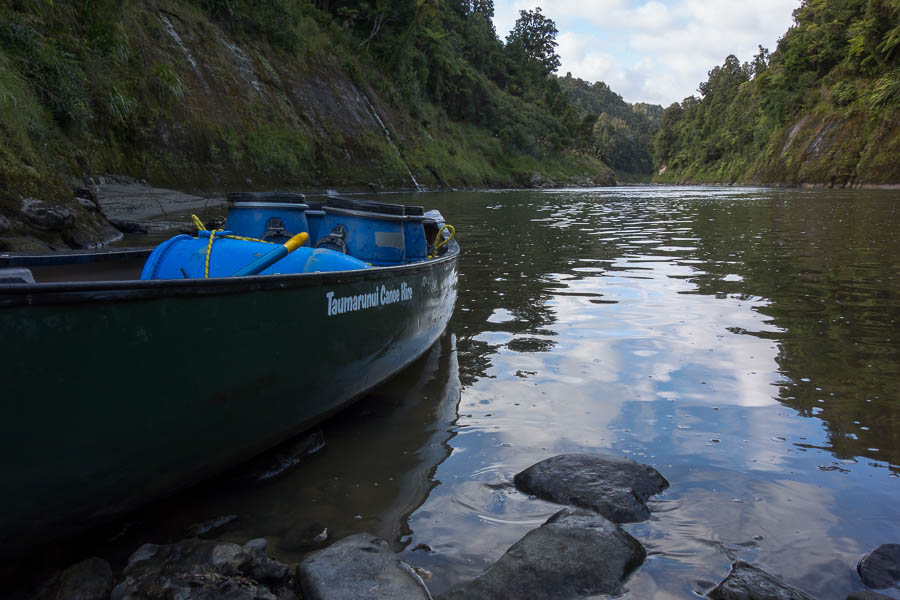
Boxing Day was an early start on the Intercity bus from Wellington to Taumarunui. We then sat round in Taumaranui for longer than planned (our lift forgot us)… fortunately we both had fat books with us! Eventually we made it to the Taumarunui Canoe Hire property where we were promptly processed. It was a very busy day with 60 people going on to the river the following day.

DSC01781

Camp the night before we start

It was an early start, with the safety briefing at 6:45am. So in line with much of the trip we were up at 5:30am to get ready. Fortified by lattes we got through the safety briefing (“the canoe will never tip over, it’s always your fault”) and driven out to Ohinepane.
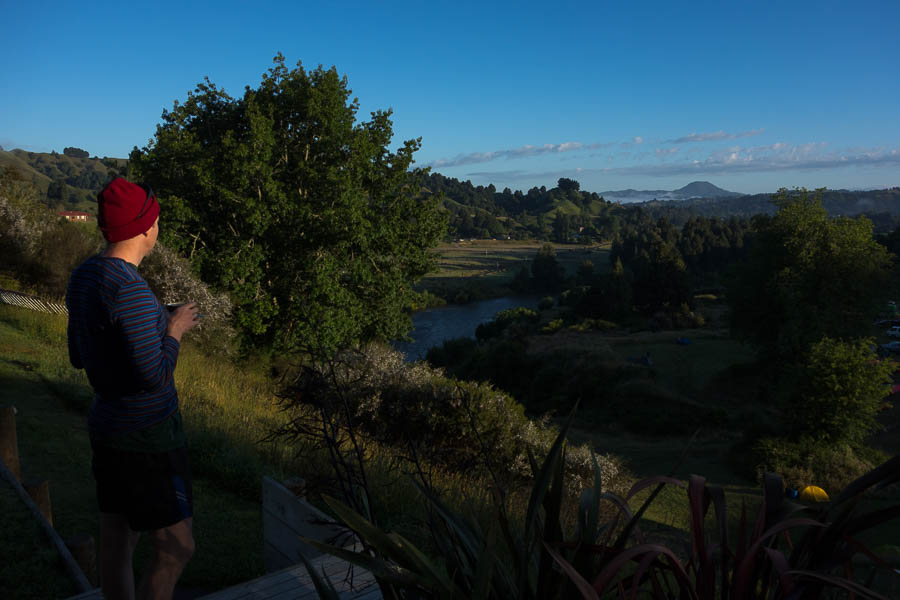
DSC01782

Beautiful views, with coffee, before the safety briefing

There were 8 others (another couple, and a group of 6) starting with us. We did our test paddle around and got the seal of approval so Tom & I were the first to leave. There was a reasonable rapid almost immediately and everyone else was watching… no pressure!
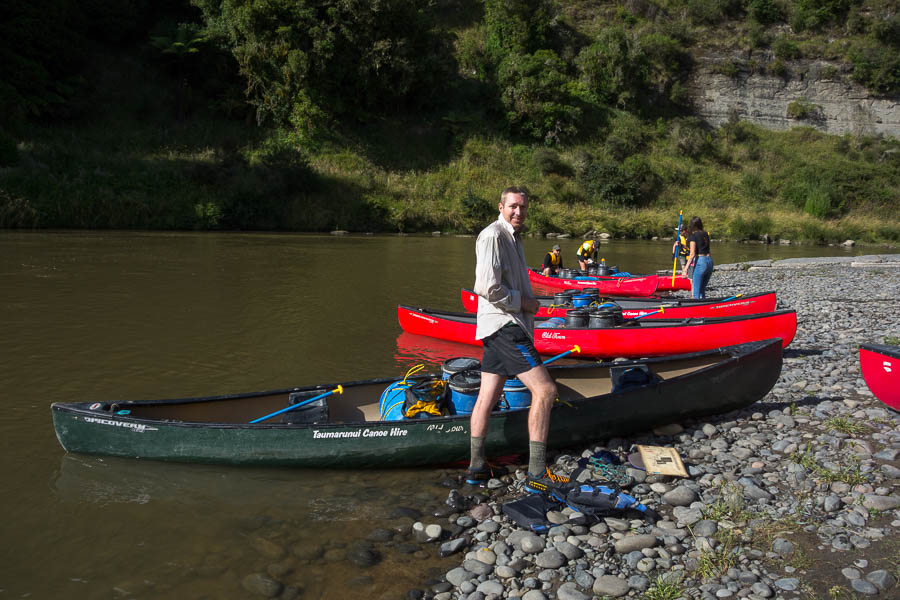
DSC01784

Ready to launch!

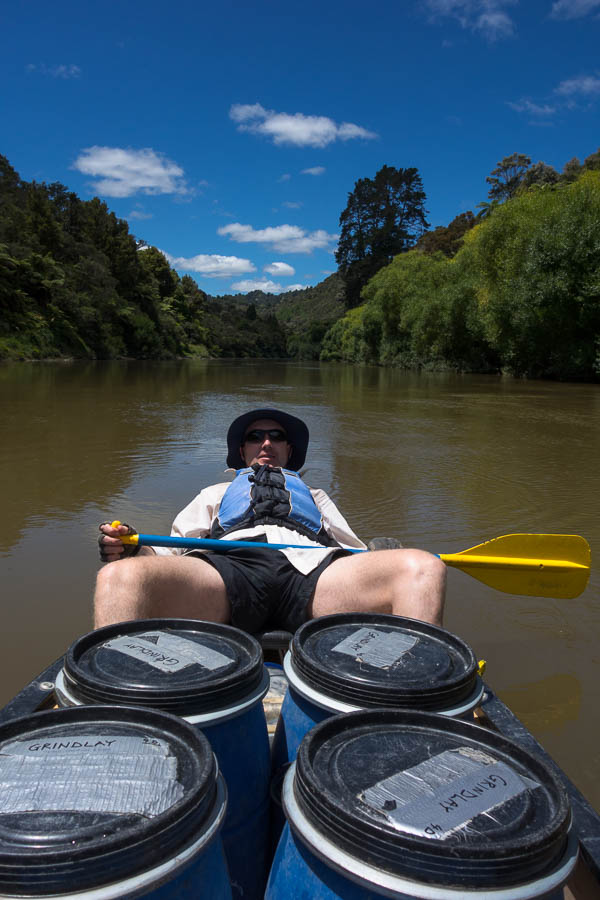
Successfully through the first (and probably most difficult one of the day) rapid we were carried down the river at a fair clip. Groups that had started the day before had been held back till 11am as the river was too high and we were still benefiting from some of that height.
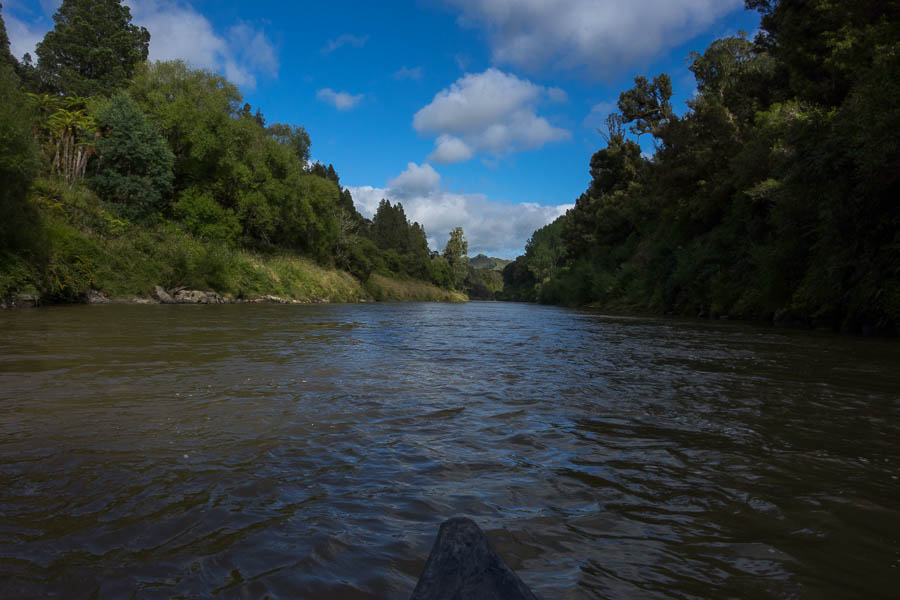
DSC01785

On our way

While there are campsites every couple of hours along the route, which make convenient stops, we decided to have lunch at Ohura Falls. There were waterfalls the whole way down the river, but they were generally of a vertical skinny nature.
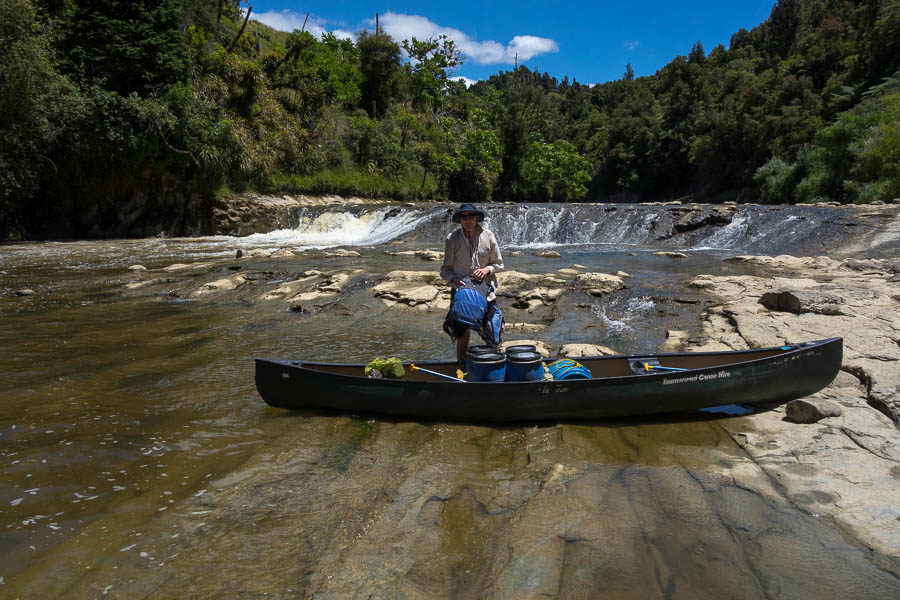
DSC01795

Lunch at Ohura Falls on Day 1

DSC01797

Working hard

The campsite at Whakahoro is a 400m walk, with 50m vertical, from the canoe tie-up area. It doesn’t sound like much, but when you have to lug 5 barrels up I assure you it’s not much fun. Not surprising then we were ready for a swim after that!
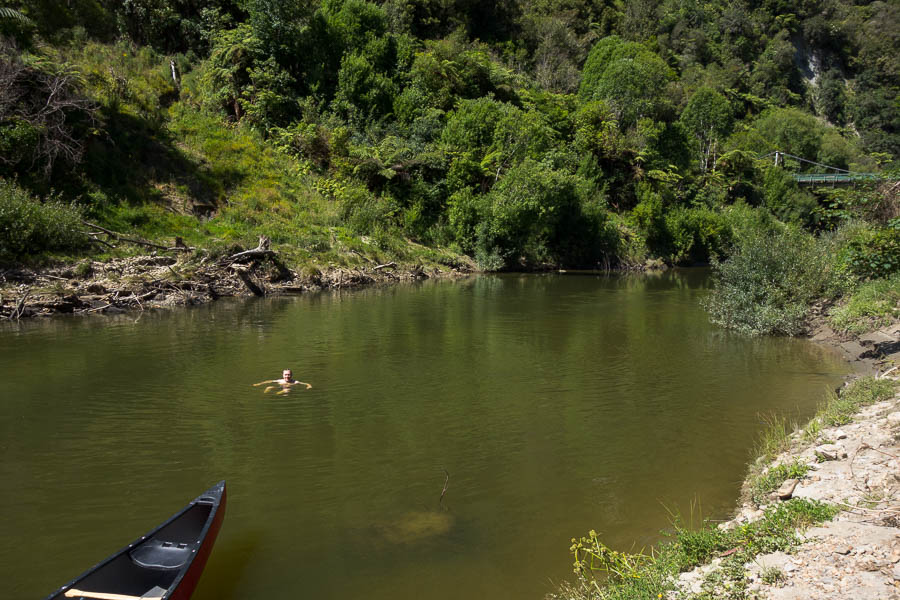
DSC01805

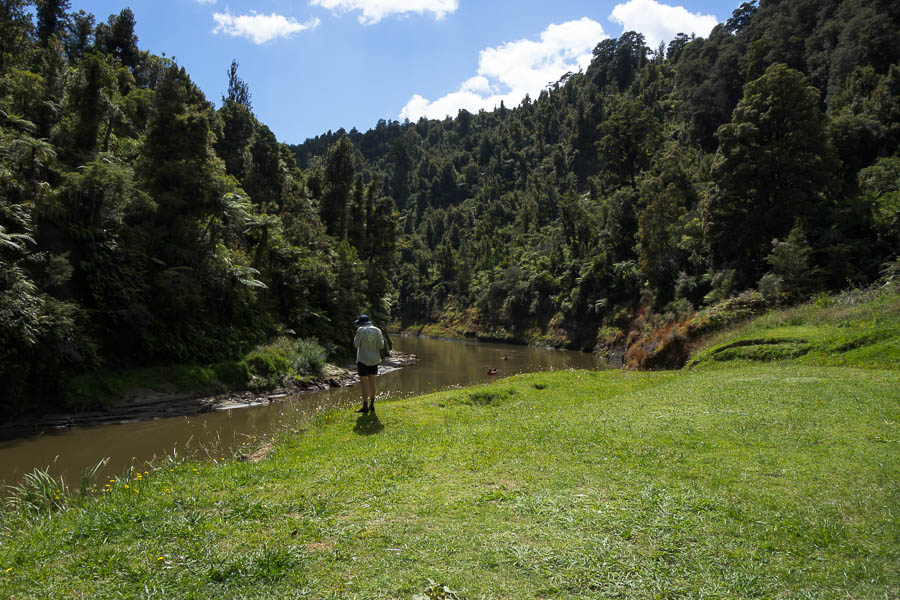
Swim below Whakahoro campsite at the end of Day 1

It was pretty windy at the campsite and our tent which had been saturated from condensation the night before was soon dry. There were a few Te Araroa walkers who were starting on the river the following day so we heard a bit about their experiences on the trail that evening.
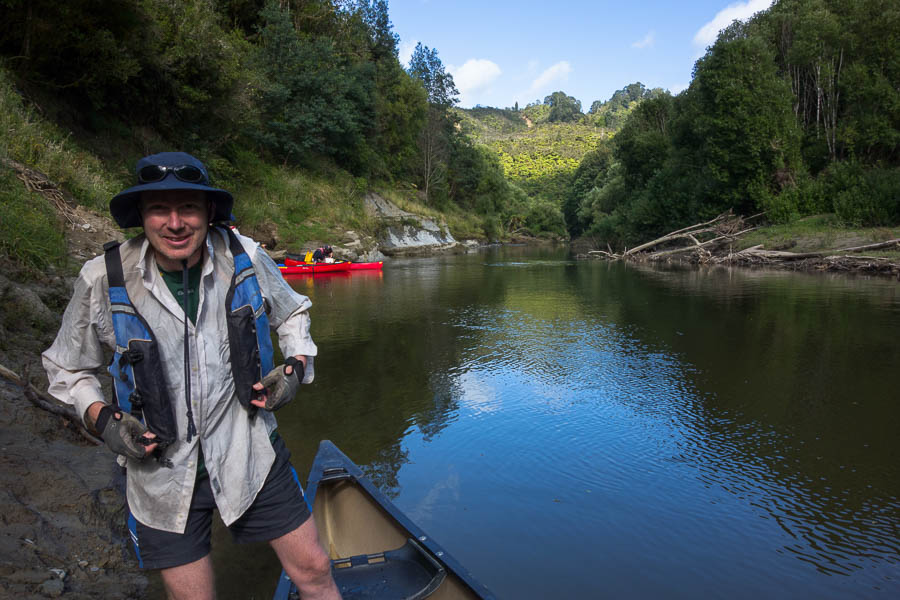
DSC01808

Getting ready to go on Day 2

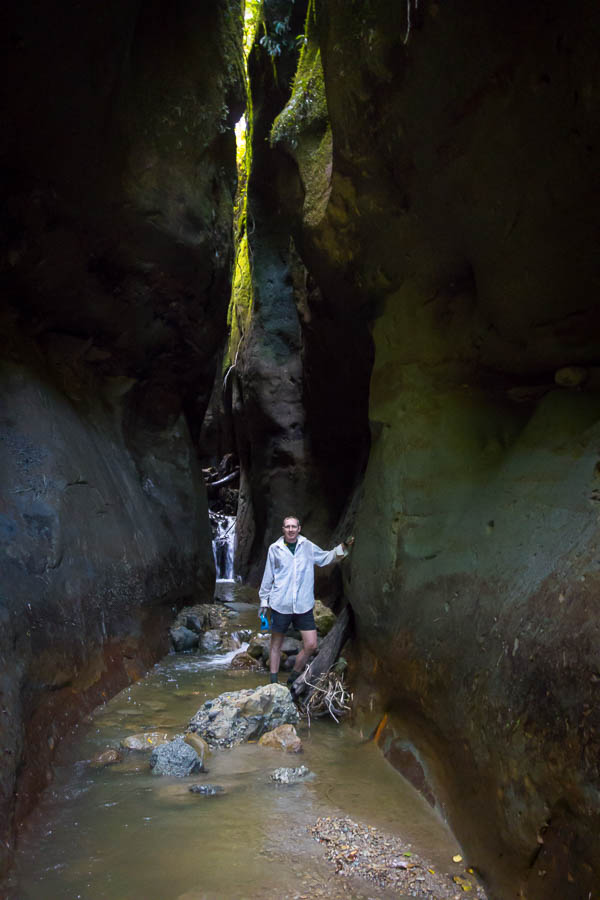
As we’d left our bookings till fairly late in the piece we hadn’t been able to stay at the ‘recommended’ campsite on night 2. Instead of John Coull we were headed for Ohaurora, two hours earlier. Subsequently we weren’t in any particular hurry on day 2. Unfortunately there was a bit of headwind and we had to work pretty hard rather than just drifting with the river. We had a stop early on to explore one of the many side creeks, which turned out to be a reasonable canyon.
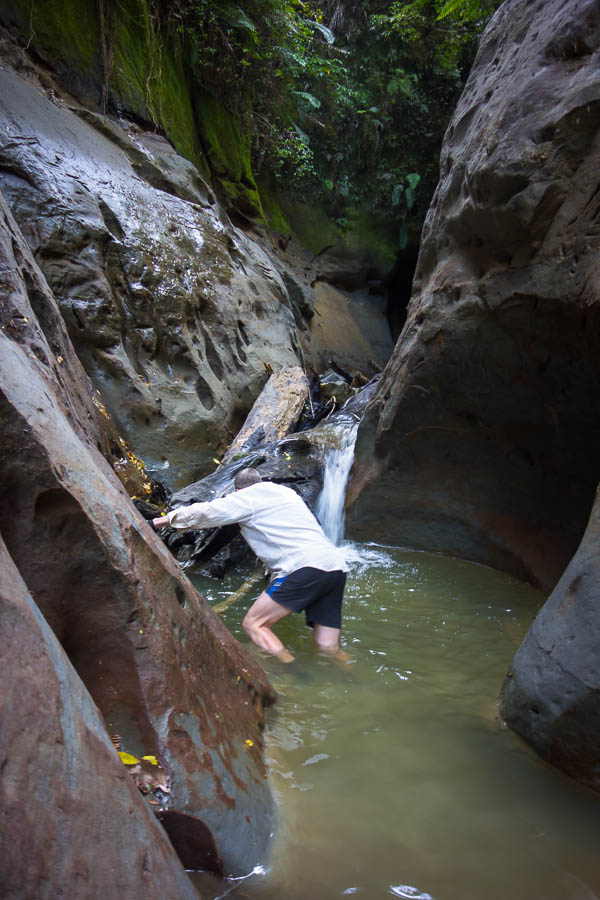
DSC01812

Oh look we found a canyon!

DSC01815

The man in his element

DSC01820

Morning tea stop at Mangapapa Day 2

My willingness to stop for further canyon exploration was muted with the effort with the headwind. I was quite happy just to get to camp – the first there – at 2:30pm and not have to paddle any more. Since we were first we got the choice of the campsites – a lovely spot with river views slightly removed from the main grassy area. The next couple arrived about an hour later, as they were choosing their spot, I realised it was Bruce who I had played Ultimate with back in 2001. Small world indeed! Though I would have been disappointed if we hadn’t bumped into someone we knew on the trip – these sorts of things always seem to happen.
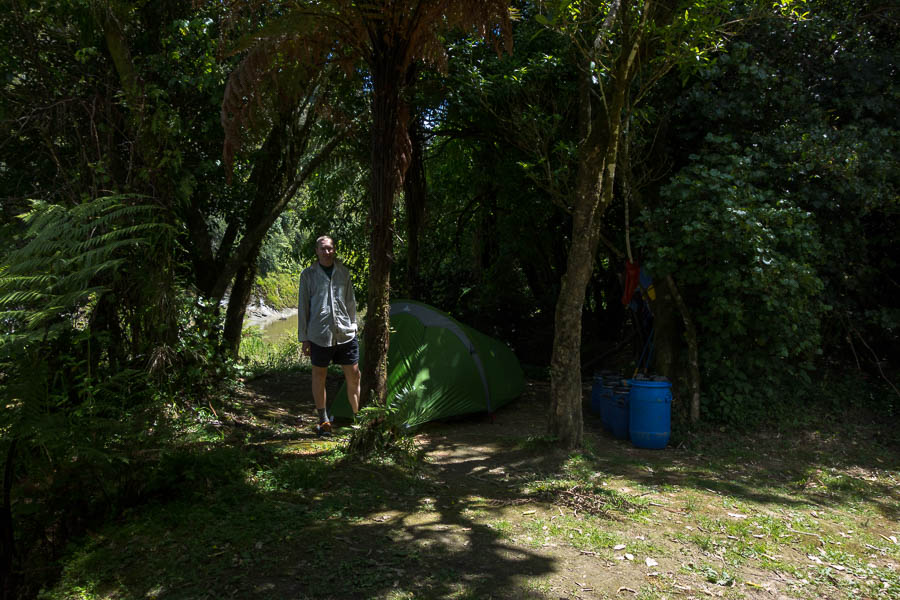
DSC01823

The prime site at Ohaurora Campsite night 2

With our early camp on day 2 we had a long day 3. We got up at 5:30am and were paddling by 7am. When we arrived at John Coull there were groups who hadn’t left yet – that was even with a couple of stops for canyon exploration.
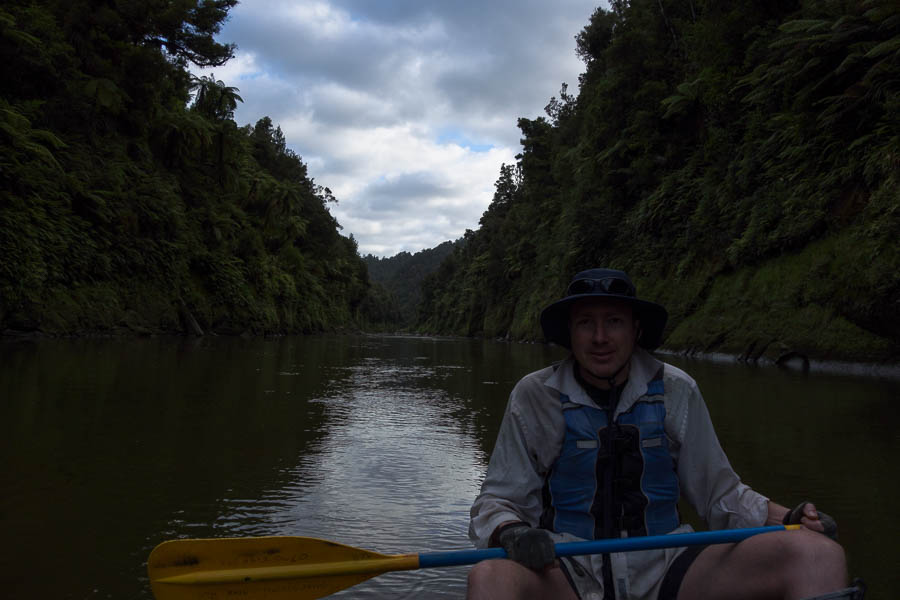
DSC01829

Here we go again Day 3

DSC01830

Pull off for more canyon exploration

DSC01832

Canyon!

DSC01834

What is up here?

Unfortunately we left John Coull just ahead of the group we termed the “flotilla” since there were 16 of them (8 canoes). These arrived at Mangawaiiti just after we did for morning tea. We got away before them but felt compelled to paddle a bit harder than we might of (no wind today) to keep separated from them.

DSC01840

Morning tea at Mangawaiiti campsite Day 4

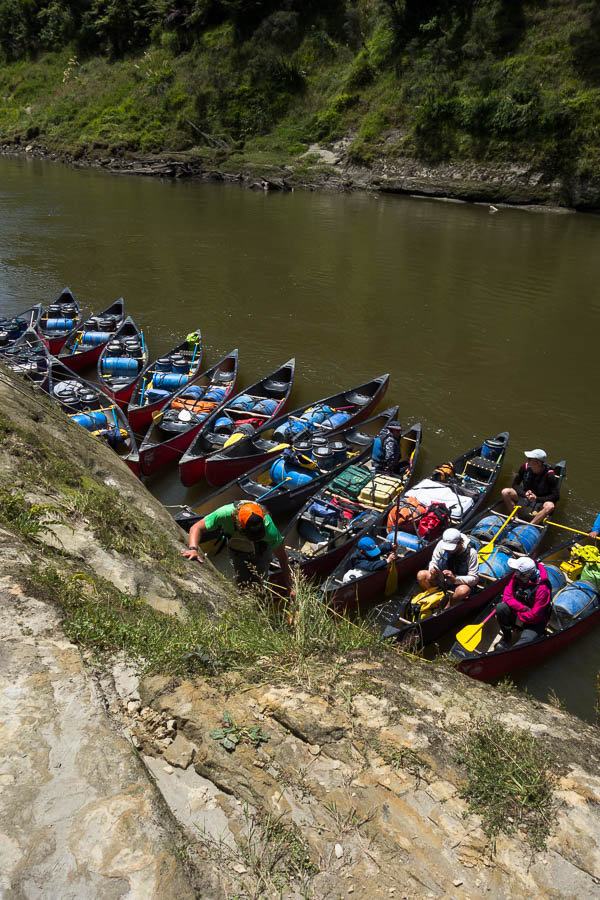
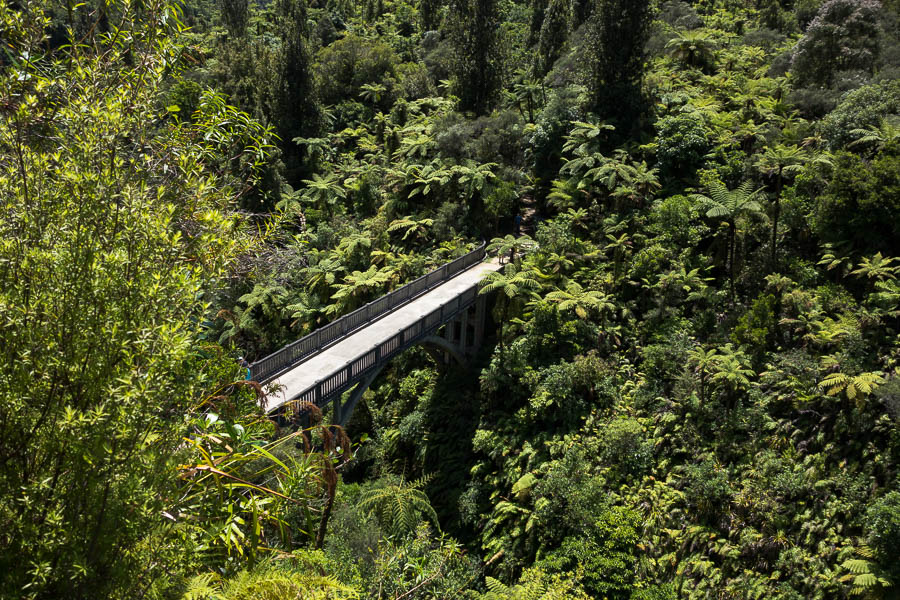
Fortunately I’d just managed to retrieve lunch from our barrel at Mangapurua before the canoe got bumped out of the way by the arrival of the flotilla. We headed up the hill on the 40 minute walk to the Bridge to Nowhere.
DSC01841

Peak hour at Mangapurua!!

We seemed to have timed things fairly well. Despite seeing hoards of people on the track by the time we got to the Bridge we had it almost to ourselves.
DSC01842

I’m on a bridge to nowhere….

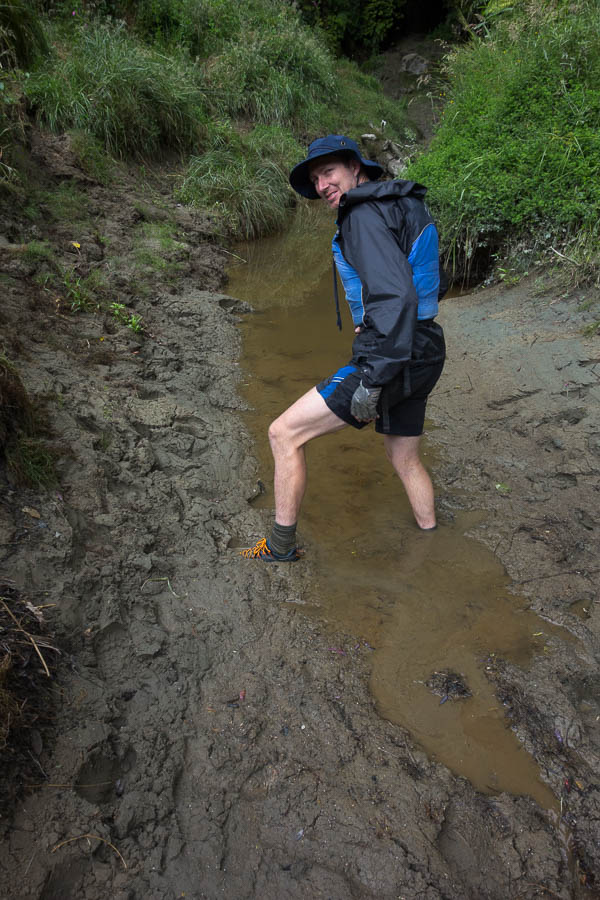
We stopped for more canyon exploration – the wind and jet boats were causing a bit of chop so we decided the boat couldn’t be left by itself. Tom went off exploring. I wasn’t that keen but he insisted it was worth it. I got to a section where I needed both hands and was umming and aahing about pushing on, but Tom was waving at me to keep going. So abandoning the camera I did. Just as well – it was the most impressive canyon of the trip.

DSC01848

Best canyon of the trip… but I had to leave my camera here as I needed my hands

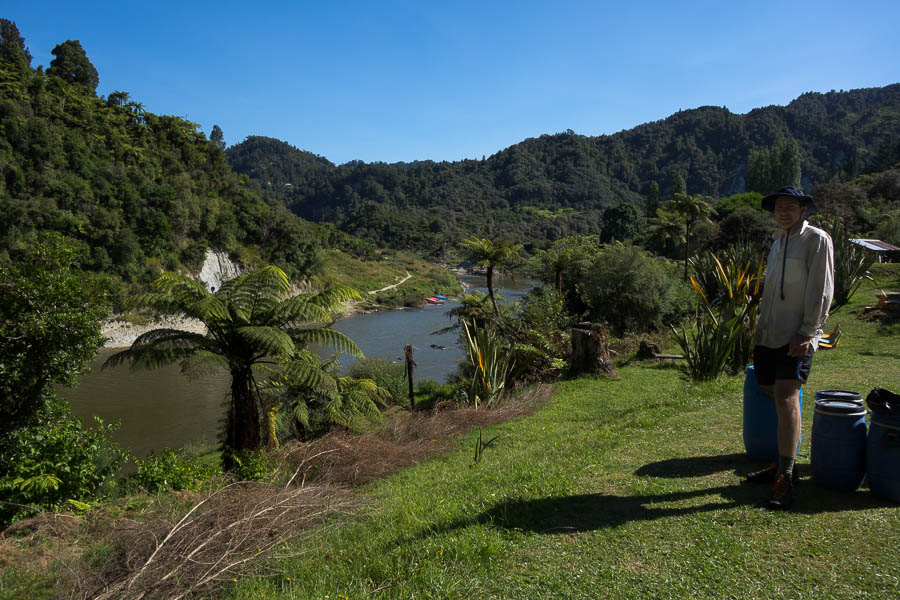
It had been a long day, with the canyon side-trips, the walk to the Bridge to Nowhere and several hours of paddling, we didn’t get to camp till 5pm (from a 7am start). The campsite at Ramanui was busy, and I was very glad to have the owner drive our barrels up to the site on his quad bike. The flotilla arrived not long afterwards and we ended up camped in the midst of them. However, despite the crowds it was a very scenic spot and I enjoyed sitting on the grass eating cheese and biccies and finishing our port.
DSC01849

Very scenic (if packed) campsite at Ramanui night 3

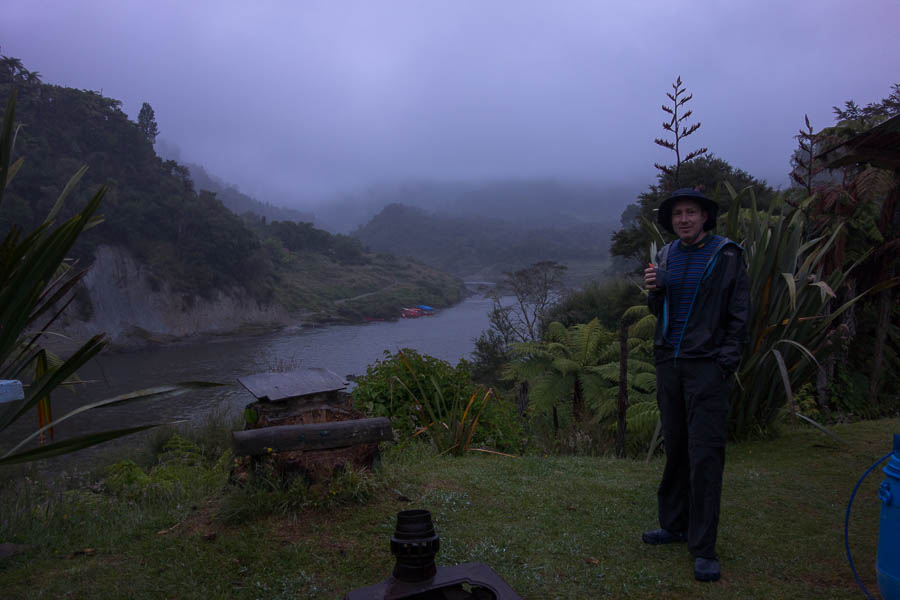
The forecast rain came overnight, but we got up at 5:30am again despite the drizzle. Thinking we’d drag our gear over to the camp kitchen to avoid disturbing others we were somewhat surprised to find bodies on the floor in the kitchen, and sleeping on the covered picnic tables! I felt less bad about disturbing them… Though turned out the people on the floor in the kitchen where there because the tent they’d hired had the wrong fly with it. It was substantially smaller than the tent which was obviously no good when the rain started. I think the company they hired from was going to be getting some frank feedback!
DSC01850

Slightly worse weather early on day 4
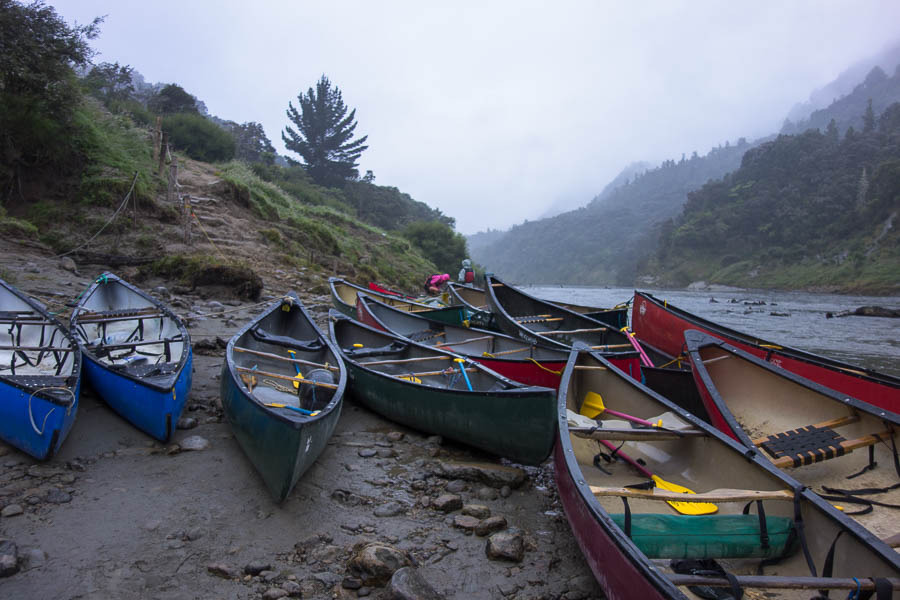
DSC01851

About to start off on our last day

DSC01853

Gloomy, wet start to the day

The wet weather burnt off after a couple of hours, in time for us to hit the trickiest rapids of our 4 days. The Autapu rapid is apparently known as “50/50” – the odds of staying in your canoe. We took on a fair bit of water but stayed upright. Of course we don’t have any photos of the rapids since there was no time for waving a camera as we were going down them!
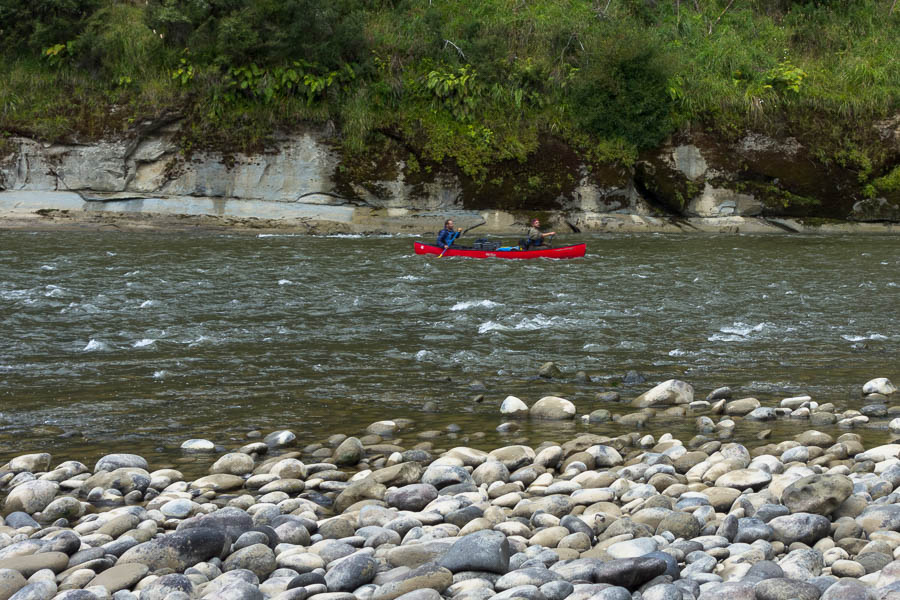
DSC01857

Te Araroa walkers at the end of one of the rapids
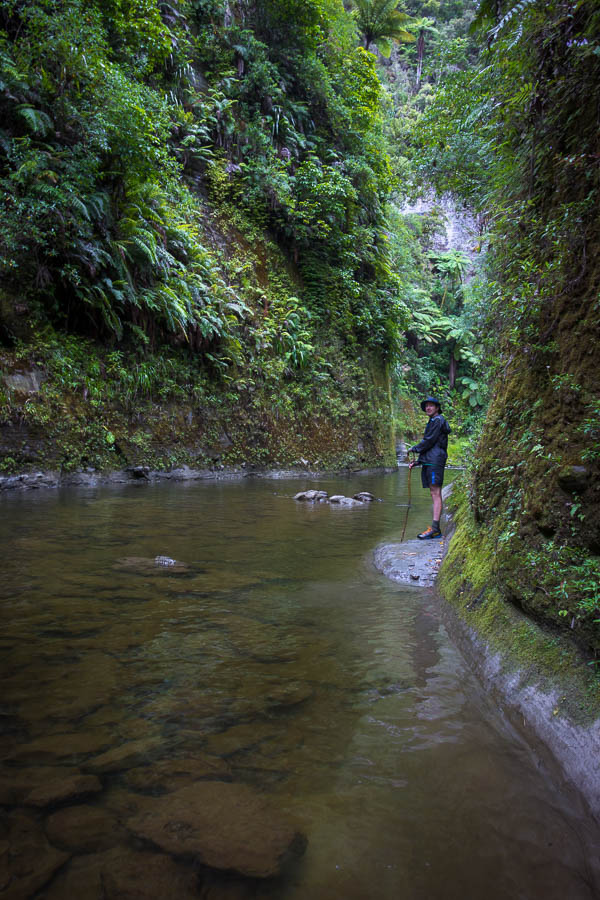
DSC01859

Side-creek exploration

DSC01861

Side-creek exploration

DSC01863

Tom off to see some caves

At the end at 12:30 it was time for action. Tent was set to dry, ate our emergency noodles for lunch, and a full re-pack from barrels into packs as we were getting dropped off in Raetihi to get the bus back to Wellington. A great 4 days – though my lazy left shoulder is still complaining about all the work it had to do several days later.
Lower Zambezi – Zambia Part III (5-10 Aug 2018)

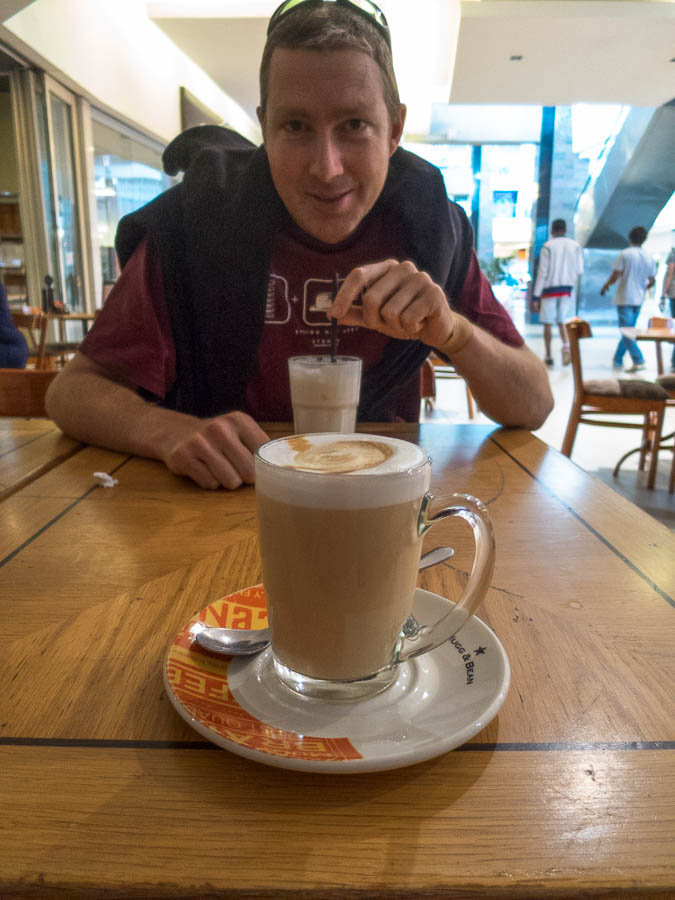
After a few days at my school reunion (Part II) we were ready for the next part of our trip. We left Mkushi early on Sunday morning to drive to Kariba. We had a much better trip to Lusaka compared to the way up – a lot less traffic as we were earlier in the day. We had lunch at one of the big malls in Lusaka – they were very impressive – you could have been anywhere in the world!

IMG_3063

Lunch stop in one of the several large malls in Lusaka

Then we still had a few hours drive to the border post at Kariba Dam. The border formalities went relatively smoothly. As we were taking our hire car across the border there was a bit more paperwork. Everything I’d read on the internet had led me to believe we were going to be hit with large ‘taxes’ for taking the car into Zimbabwe but only US$20 poorer we were across – I’m not complaining! We finally got to where we were staying about 5pm – so an 11 hour day of travel. We got to enjoy sunset on the edge of Lake Kariba for a bit but then we needed to sort out our gear as we were starting our canoe safari early the next morning.

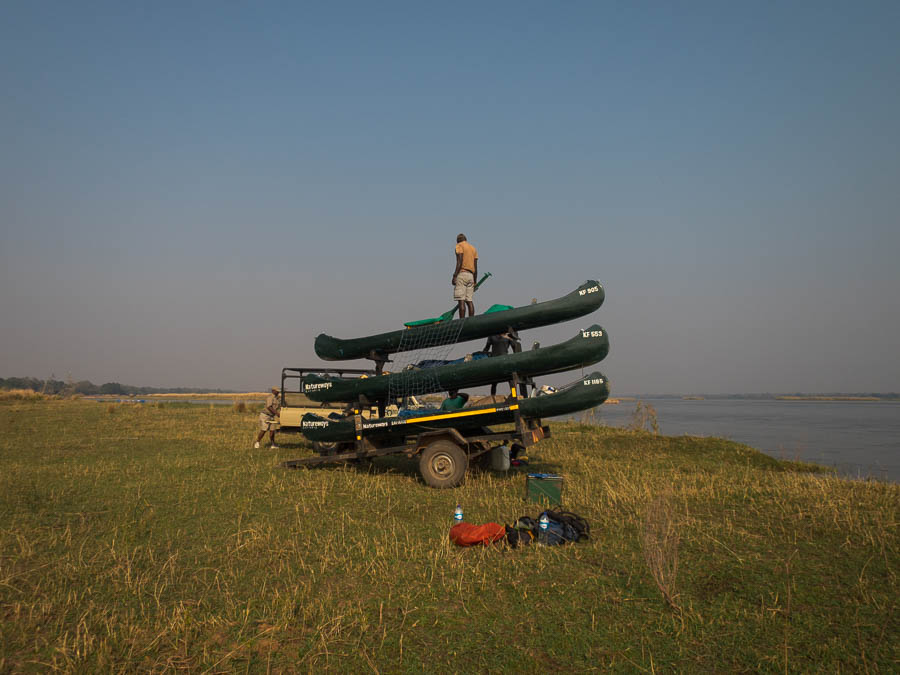
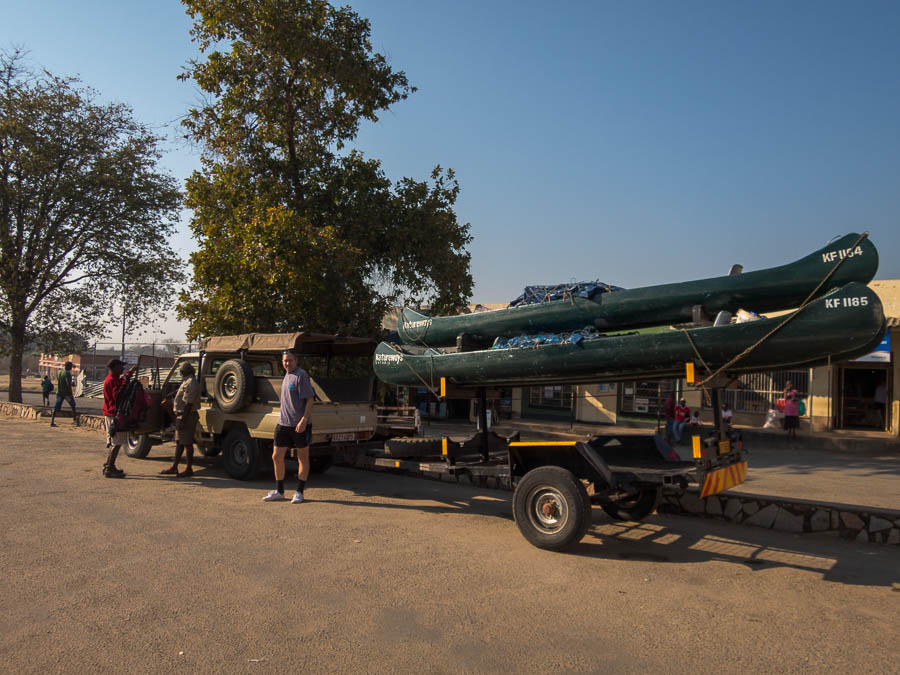
The canoe safari ended up being just me, Tom and 3 guides; Norman, KK and Thomas! (Thomas was a trainee, normally it’s just 2 guides to a trip with up to 8 clients). We started off with a shopping trip for any additional beverages we wanted and then we had a few hours drive to Chirundu.

IMG_3069

About to leave Kariba Town

IMG_3070

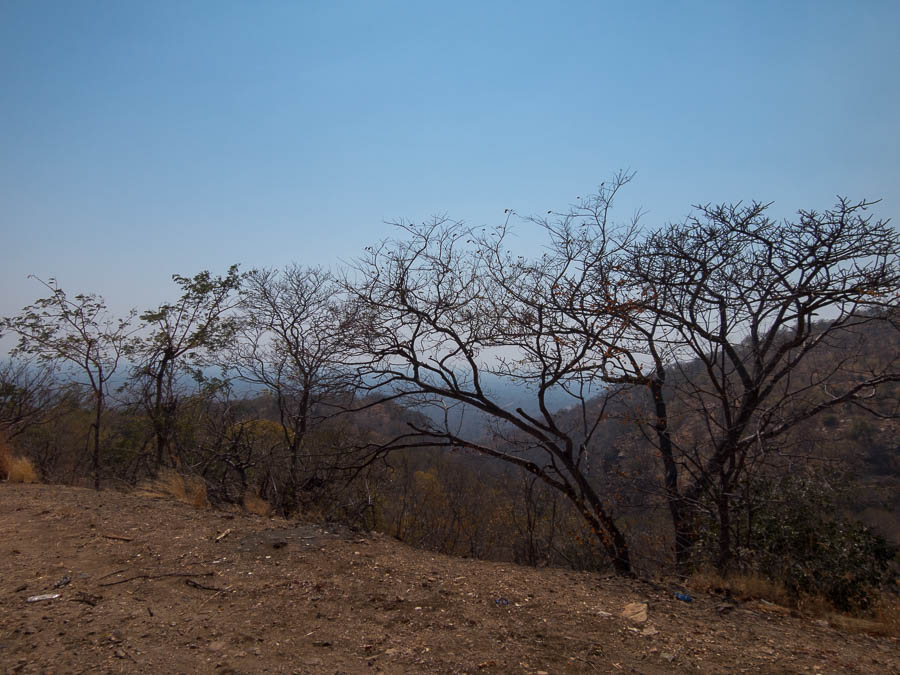
Looking down the Zambezi escarpment – very hazy due to seasonal burn-off

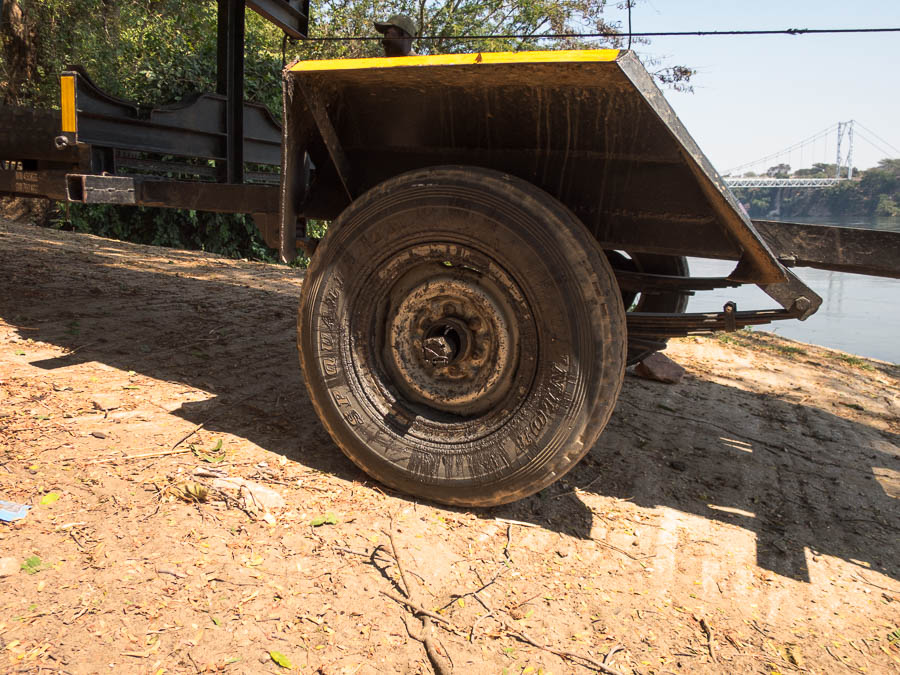
Just as we were about to start heading down the Zambezi escarpment one of the guides got the driver to pull over. It seemed the bearings on one of the wheels on the trailer had gone. After a bit of chat the driver and guides decided we’d just keep going. We made it to Chirundu safely though the wheel looked a little worse for wear!

IMG_3074

The wheel with the broken bearings in Chirundu

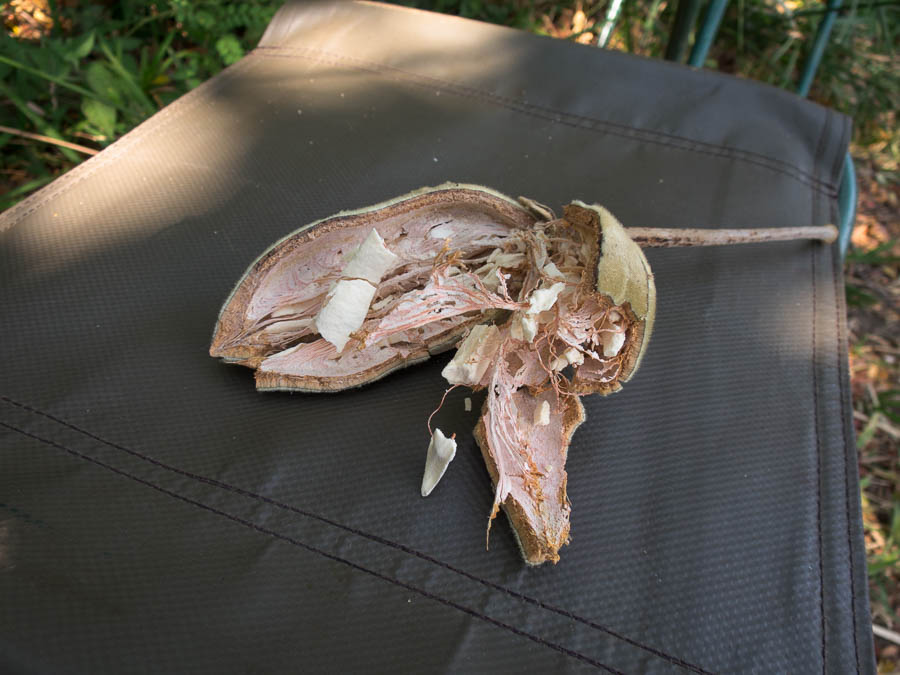
We had lunch on the riverbank while the canoes and gear got sorted out. KK found us some Baobab fruit to sample. They were quite nice.

IMG_3077

Baobab fruit – quite tart but tasty

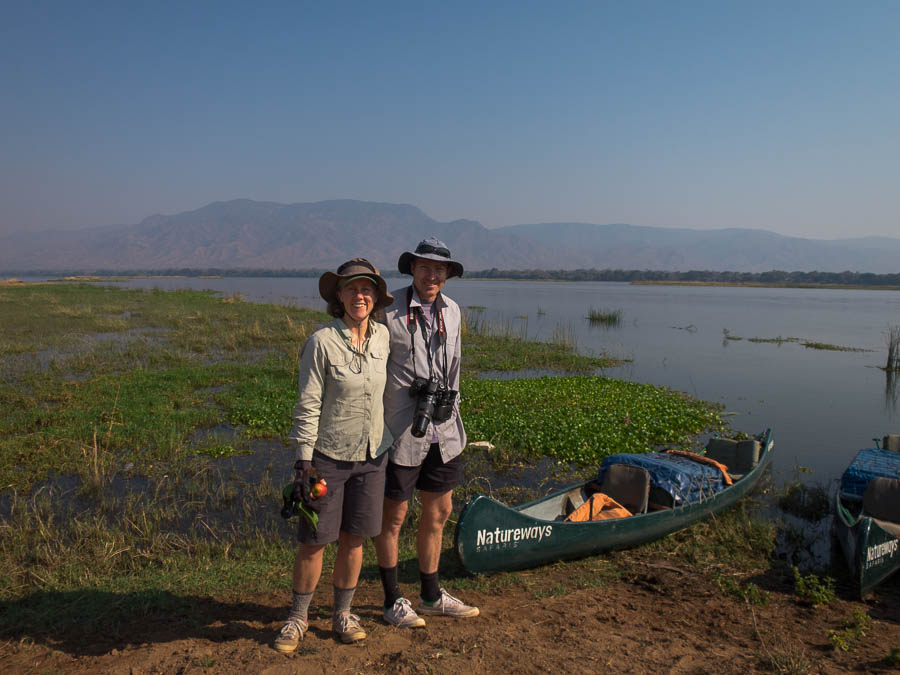
With the guide to client ratio as it was Tom & I both got to go in a canoe with a guide which made things pretty relaxing as all we needed to do was paddle (sometimes) and they did all the steering. Norman told us he normally tries to split couples up in the canoes otherwise they tend to not enjoy the trip.

IMG_3080

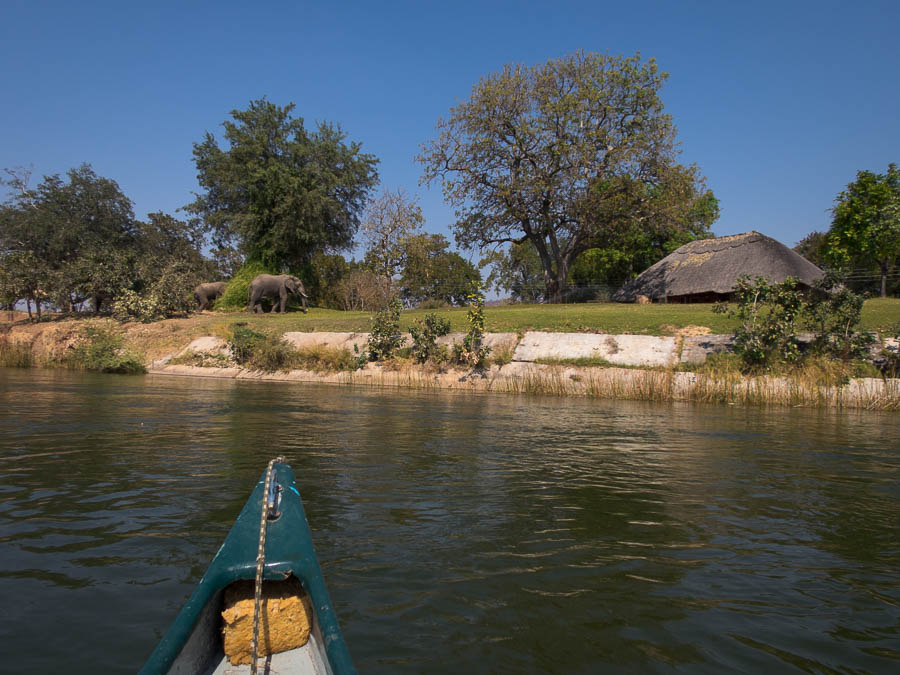
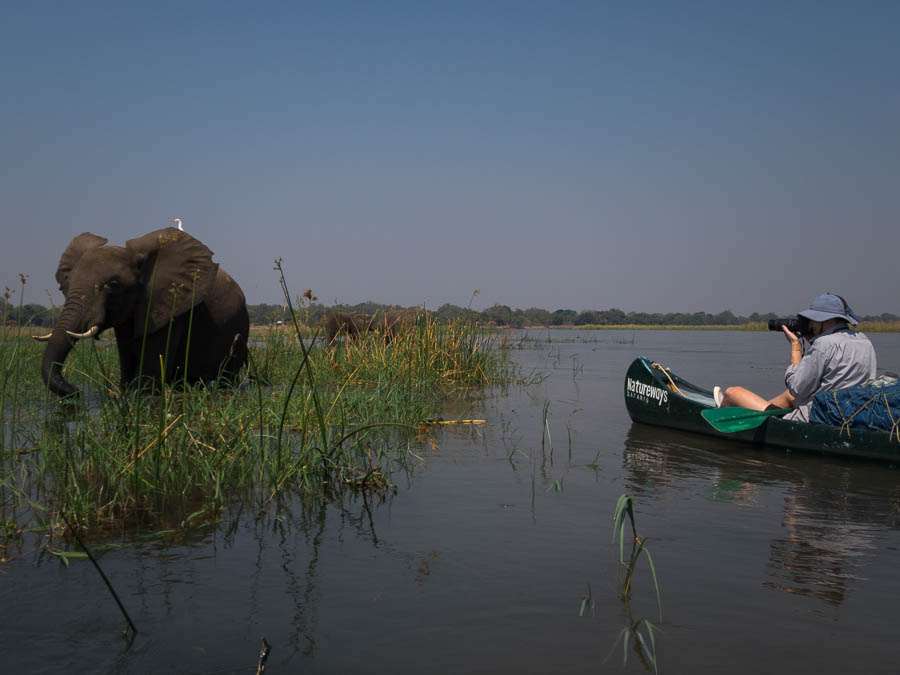
Riverside scenery – luxury lodges and elephants!

IMG_3086

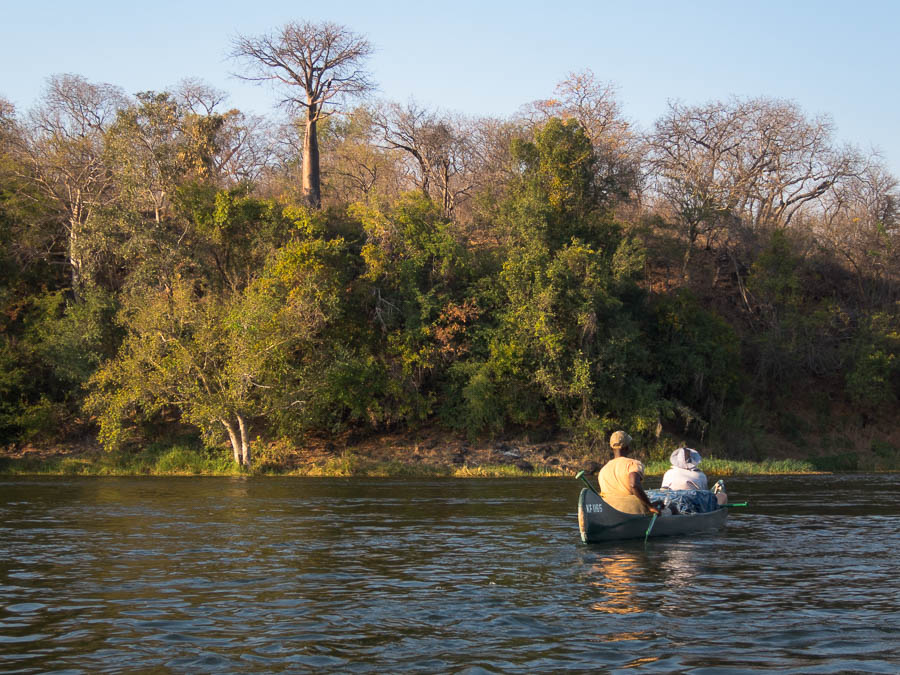
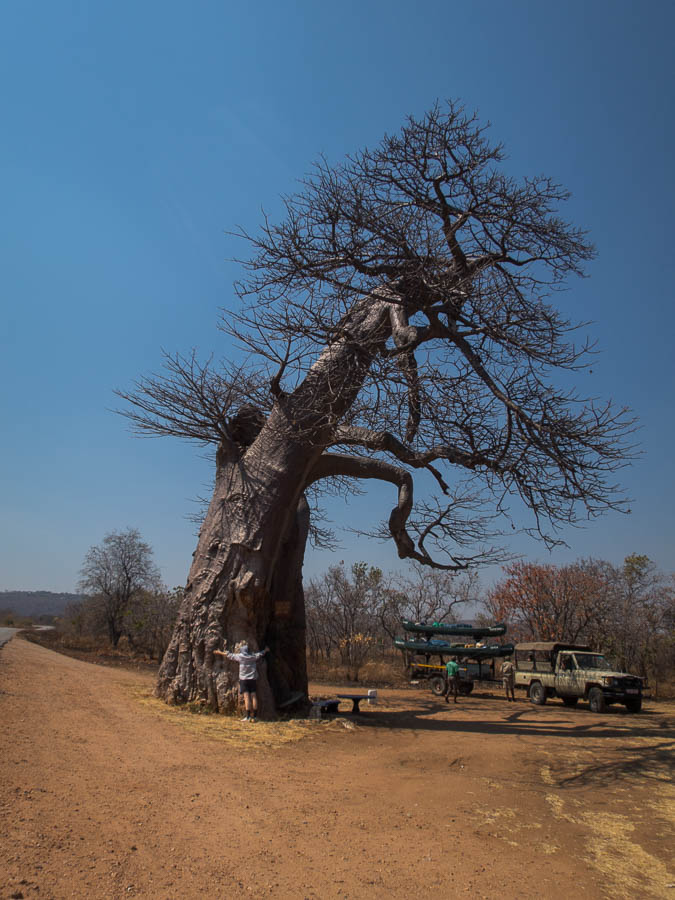
Photographer, baobab, fish eagle (in the tree) = match made in heaven

IMG_3087

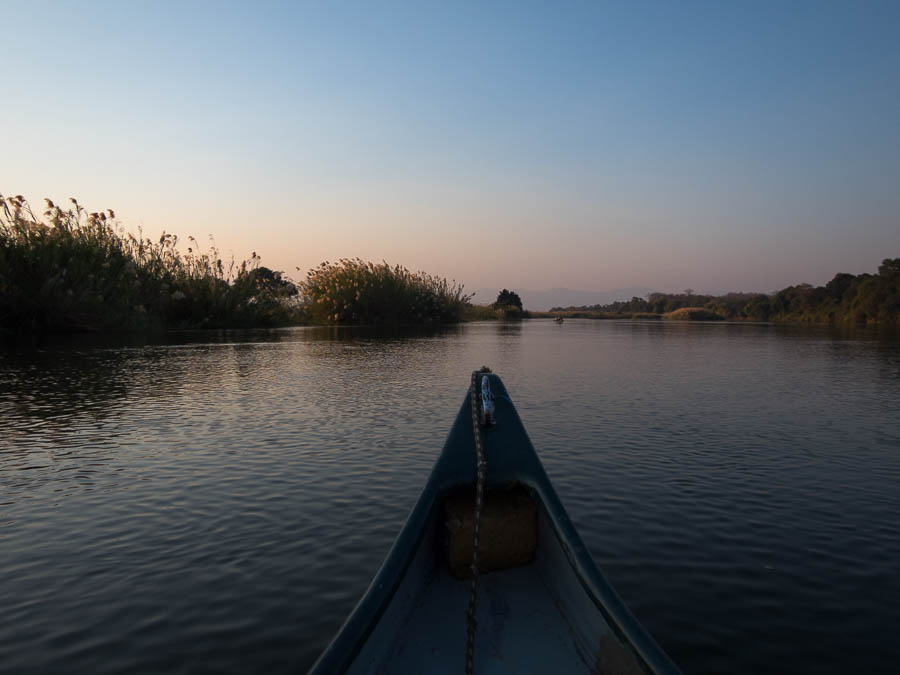
Idyllic river paddling

The first day was fairly hard for non-conditioned paddlers like us. We did 4 hours in the canoes without stopping (~25km) so by the time we pulled into our island for the night our bottoms were pretty sore. I was beginning to wonder if I’d got in over my head!

IMG_3090

African sunset – camp night 1

IMG_3092

KK cooks up pork chops on night 1

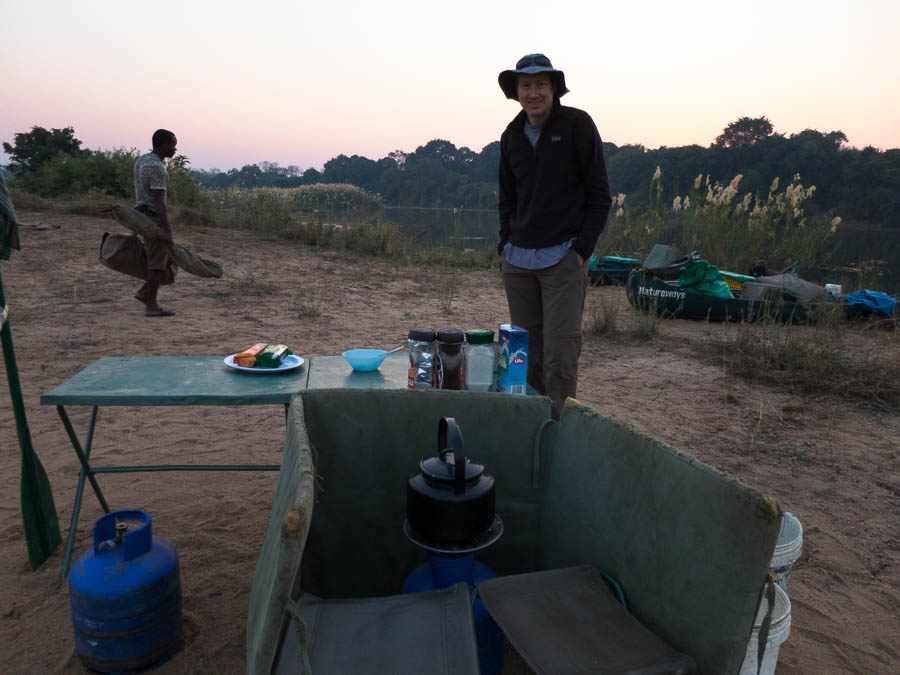
I was more relaxed when I realised we’d done almost a third of the distance on the first day. Day 2 was another 25km day – but done over 3 stints so more chances to stretch out. We started the day with hot drinks and biscuits.

IMG_3093

Some serious wind shielding for the kettle!

IMG_3103

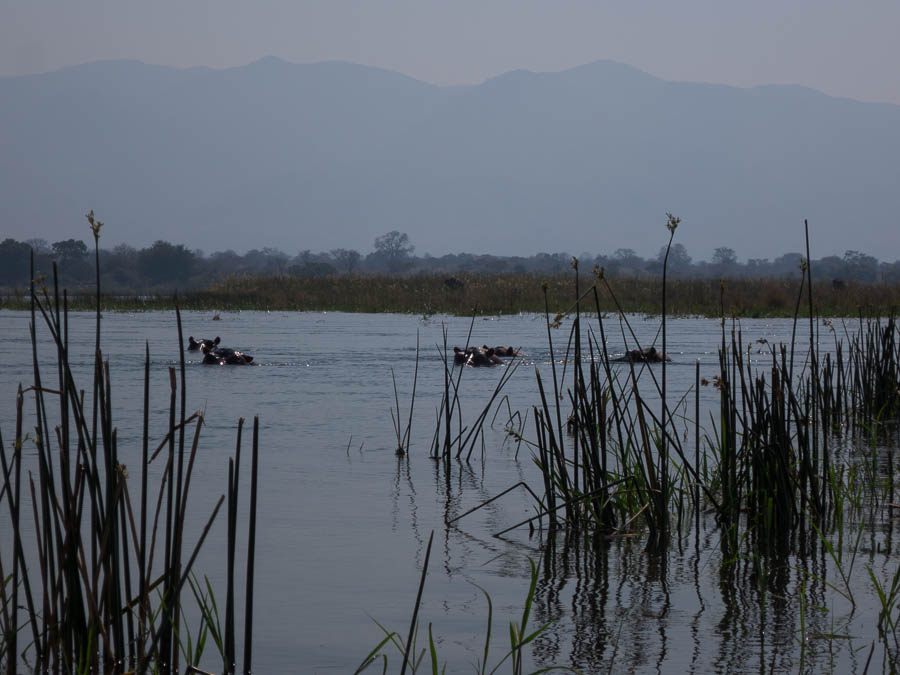
The hippos were always lurking

IMG_3112

River-level views were pretty good

IMG_3114

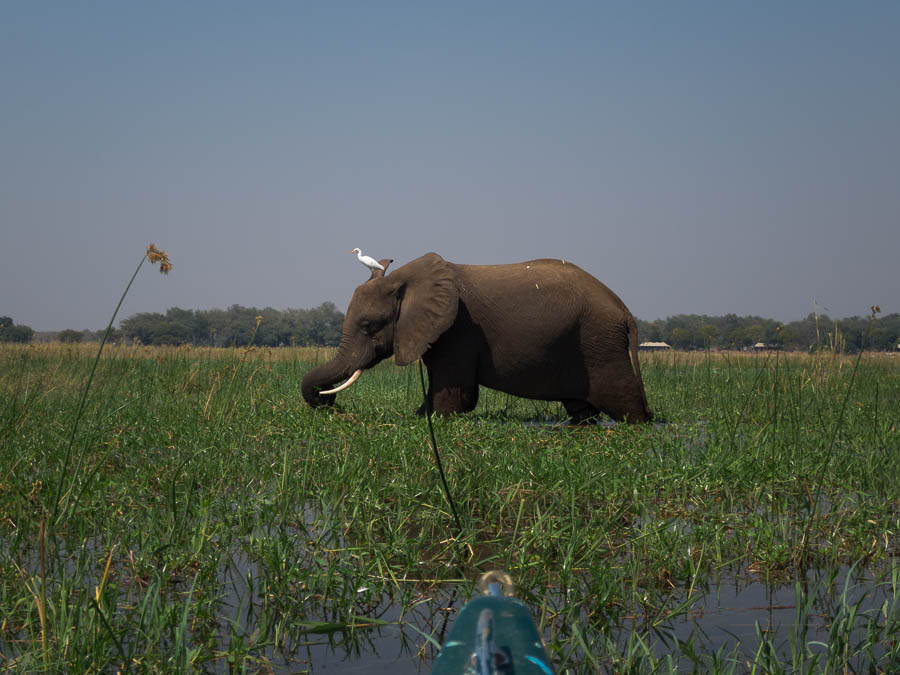
Elephant and cattle egret

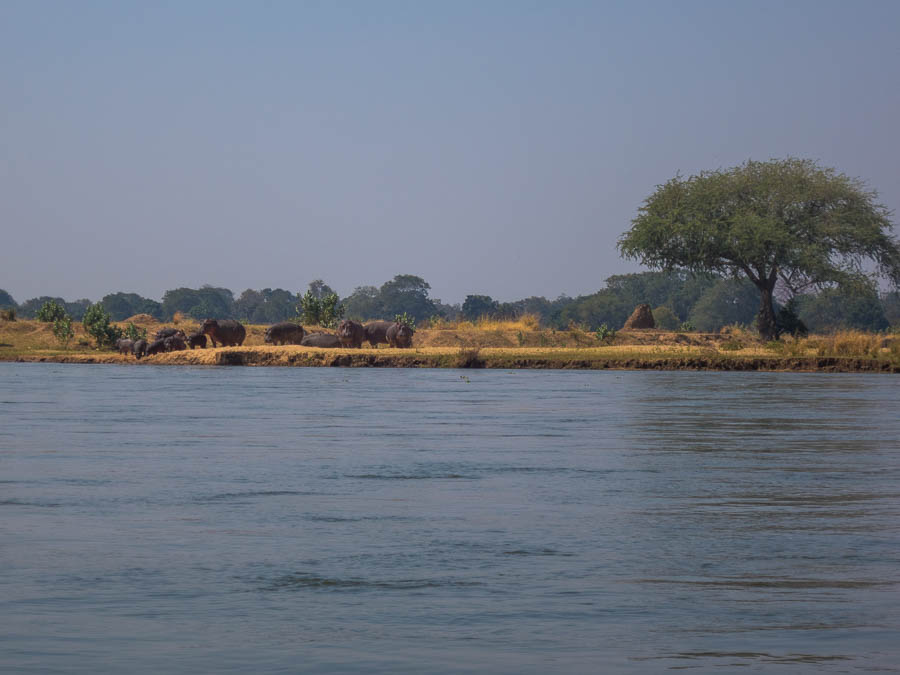
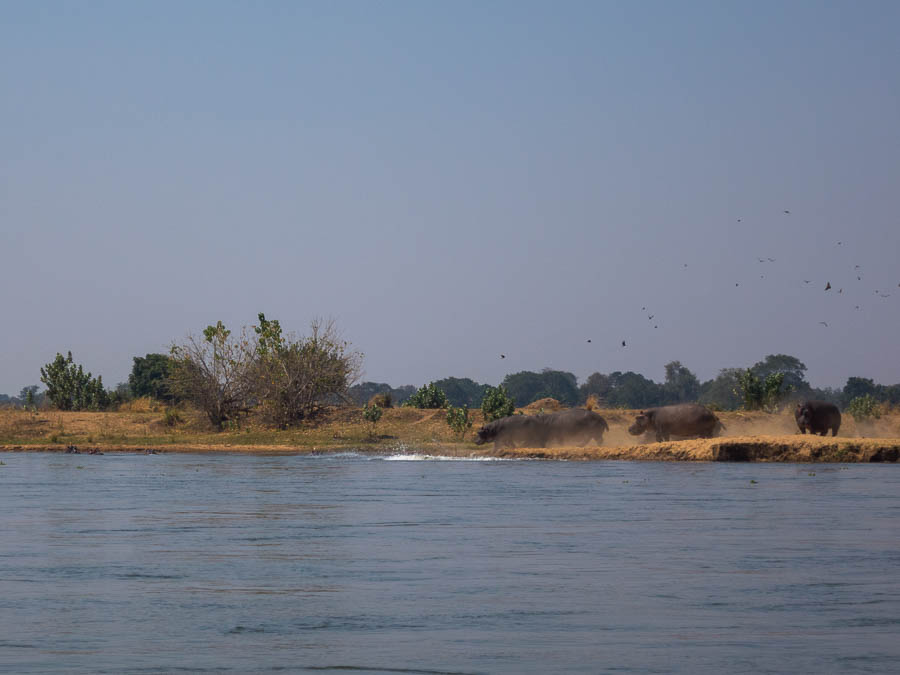
We had breakfast after a couple of hours of paddling, then lunch a bit later. Hippos were ever present so the guides were always on alert to make sure we took the best route around them. Our lunch spot was down a side channel, and there was a large pod of hippos on the shore next to where we needed to go. Hippos want to be in deep-ish water when feeling threatened so a bit of slapping the paddles on the water got them all moving.

IMG_3117

We’re aiming for the tree on the right… just go to get the hippos out of the way first!

IMG_3118

And they’re off! including all the birds off their backs

As soon as they were in the water we zipped through the side channel entrance that had been full of hippos only moments before. We had lunch and a long break in the heat of the day before our final stint of paddling for the day to camp.

IMG_3132

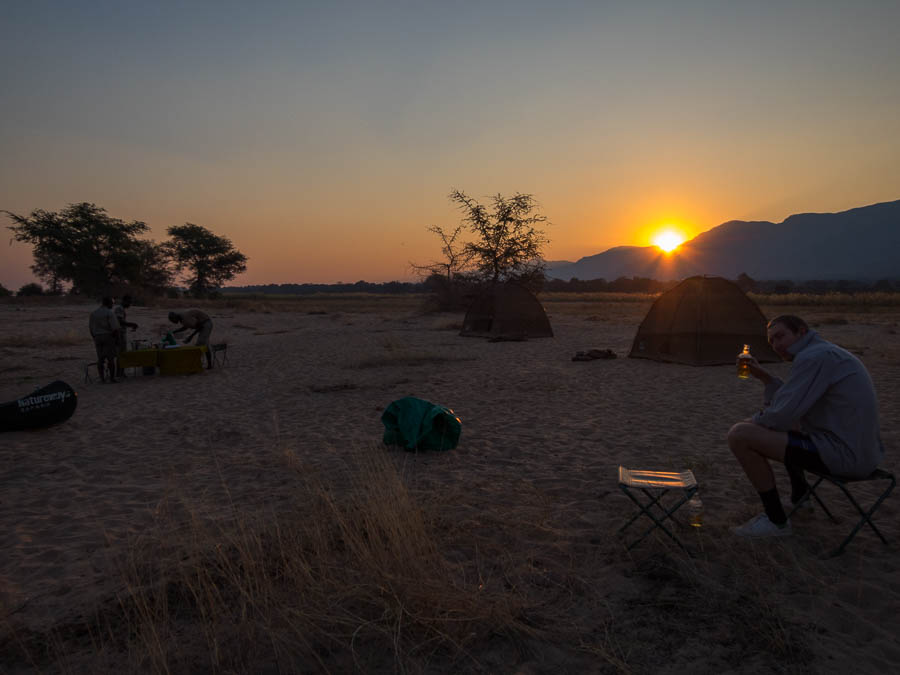
Sunset – day 2

As we’d done half the paddling in the first two days the third day was fairly relaxed. We followed the pattern of the previous day but drifting more and paddling less.

IMG_3147

Morning tea stop day 3

IMG_3159

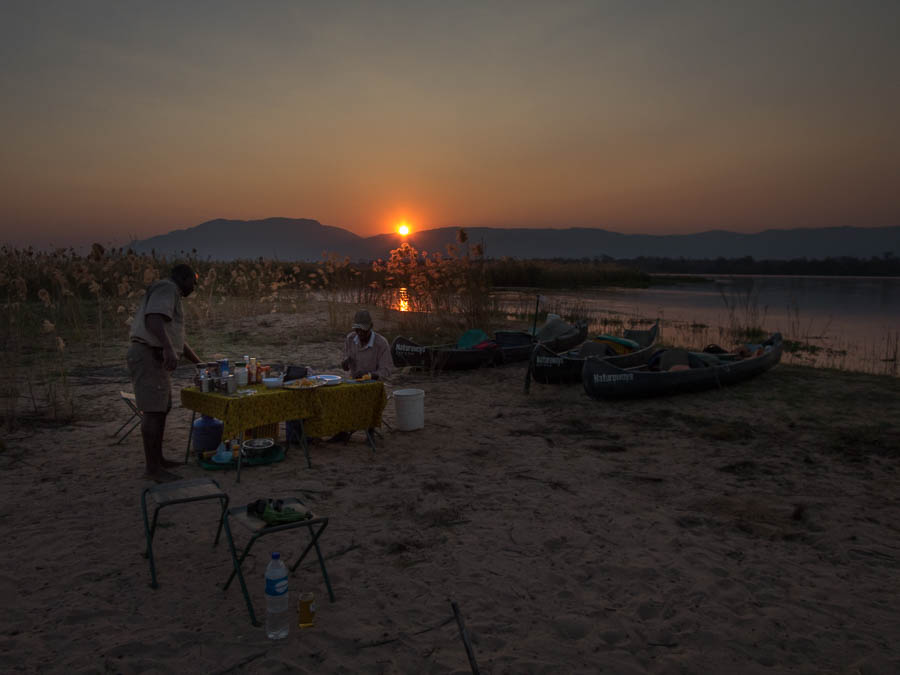
Sunset – day 3

The final day was only 8km so we covered that in about an hour. Then there were trailers to load at Mana Pools, more National Parks paperwork and then a long drive back to Kariba.

(If I was planning this trip again, knowing what I know now, I would have looked at a provider on the Zambia side as it would have saved us both driving time and border crossing time and expense. That is in no way meant to reflect poorly on the company we went with – more that we probably could have saved ourself a day or maybe more of driving.)

IMG_3168

And before we know it that’s the end

The drive out of Mana Pools was made unpleasant by the presence of Tsetse Flies which have a fairly painful bite. And similar to the March Flies in Australia they need to be well and truly squished to kill them. We were all pretty glad once we were back on the escarpment without them.

IMG_3169

Lunch stop on our way back to Kariba

Once back in Kariba we had border formalities to go back to Zambia (Siavonga). I thought maybe all these ‘taxes’ were going to come on the way out – but other than a K20 (A$2.70) road toll we got through unscathed.

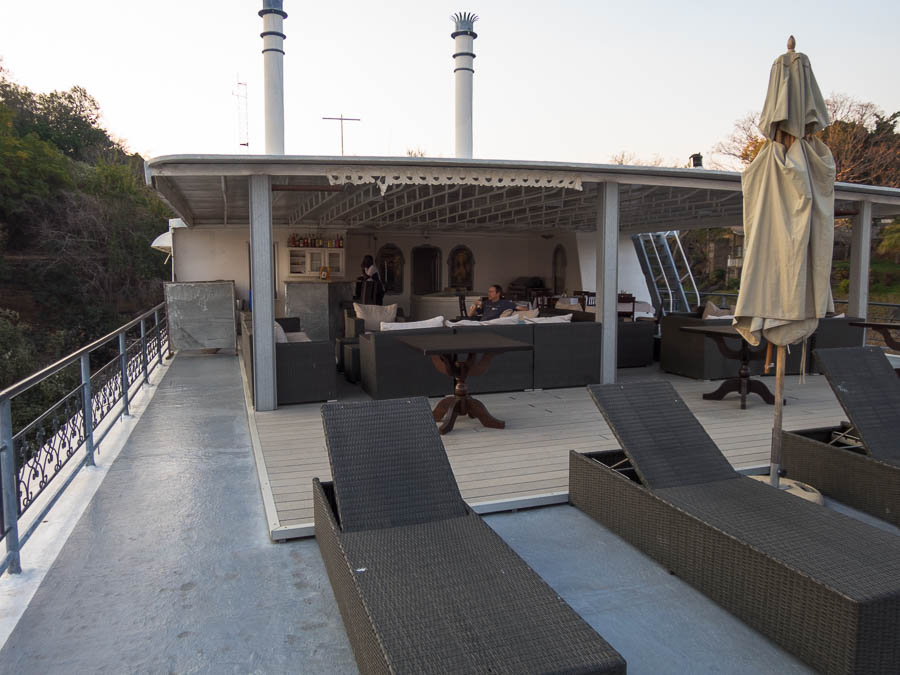
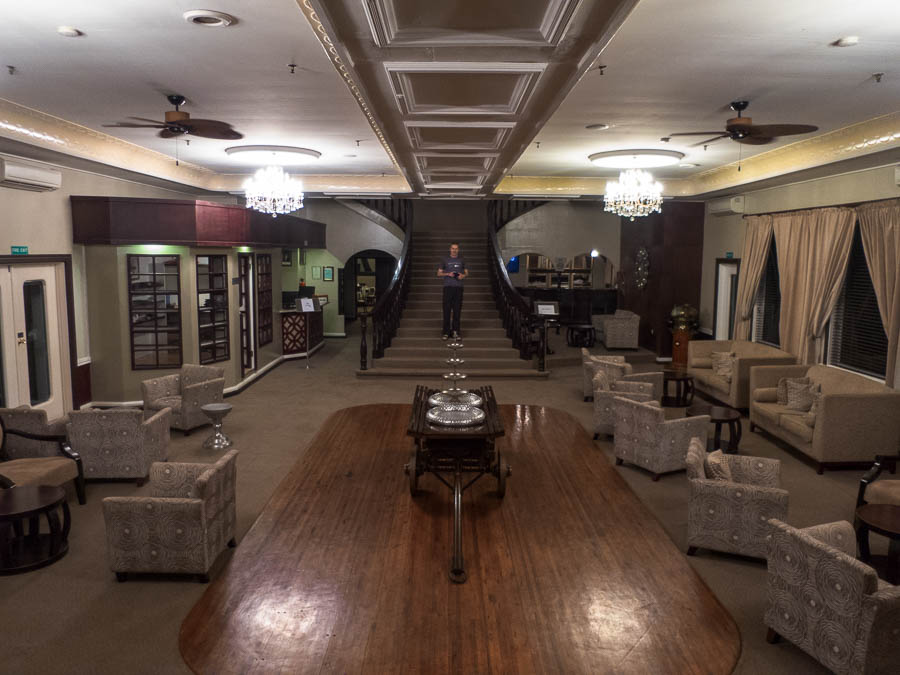
Our original accommodation provider couldn’t take us so other arrangements had been made on the Southern Belle – a moored houseboat on Lake Kariba. Probably an upgrade from what I’d booked!

IMG_3180

The Southern Belle

For a while it appeared we might have the entire boat to ourselves, but there was another group of 4 guests. Of which 2 turned out to be the parents of one of my school friends who I hadn’t seen since 1994! Such a small world.

IMG_3177

Southern Belle relaxing

IMG_3179

Southern Belle lounge room

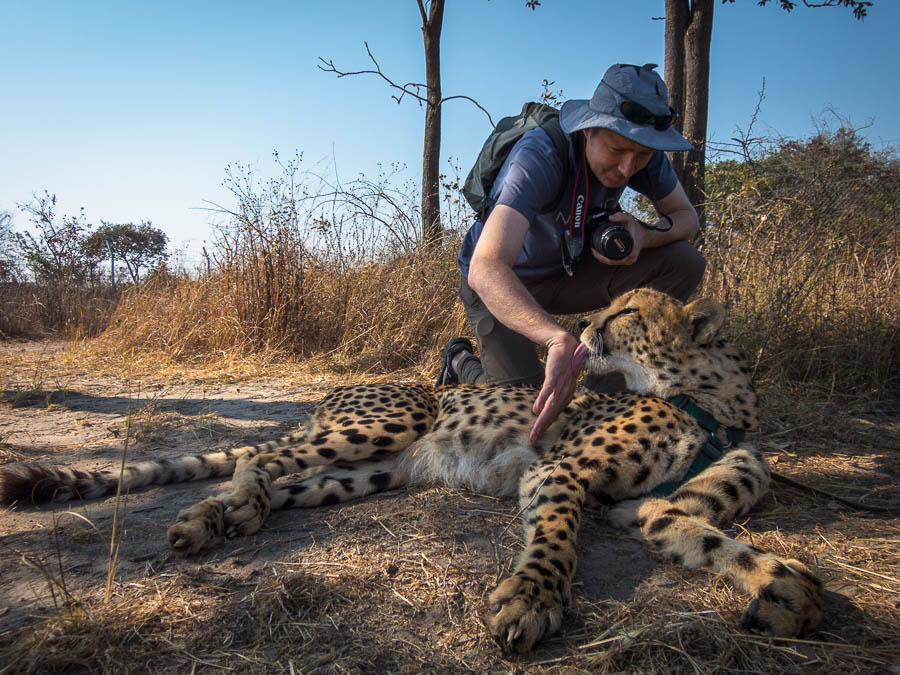
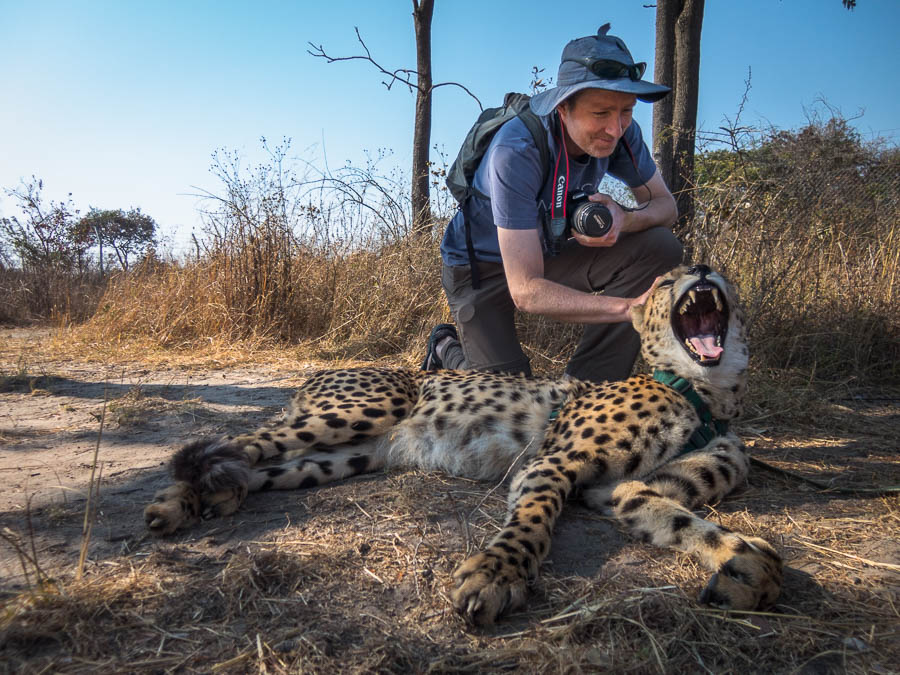
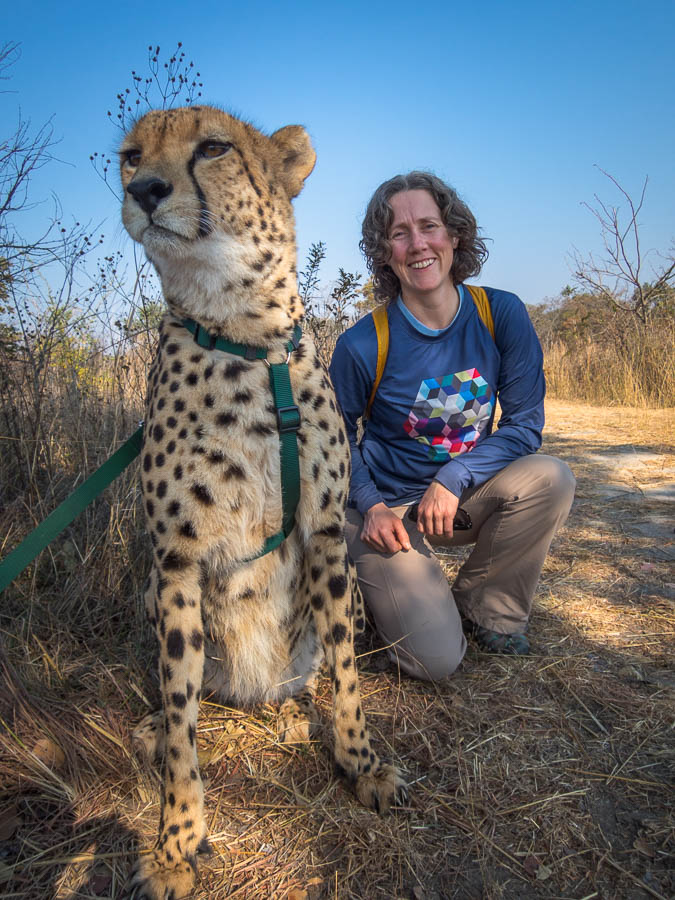
From Siavonga it was back to Lusaka. And primarily for the location north of the airport we stayed at a small ‘game park’ just out of town. Having done ‘proper’ safaris in Namibia and Botswana this wasn’t particularly exciting though they did have some gorgeous cheetahs.

IMG_3231

Tom’s found a friend

IMG_3232

Just a yawn right?

IMG_3236

Rachel’s found one too

Of course when we got on the plane there was an article in the in-flight magazine about how these sorts of animal interaction experiences should be avoided due the exploitation of the animals, unhealthy breeding industry which it promoted etc. I’d like to think the story we got told was true – that the cheetahs had been found as orphans – they’d been at the property 6 years. I would’ve been happy just to watch them as we haven’t seen any cheetahs in the wild during our African adventuring, but as evidenced below we got quite a lot of interaction.

And thus ended our Zambian adventure.