Not the O Circuit – Nov 2025

As already discussed in my Carretera Austral Part 4 post, 5 people had died on the O Circuit 5 days before we were due to start it. Our last two days in Puerto Varas had been intended for preparation for the O Circuit but instead we were searching the internet for anything relating to the circumstances, and trying to work out what to do.

Do we just work on the assumption that it will re-open in time for us to start walking? Do we try and hedge our bets with options both ways? Do we just assume it won’t re-open in time and plan for that? We looked at the forecast for the days we were meant to be going over John Gardner Pass. We bought microspikes. I became a reddit reader for the first time in my life.

In some ways it was a good thing we only had 2 days between when we found out on Wednesday night and when we were due to start on Saturday morning. It meant we couldn’t spend too long thinking about it. After ruminating on it for a day we concluded that we should just pivot to doing the W trek.

For those not familiar with the O/W – the O Circuit, as the name implies, is a circuit, normally done over 8 days. Three of those days (the section on the Northern side of the range) have to be walked in an anti-clockwise direction. On the 4th day the O Circuit goes over John Gardner Pass and arrives at Grey Campsite. The W Trek can be walked in either direction and starts (or ends) at Grey and goes through to Las Torres Hotel (where the O starts) i.e. the W is 4 of the 8 days of the O Circuit. The W side of the circuit is a circus compared to the more remote northern side. The W can be accessed in multiple places, so you will encounter people doing short day trips, long day trips, two, three, four night trips, and going in any which direction.

Our (new) plan was to get to Grey campsite on the day we should have walked over the pass. But, since we weren’t going to be walking the O we needed to work out how we were going to get there. The most common and cheapest option is to get a catamaran across Pehoé Lake and then walk from Paine Grande to Grey, then walk back again the next day and camp at Paine Grande on the second night. Neither Tom or I had any interest in walking Paine Grande – Grey and then returning on the same track the next day, so the alternate option was to get the Lago Grey Ferry to Grey directly. This is much more expensive as the ferry is mainly a sight-seeing excursion (rather than hiker transport) that sails across the face of Grey Glacier. This sounds amazing, but of the three daily sailings two of them go to the face of the Glacier before dropping off at Grey, the other one drops off at Grey then goes to the Glacier. The only sailing which had any availability left on it was the one which went directly to Grey which was made it a particularly bitter expense since we didn’t even get the sight-seeing bit! Anyway, at least we had a way secured to get onto the W.

If you’re interested in our reasoning for the pivot, here are the various reasons which contributed to the decision:

  • There was every chance the O wasn’t going to re-open in time, so the earlier we made the decision the more time we had to re-arrange plans (which would mean less stress)
  • The forecast for the day we were due to go over the pass was ok, but the days on either side weren’t great. Given hikers were likely to be super nervous given the events of the previous week we didn’t want to get caught up in chaos around the pass.* And the weather could obviously move around from the current forecast.
  • We realised how vulnerable we would be (and most hikers are) since we’d elected to book pre-erected tents. We didn’t have a shelter with us, so if we did get caught in weather we wouldn’t be able to bunker down.
  • After all the hiking we’d done on the Carretera Austral we weren’t feeling fresh, and weren’t that excited for an 8 day hike

With the decision made that we were just doing the W, we had 3 extra days in Puerto Natales. Our first day, originally meant for grocery shopping, we tracked down one of the best coffees we had on our trip. Then managed to hire a car for a couple of days so we could visit Torres del Paine National Park as a day trip.

A decent coffee

The next day we drove the ‘back route’ (Y-290) into Torres del Paine National Park. The road was some gravel and some ashphalt. It was a pleasant morning and we stopped at a few lookouts on the way in, and did a short walk to Salto Chico (waterfall). Then we did a longer walk up to Mirador Condor, where we had morning tea. I walked back to the car the way we’d come, and then drove along the road to pick up Tom at the alternative trailhead.

Classic TdP views

Mirador Condor

At this stage we hadn’t really run into too many people, and had probably been lulled into a false sense of quietness. Our next stop was to visit Mirador Cuernos/Salto Grande but the car park was packed! We ended up having to park at the catamaran parking area and walked back along the road. We had lunch at Mirador Cuernos – we seemed to be at the end of the peak, so by the time we’d finished lunch it was a lot quieter than when we’d arrived.

Mirador Cuernos

As we finished lunch the cloud had started forming and was quite dramatic over the peaks as we headed back.

Weather coming in

As we continued our loop around the park we encountered a large number of cars parked along the road. Curiosity meant we stopped to find out why they were all there. Apparently a puma with a kill was behind some bushes, only about 30m off the road. There were some very serious wildlife photographers set for the long haul, but after 20 minutes and no action I was keen to be on our way. As a consolation prize as we were on our way out of the park I spotted an Andean Fox which Tom managed to photograph, and then a flock of rheas (ostrich like birds) on the main road. It was a long day, but we did get to see a bunch of stuff in the park we wouldn’t have seen if we’d been on the O.

The next day we headed to the Mylodon Cave National Monument which is only a 30 minute drive from Puerto Natales. We were pleasantly surprised by our visit here. We walked to the smallest cave (Cueva Chico) first, the walking track was surprisingly sheltered given it was a very windy day. The landscape was level and somewhat different to what we’d had. We did regret the order we’d chosen to do things once we found picnic tables (a rare site in Chile) near Cueva Chico – we had to settle with having morning tea there since we hadn’t brought lunch with us. From there we walked past The Devil’s Chair and to the medium cave (Cueva de Media).

The Devil’s Chair

Cueva de Media (the medium cave)

Next was up the hill to the mirador – where it was exceedingly windy and we did not last long. We’d chosen the order since we figured we’d save the biggest for last, but we’d been quite surprised how large the first two caves had been. Finally, we got to Cueva Grande (Big Cave). It was pretty impressive.

Cueva Grande – where Mylodon (prehistoric sloth) fossils were found

Then we did manage lunch on some picnic tables but essentially in the car park, so not anywhere near as nice as our morning tea spot. It was a very enjoyable visit – we spent about 3 hours there – and was one of the few places in Chile where it felt that the entry fee was actually going into developing the site into a tourist-worthy experience.

By coincidence another SBW member was in town – also impacted by the O Circuit closure – so we caught up with him for a hearty meat filled dinner.

Victims of the O Circuit closure

Our third extra day we spent getting food and preparing for the W track. We were pleasantly surprised by the things we were able to get in the various supermarkets. The best win from our perspective were dehydrated tomatoes. We opted to just get BackCountry dehy meals for dinner – but if you didn’t want to incur that cost there were plenty of things you could buy for dinners e.g. pasta, noodles.

————–

*There are many issues with the way things currently run in Torres del Paine. It is immensely popular and so camping and refugio spaces are booked out six months in advance. If the weather is poor on the day you are supposed to go over the pass then there doesn’t seem to be any capacity for delaying – more people are going to arrive at the campsite you’re meant to vacate. And if you do delay, then you will then be out of sync with your bookings for the future campsites. Unless that issue is addressed (and that would require significant change) I think it’s quite possible a similar tragedy could occur again. This is compounded by many people not carrying tents – so unable to erect a shelter if caught in inclement weather.

Galapagos – Oct 2025

After the Amazon, due to flight schedules, we had a night the highly dangerous city of Guayaquil. Regarding Guayaquil the Australian Government advised to “reconsider your need to travel due to high level of gang-related crime and threat of kidnapping.” I shouldn’t joke about it – and we certainly didn’t court danger. We had one of only a couple of nights for the whole trip in a proper hotel, with a shuttle to and from the airport, and our only excursion was to the large mall across the road.

Having survived that we then flew on to the Galapagos. We got our first iguana while we were walking from the plane to the airport terminal. Our next animal encounter was in the luggage collection area – we all had to stand by and watch two dogs sniff everyone’s luggage before we were allowed to collect it. It’s then a bit of a convoluted process to get to main town of Puerto Ayora – a bus to the canal, then a boat across the canal, then a cab! All to be paid in cash.

Waiting for the dogs to sniff our luggage

We had two nights in Puerto Ayora where it became obvious how easy the wildlife was going to be to spot – sea lions in cycle lanes and marine iguanas on the footpath. Coming from the jungle where binoculars were critical as everything was at quite a distance this was a welcome change!

Cycle hazard

Tom surrounded by Candelabra & Opuntia Cactus on our way to Tortuga Bay

Following our time in Puerto Ayora we did an 8-day cruise on a boat with 13 passengers (including us), a guide and about 7 crew, and visited 6 different islands. Across the Galapagos there are maybe 50 sites over about 14 islands that the boats can visit, and all the boats do a 21 day loop, visiting 2 sites a day. There’s a maximum of 4 boats at any one site at a time – though we were often the only boat at our sites (we were there in the off-season if Galapagos has such a thing). At most sites we would do a couple of activities – depending on the site, walking, snorkelling, a ride in an inflatable boat, or kayaking.

Santa Cruz Highlands: Giant Tortoise

Santa Cruz Highlands: How many giant tortoise can you spot in this photos? (There’s 6)

Santa Cruz Highlands: Giant tortoise poo – quite big!

Santa Cruz Highlands: Tom in a lava tunnel

Santa Cruz Highlands: Another Galapagos adaptation?

Isabela Las Tintoreras: Marine iguanas overseeing the white-tip sharks

Isabela Las Tintoreras: Amazing access to wildlife! White-tip shark nursery channel

Isabela: Villamil Flamingo Lake

Isabela Is.

Isabela: Blue-footed booby

Isabela: Sealions were always entertaining – even when not moving!

Typical snacks on return to the boat from an excursion

We had the fun of the boat generator breaking down on day 3. So we were without power for about 12 hours while a speedboat was dispatched with parts and engineer. No power meant the kitchen couldn’t cook anything (sandwiches for dinner), our below deck windowless room had no light or aircon (so most of the below deck guests slept outside or in the guest lounge that night), no showers (so sleeping was a bit sticky as we’d been swimming that afternoon). Fortunately it got resolved during the night! And the engineer stuck around on board in case anything else went wrong – and got his first ever visit to Genovesa as a bonus.

Isabela – Moreno Point: Cero Azul shield volcano

Isabela – Moreno Point: Here’s looking at you! Pelican & flightless cormorants

Isabela – Urbina Bay: The far more illusive land iguanas (relative to marine iguanas!)

Isabela: Tom with Darwin Lake and Tagus Cove

Fernandina – Espinosa Point: What’s a pile of marine iguanas called? Our boat in the background

Fernandina – Espinosa Point: The very colourful Sally Lightfoot crab

Fernandina – Espinosa Point: Lava cactus – endemic to the Galapagos

Fernandina – Espinosa Point: Tom and the lava cacti

Santiago – Egas Port: Sealions – mum & pup. We saw pups most days – so much fun to watch.

Other than tropical fish, things we spotted while snorkelling included: sea lions, green sea turtles, penguins, flightless cormorants, pelicans, sharks and rays. Most of these came within a metre of us at one time or another while we were swimming!

Santiago – Egas Port: Blowhole excitement on Santiago Is.

Santiago – Egas Port: Galapagos Fur Seal – it launched itself into the water from that spot eventually.

Tom enjoying a sunset from the back of the boat.

While we did see a lot of sea-life, the thing we saw the most of was the birds. Variously spotted from panga (dinghy) rides, walks or kayaks. Genovesa Island was an absolute highlight. We were there in breeding season and the birds were thick on the ground – literally. They were all around, metres away, and you had to watch your step, as there would regularly be adults or chicks on the path. The frigatebirds were also impressive – and huge, like a mini-pterodactyl. They don’t dive for fish themselves, but they will chase other birds who have caught fish. We watched two of them catch a tropicbird in flight by the tail and shake it to get its fish!

Nazca Booby on Genovesa Is.

Red-footed Booby on Genevesa Is.

Nazca Booby – parent & “baby” (it eventually ends up bigger than the parents as they feed it so much they end up in poor condition)

Juvenile Lava Gull

Wading through the mangroves to see nesting birds

North Seymour: Male Magnificent Frigate birds – non-displaying and displaying!

Sea life didn’t really agree with me, while the wildlife was outstanding, the rest of the time on the boat was more a matter of endurance. With the benefit of hindsight I now understand a lot more about stabilisers and why you might want them on a boat. We had chosen a small boat deliberately, and don’t regret that choice at all, but a future trip would be on a catamaran!

I would be remiss not to include a Galapagos Finch photo – while waiting for our flight out at the airport!

Caving & Jungle Trekking in Central Vietnam (19-21 Dec 2023)

The start of a month-long SE Asia trip had us in Central Vietnam. As I now know the Province of Quảng Bình lays claim to the largest cave in the world, along with many other caves. I didn’t realise quite how famous the area was for caving when we booked the trip – I was just looking for things to do that aligned with our interests. We didn’t visit the largest cave – there’s a several year waiting list and it costs a lot – but the Hang Tien caves we visited were pretty big! When most people think of caving they think of squeezing through narrow passageways – there was none of that on this trip – it was more akin to underground canyoning.

To get to the start of the tour we flew to Saigon, then took a domestic flight to Đồng Hới. It was a bit of shock to arrive, after a steamy November/early-December in Sydney, we were rugged up for sub-20°C temperatures and rain. We were collected at Đồng Hới and had a night at the Phong Nha Lake House Resort. Despite a SMH article claiming Vietnam was the #1 place to avoid Christmas the Lake House had multiple Christmas trees and a single Christmas Album running on repeat for all hours. We managed to blow a bit of the jet lag away with a paddle around the lake the resort fronts on to.
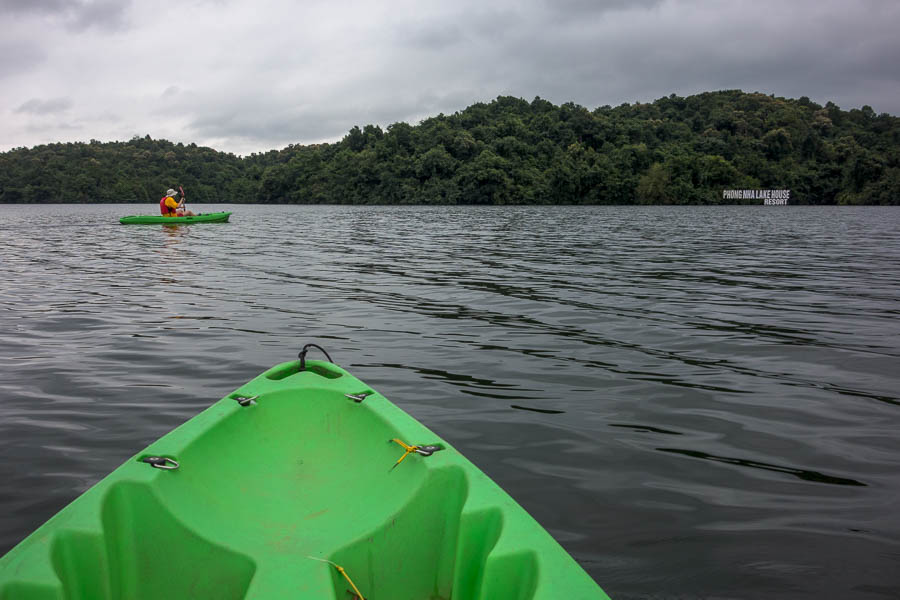
Kayaking at Phong Nha Lake House Resort

Early the next morning, in the rain, we were the first in a lengthy collection process by bus of the 11 members of our caving tour and our head guide. Once everyone had been collected we had a long, windy bus trip through the hills to the Oxalis base at Tu Lan Lodge. During this time everyone introduced themselves and I of course was judging everyone based on what they said, and their appearance.

We’d had to go through an extensive vetting process to be accepted on this trip, supplying a full resume of activities for the last 12 months, providing photos, height and weight, as well as individual phone interviews. It was a diverse group; 3 Maltese, an Irish/English couple (en route to moving to Melbourne), 4 Vietnamese (though 2 based in Melbourne and 1 in Austria) plus me & Tom. Our head guide, Anetta, was the only Oxalis female guide, with 10 years experience and a slightly sardonic sense of humour. Assisting her was Quyen, along with 3 safety assistants, porters and a cook. I think we had almost a 1:1 staff to client ratio!
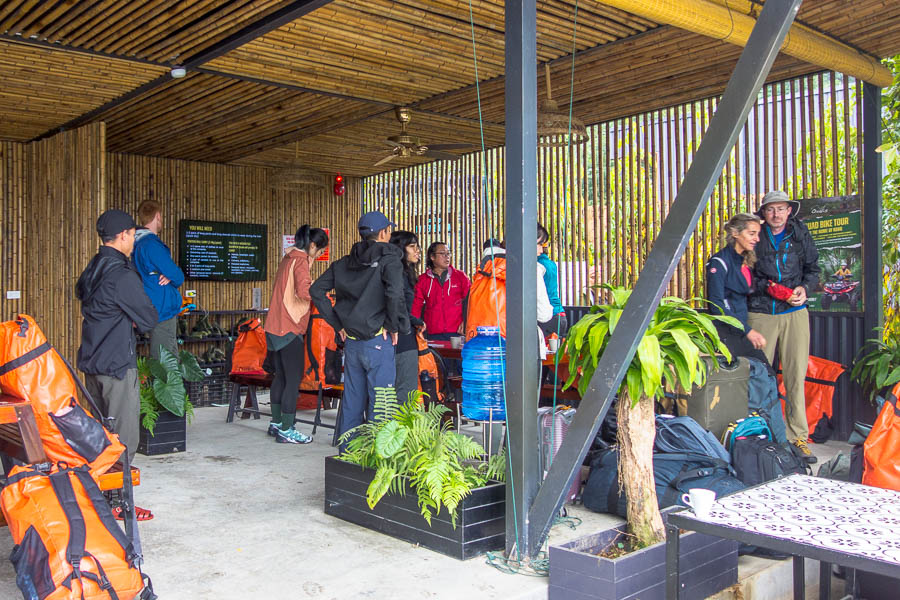
Pre-trip briefing/packing

We only had to carry our gear for the day, the rest was transported by porters who we never really saw. The rain hadn’t abated and I think we were all a bit morose with the conditions when we eventually started walking just after 11am (after a 7:30am pickup).

The initial paved road, led onto a muddy fire trail, where the guides laughed as we all sought to keep our feet from becoming too muddy. The Oxalis staff were all wearing plastic sandals and socks – so they weren’t too worried about shoes getting muddy. The plastic sandals are cheap and help prevent footroot apparently.
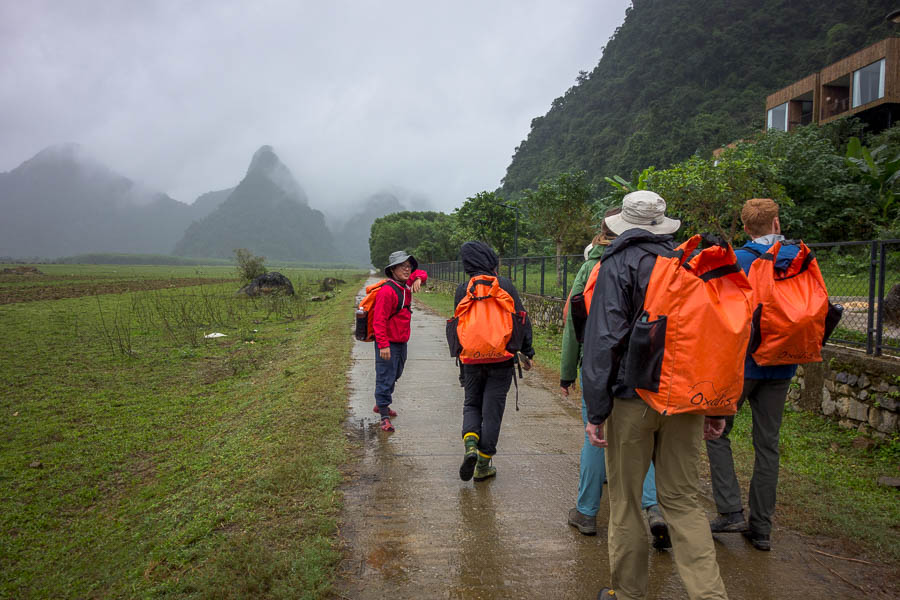
Easy walking to start (note lodges up to the right where we will stay on our final night)

It wasn’t long before we reached our first river crossing. We were shuttled across in a boat that had a fixed rope to assist with guiding across the river. Not long after that we wound our way up through muddy tracks to have lunch in a wonderful dry cave. As we well know, outdoor activities in wet conditions are made far more bearable if you can get out of the rain for breaks!
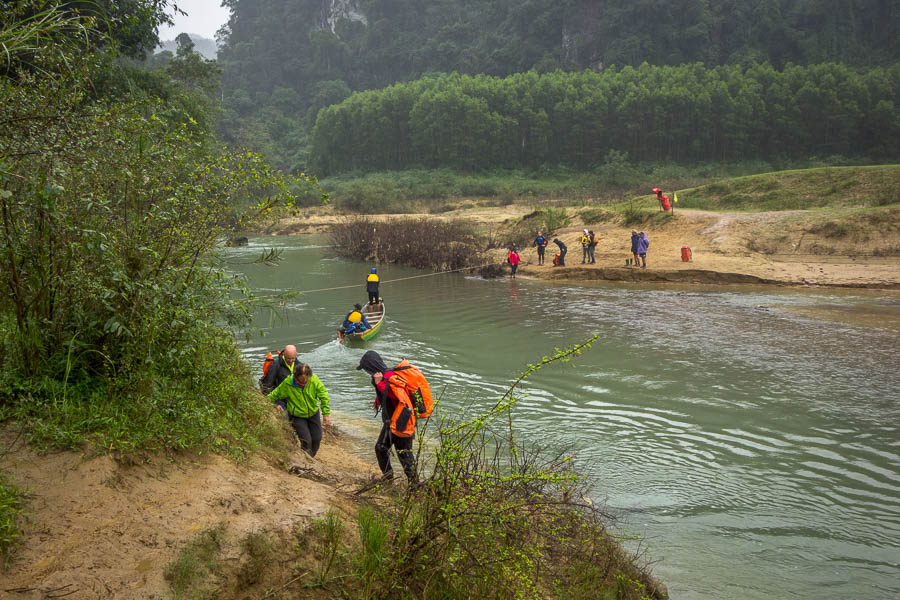
First river crossing – this one in a boat

Dry lunch spot

We entered the pretty, but short, Secret Cave after lunch. This was our first experience with queuing for photos – the best spots were well-known to the guides and bright lights were set up provide back-light while we all waited for our chance to pose in the same spot. Secret Cave, in retrospect, was probably the prettiest of the caves but I didn’t take many photos.
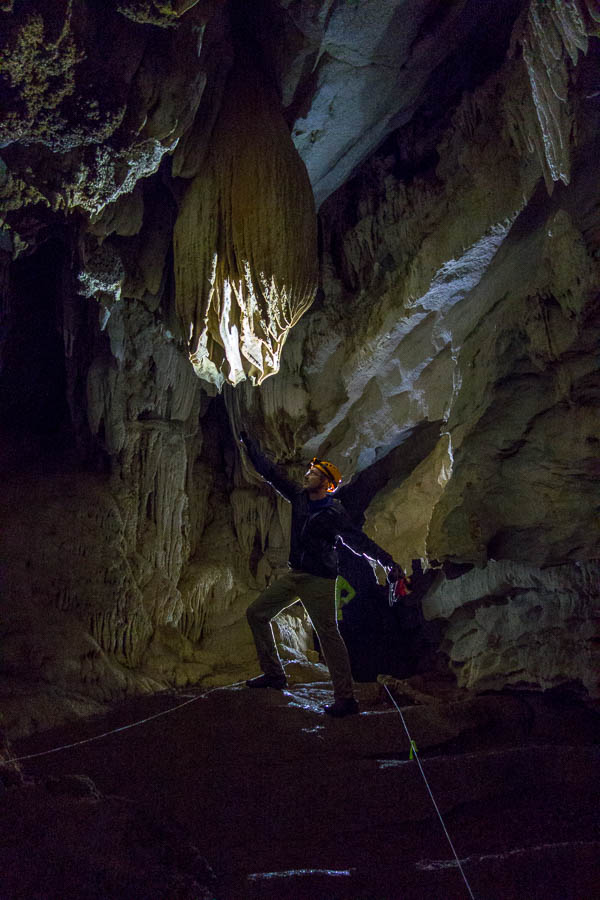
Tom in Secret Cave

Then it was back into the rain and mud to get to the entrance of Hung Ton Cave. This was our first technical section. We had to harness up before descending a 15m ladder. I ended up at the back of the group and by the time we were all down everyone had been shepherded along to the river. In warmer times (and maybe lower water) the group would swim the river, but given it was low-teens and flowing very swiftly we were taken across in a boat.
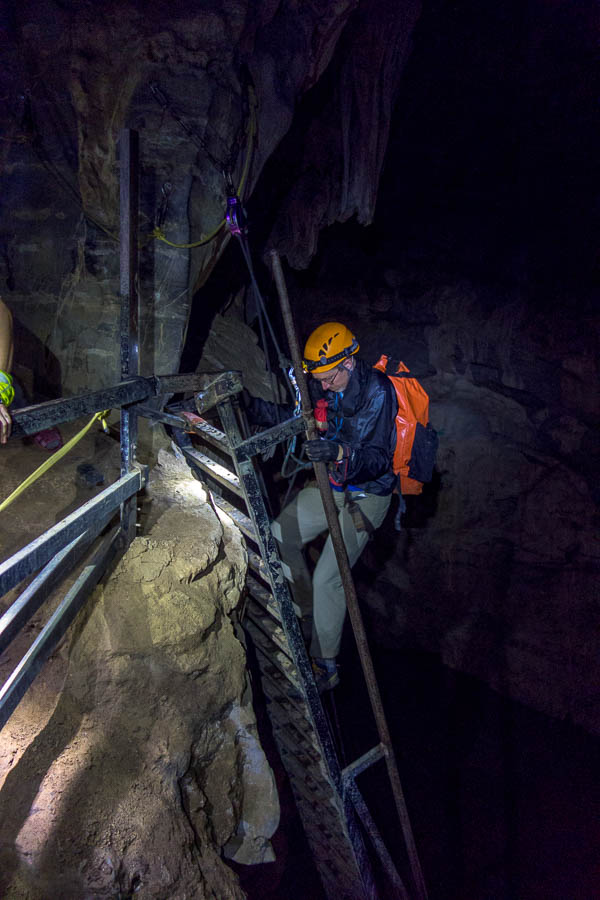
Descending into Hung Ton Cave
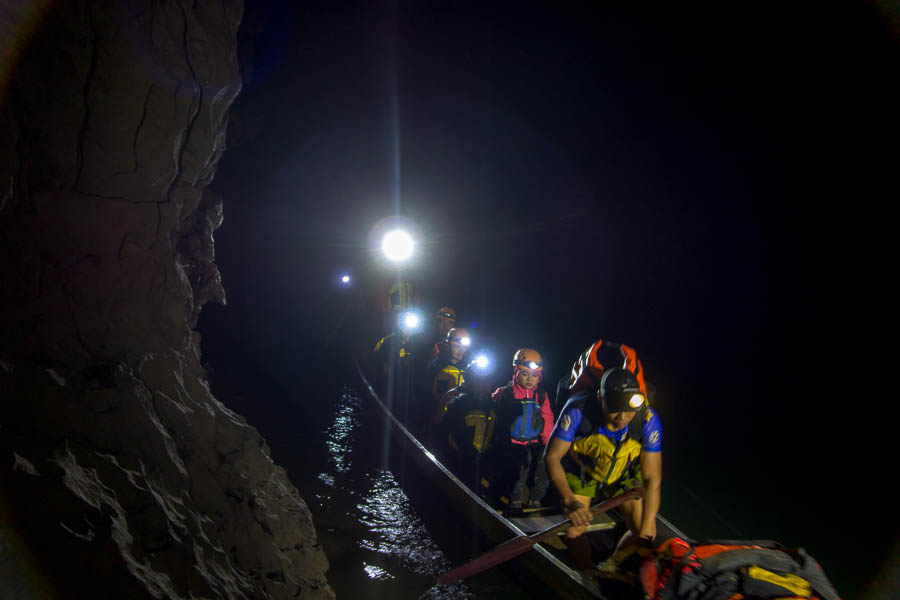
In warmer weather this river gets swum, but we got the boat

Anetta had been warning we were likely to get to camp late, and it seemed we were now on a deadline, so there wasn’t any time to linger in the cave or at the swimming area at the mouth of it.
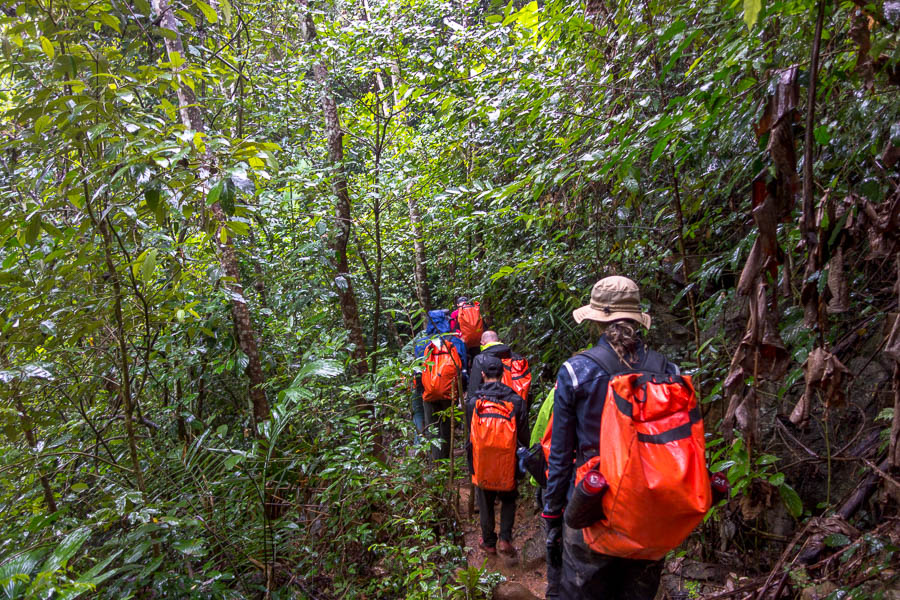
Jungle trekking in the rain

I think many of us were probably dreading camp, the rain had continued all day, the tracks were muddy, and it really felt like the weather had settled in. It was such a good surprise to arrive to a very well set-up camp. The tents were all under cover, communal dining area under cover, the ground compacted so it was just wet rather than muddy. Amazing.
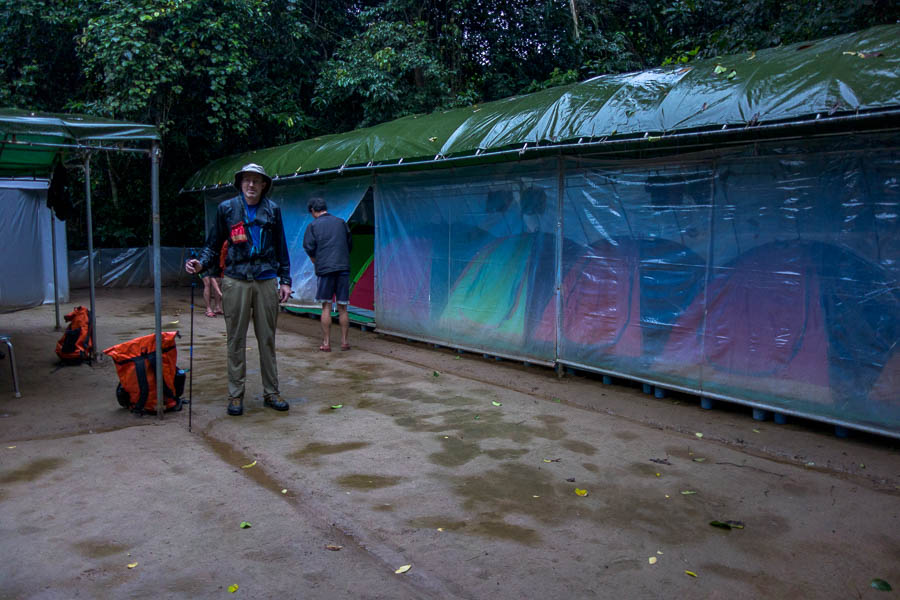
Well set-up camp!

We had an excellent time and were exceedingly well-fed that night. The camp mattresses were pretty hard and I had to sleep with the minuscule pillow under my hips. It wasn’t to be the last time on the trip I wished for my thermarest.

It had sounded like it had poured overnight, I was having visions of having to walk out the way we came because the rivers were too high. Turned out the roof over the tents made the rain sound much worse than it had been, so we continued on our way. The morning started on much flatter ground which was less muddy and we made much better time than the previous afternoon.
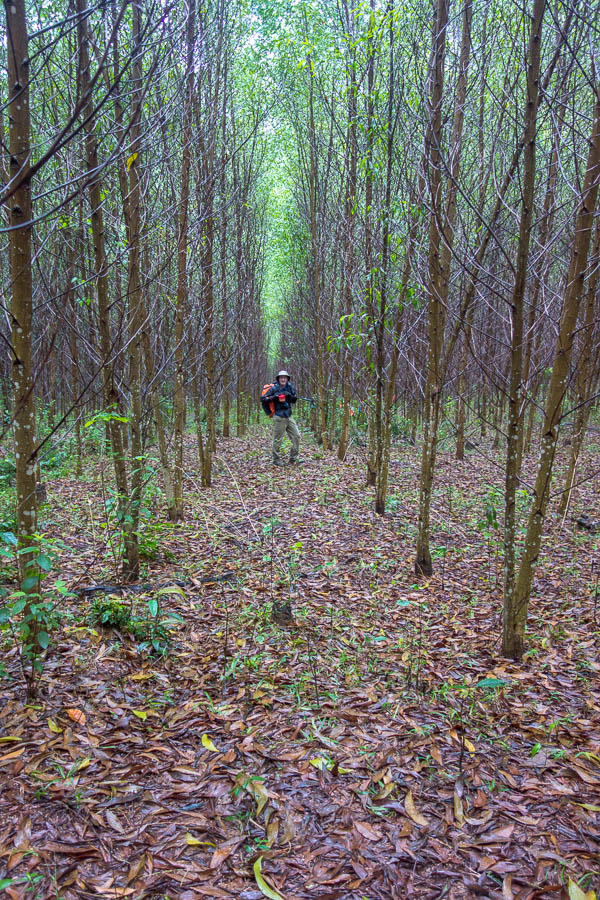
Not very jungle-like!

Even though it didn’t pour, there was still enough rain to bring the water levels up. We had lunch on the bank of this river and then needed to cross it. It looked pretty dodgy to me and I started a trend by stripping off my clothes and putting them in my drum rather than getting completely saturated. The crossing wasn’t too bad in the end only being waist deep.

Another river crossing – looked sketchy but ended up being about waist-deep
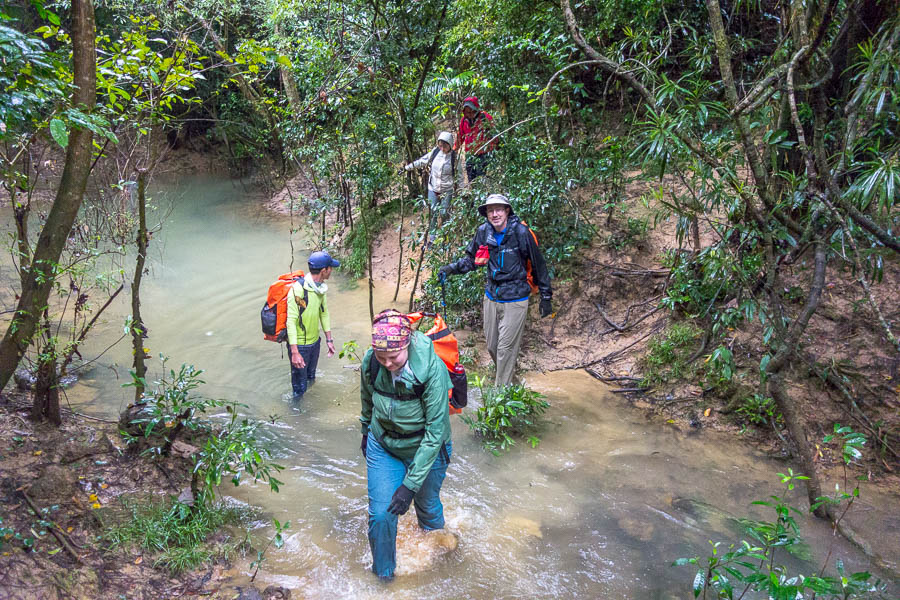
Later in the day crossing many small streams

We made it into camp mid-afternoon. The rain had eased to very light drizzle and it had warmed up enough that we were keen to swim. We had been promised a beautiful natural infinity pool – but with the water levels up it had a bit of a dangerous undertow near the outflow. Anetta would only let us swim with life jackets on, while she stood guard with a life ring near the outflow. It was still good to get the mud & sweat off.

Camp night 2 – it’s almost stopped raining
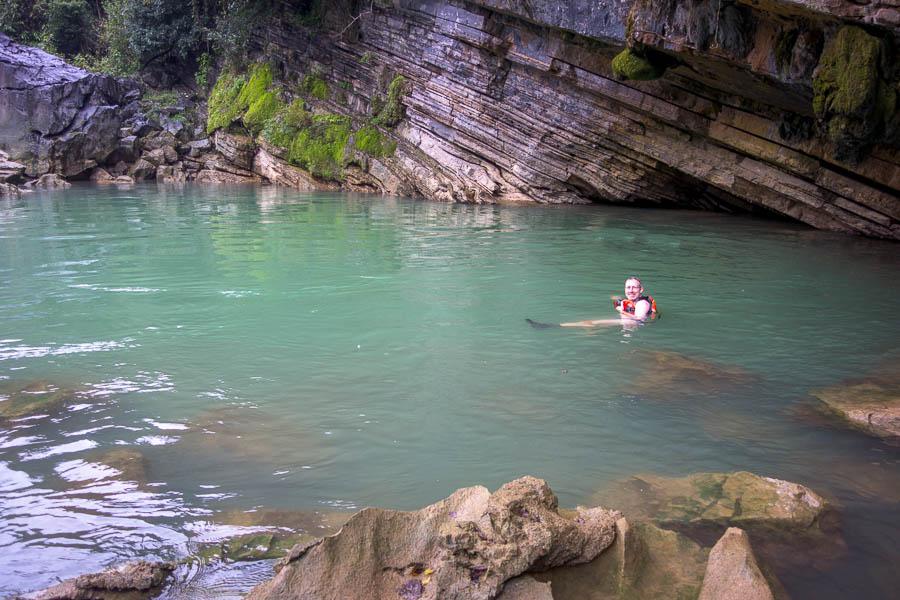
Swimming hole – flow was high out of the pool on the left so we had to wear life jackets and keep right

Our diverse group included some members who were keen for photos for the ‘Gram (which of course they did full make-up for). Quyen was a keen photographer and assisted with photo shoots and directing the best shots. Tom & I found this quite amusing and couldn’t resist some parody shots.

Tom the model. Water came up a fair bit overnight – the next morning the seat of the chair would have been underwater.

The highlight of the trip came on day 3 when we explored Hang Tien 1. An enormous opening was awe-inspiring, but even better was going through it.
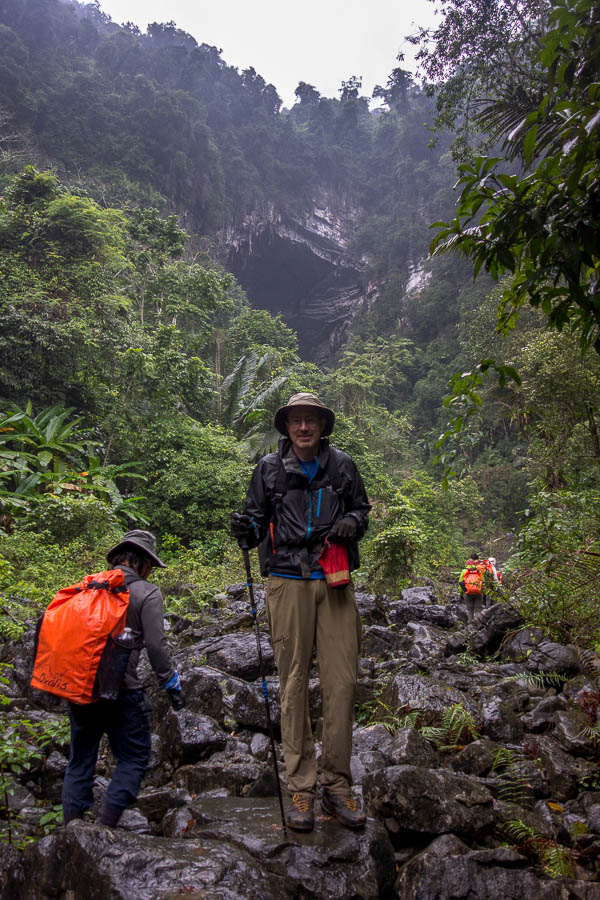
Approaching Hang Tien 1
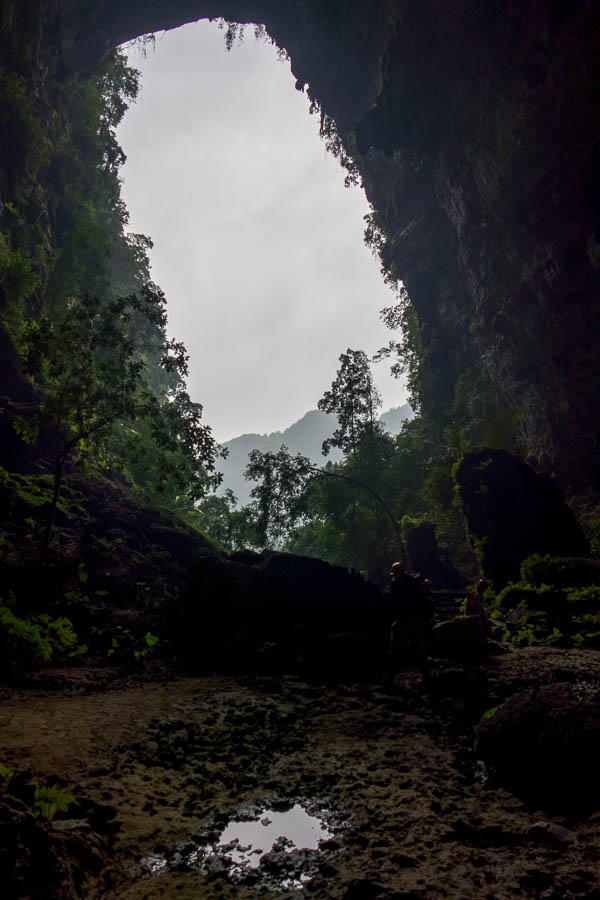
Looking back out of Hang Tien 1. Approx 100m vertical entrance.
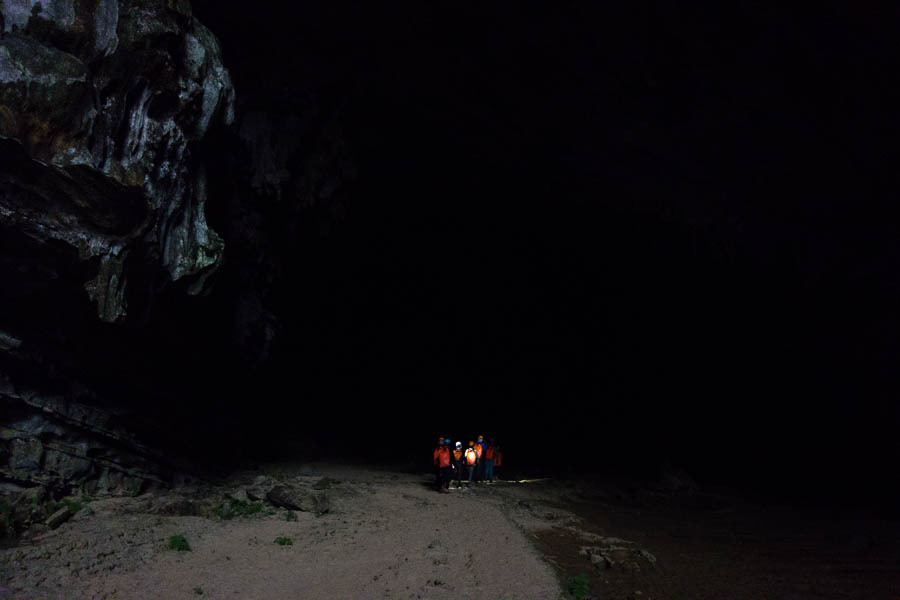
Entering Hang Tien 1

Anetta knew Tom & I were keen to take photos, and I assume she’d decided we were competent enough to negotiate our way through the rocky banks of the underground river. We took up the rear and I proudly kept my feet dry the whole way through.
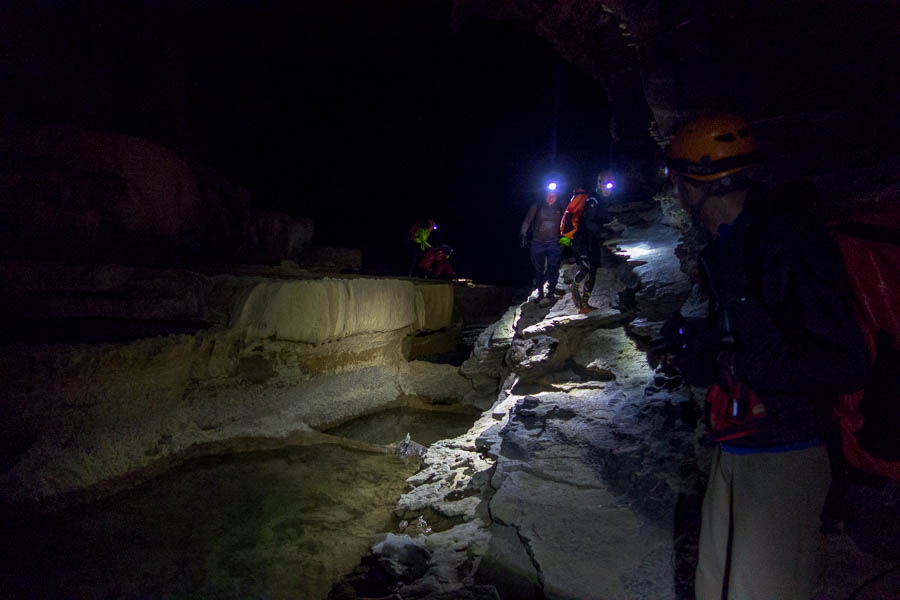
Underground canyoning 🙂
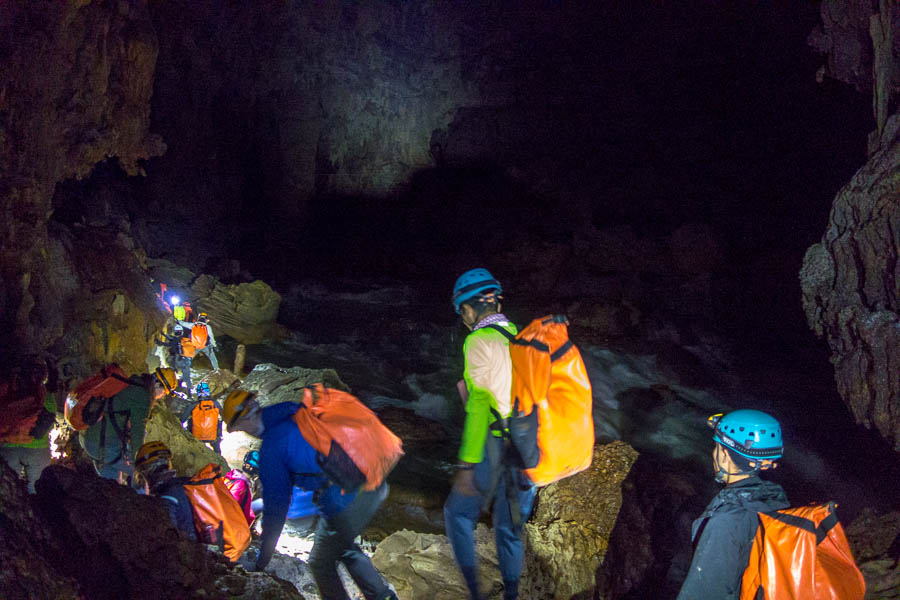
Team along side a raging underground river

In lower flows I think groups just walk across the river but it was raging when we came through so we got hauled across on a Tyrolean Traverse.
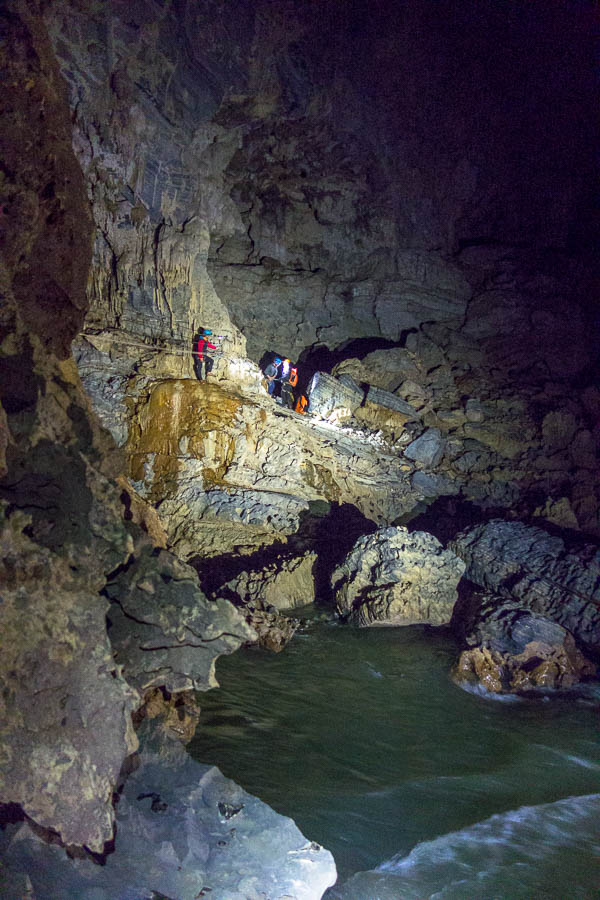
Using a Tyrolean Traverse to get across the river

Tom on the Tyrolean Traverse
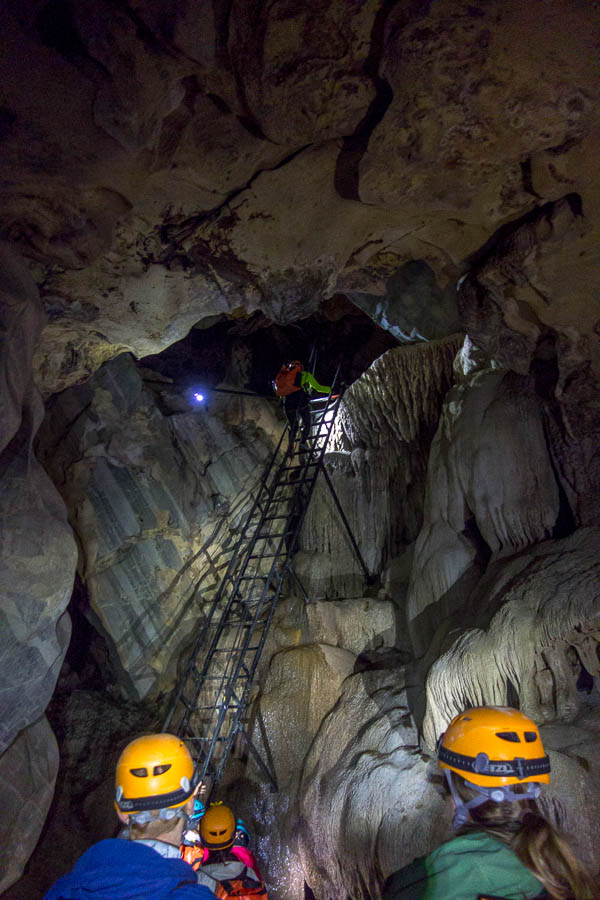
Climbing out of Hang Tien 1
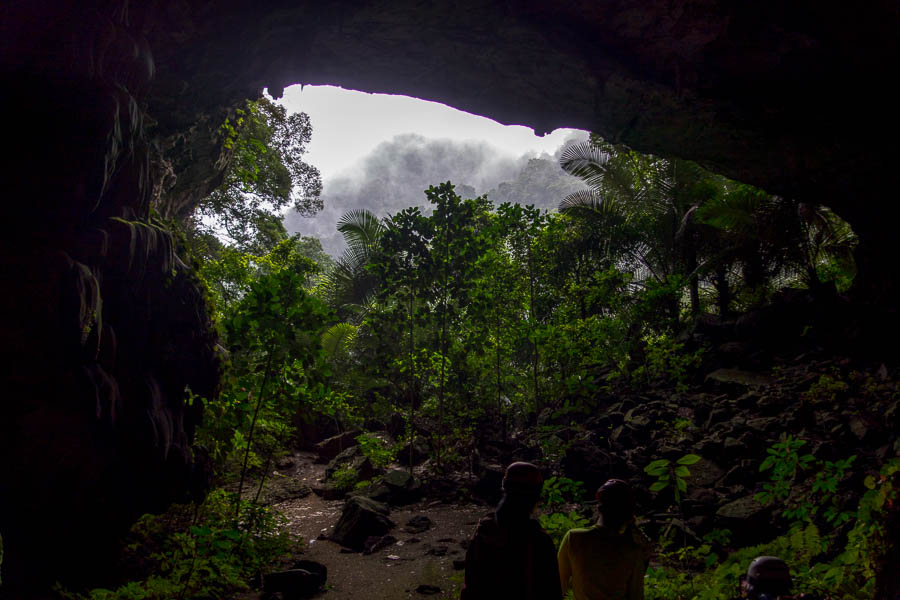
The top entrance

Hang Tien 2 was a very different cave. Unfortunately Tom didn’t get the best advice about whether to take his camera gear in (we left our bags as it was an out-and-back exploration). As it turned out there was one easy scramble and then it was flat walking, with lots of opportunities for tripod shots. The size of the cave and the formations were impressive. The shot below without a person in it doesn’t give a true sense of scale – I guess the height of the cave at that point is approx 20-25m?

Impressive formations in Hang Tien 2

Lunch in the cave

After our morning of caving we had to walk out to the road for a pick-up. This was quite enjoyable walking from my perspective – a much steeper ascent on mainly rock and then a similarly steep descent on rock before a flattish trail. Our group was pretty competent, everyone handling the conditions far better than I would have expected from my judging on the bus on day 1. So on that evidence the Oxalis screening process was effective.
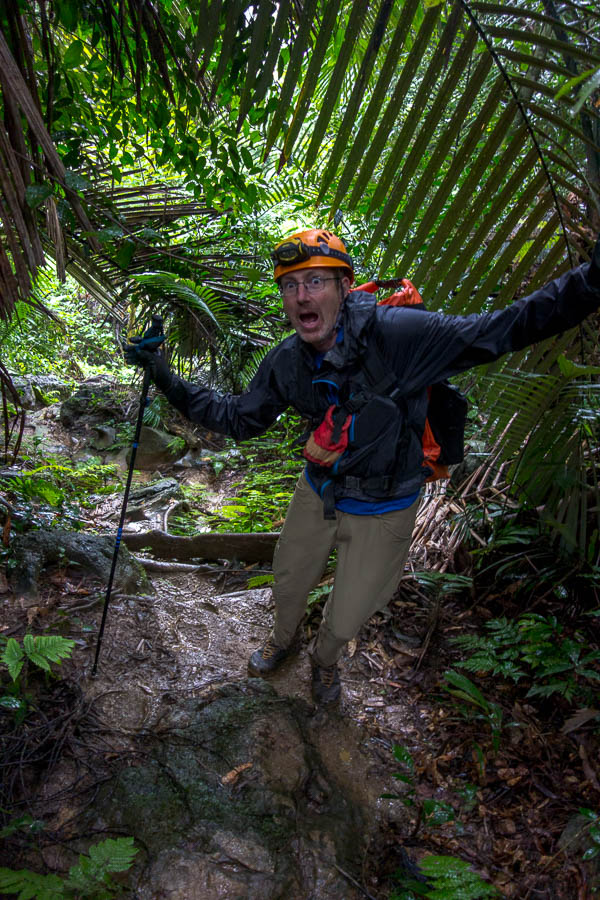
Muddy trekking
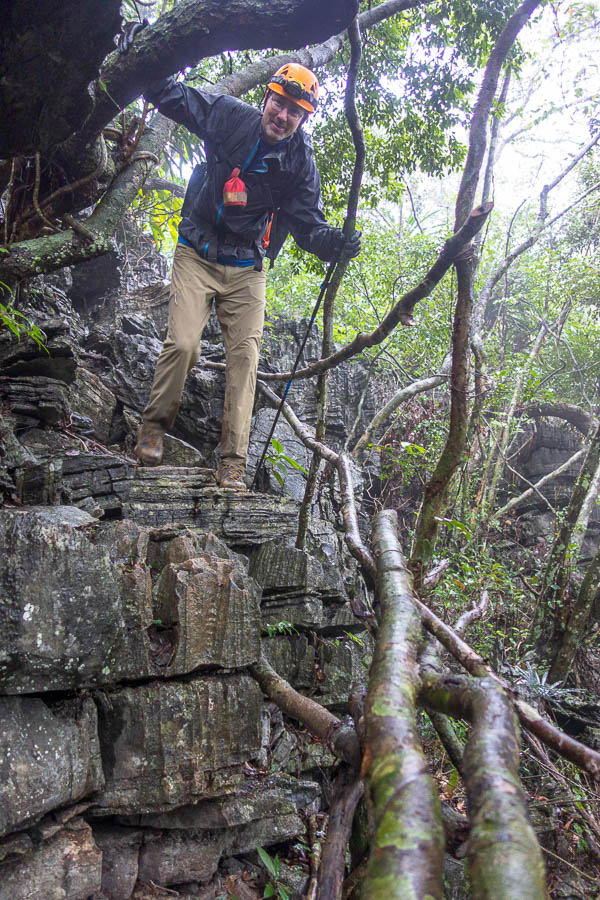
Trekking over limestone

We got picked up on the road mid-afternoon and driven back to the lodge. We had a night in luxury at Tu Lan Lodges. That evening we were taken into the local village, by truck (no one was keen to cycle given it was still raining!). Dinner was at one of the Oxalis staff members houses. It was really interesting to see the houses, including the floating house which gets used when the valley floods a few times each year.
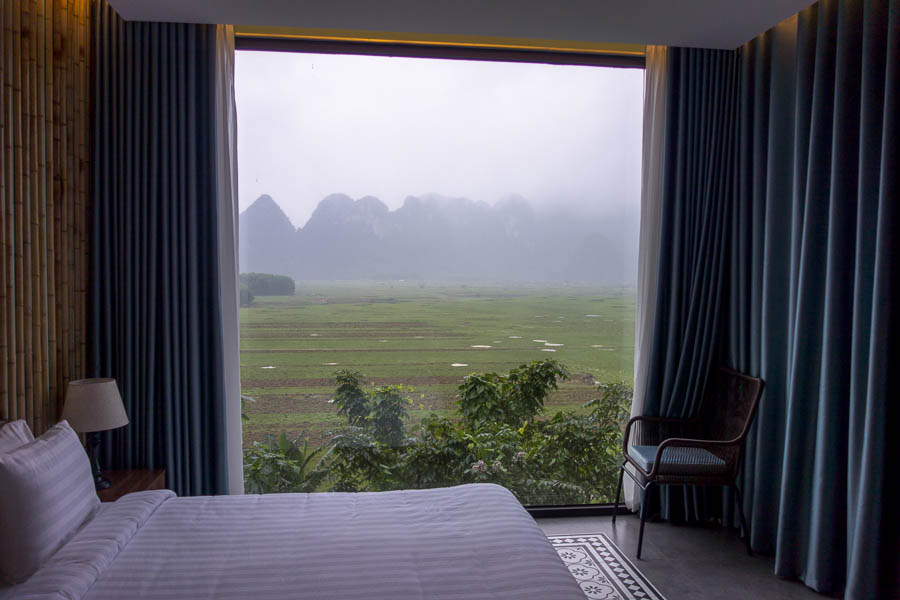
View from our lodge
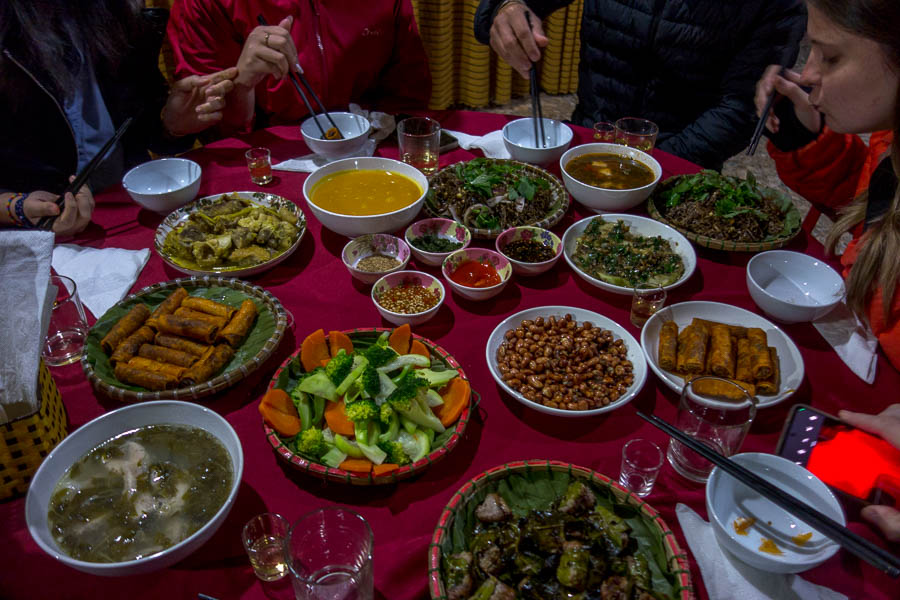
Dinner in the local village

The group, with our host for dinner at the head of the table

Unfortunately for us our flight had been cancelled the following afternoon and we had to get a morning flight. This meant a pre-dawn departure so we didn’t get to fully enjoy the lodge.

Despite the unseasonable rain (it’s meant to stop raining late November) we had a great time. The Oxalis camp set-up meant the conditions were almost enjoyable. The highlight was Hang Tien 1 – not sure I really needed the day 2 of jungle trekking – we do enough rough walking of that nature in our own time without needing to pay for the experience of ‘jungle-trekking’. It was hard to tell how contrived the route was or whether a more cave-intensive itinerary was possible. It’s somewhat a moot point as Oxalis is the only company with permission to run trips in the area!